The warming northern Indian blend — cardamom, cinnamon, clove, black pepper, cumin — added at the end of a dish, and the family of house spice mixes it belongs to, from Moroccan ras el hanout to Ethiopian berbere to Gulf baharat.
Where it comes from
Garam masala means ‘warming spices’: not warming in heat but in the Ayurvedic sense of spices that heat the body. Every household in northern India has its own, ground from whole spices toasted and mixed in proportions that are the family’s, and it is used as a finishing spice — a teaspoon stirred in at the end of a dal or a curry — rather than as a base. The southern equivalents lean on coriander, fenugreek and dried chilli; Bengal has panch phoron, five whole seeds used unground.
Every spice-trading culture arrived at a blend. Ras el hanout, ‘head of the shop’, is the Moroccan spice merchant’s best mix, anywhere from a dozen to thirty spices, including rose petals and lavender; baharat is the Gulf and Levantine everyday blend around black pepper, allspice and cinnamon; berbere is the Ethiopian chilli blend with fenugreek and ajwain; advieh is Persian, delicate with rose and cinnamon; and curry powder is the British commercial imitation of an Indian masala, turmeric-yellow and fenugreek-scented, which no Indian kitchen uses.
Varieties
- Garam masala — Northern Indian: cardamom, cinnamon, clove, black pepper, cumin, sometimes mace and bay. Added at the end.
- Panch phoron — Bengali five-seed mix — cumin, fennel, fenugreek, nigella, mustard — used whole in tempering oil.
- Ras el hanout — Moroccan; complex, warm and floral. In tagines and with lamb.
- Baharat — Gulf and Levantine; pepper, allspice, cinnamon, clove, coriander, cumin, nutmeg. For kofte, rice and stews.
- Berbere — Ethiopian; dried chilli with fenugreek, ajwain, cardamom and more. The base of doro wat.
- Curry powder — The British-Indian commercial blend: turmeric, coriander, cumin, fenugreek, chilli, mustard. Not an Indian ingredient.
In the kitchen
Garam masala goes in at the end — the last minute of cooking or sprinkled over the finished dish — because its aromatics are fragile and its job is fragrance, not foundation. The base spices of an Indian dish (turmeric, coriander, cumin, chilli) went in earlier with the onions. A blend added at the start would need re-adding at the finish.
Ras el hanout and baharat are used differently, as the main spicing of a tagine or a kofte from the start. Berbere is fried in oil or butter to open its flavour. Toasting whole spices and grinding them yourself, in small batches, is the single biggest improvement to any of these.
Choosing and keeping
Blends fade fastest of all spices because they are ground. Buy small tins from shops with a quick turnover, or better, make a few tablespoons at a time from whole spices. Keep them sealed and dark; six months is a good life.
Commercial garam masalas vary from mostly cumin and coriander to mostly cardamom and clove; taste before assuming. A good one smells first of cardamom and cinnamon.
Dishes with garam masala
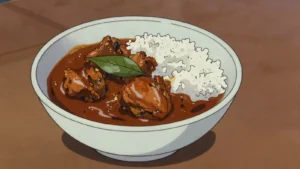 Kukul Mas CurryChicken curry in roasted spice and coconut gravy
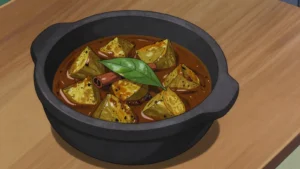 Polos CurryYoung green jackfruit simmered dark with roasted spices
 Tagineslow-braised meat, vegetables, olives or prunes cooked in a conical earthenware pot
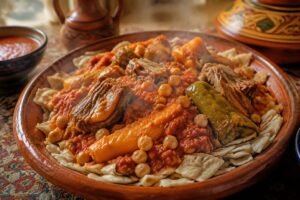 Chakhchoukhatorn flatbread pieces drenched in spicy tomato-lamb sauce with chickpeas
 Tashreebflatbread soaked in rich lamb or chicken broth with chickpeas
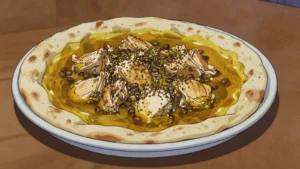 Rfissashredded msemen under chicken, lentils and fenugreek broth; served to new mothers
 AwazeBerbere loosened with tej or wine into a dark dipping paste for grilled meat
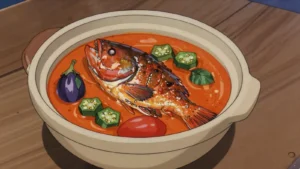 Fish Head CurryRed snapper head in South Indian curry with okra and aubergine
Garam masala and the spice blends is tagged on 208 dishes from 74 countries in the atlas. These notes are written from general knowledge and carry no per-fact citation — see About.