
Ingredients
Chickpeas
- 250 gdried chickpeas
- 1 tspbicarbonate of soda, half for the soak and half for the pot
- 2 litreswater
Hummus
- 160 gLebanese or Palestinian tahina, well stirred
- 60 mllemon juice, freshly squeezed
- 2garlic cloves, crushed to a paste with a pinch of salt
- 1 tspfine salt
- 80–120 mlice-cold water
- ¼ tspground cumin, optional
To serve
- 3 tbspextra virgin olive oil
- 1 tbspreserved whole chickpeas
- ½ tspsweet paprika or sumac
- 1 tbspchopped flat-leaf parsley
- Warm khubz arabi (pita), to scoop
Directions
- Soak the chickpeas overnight in plenty of cold water with half the bicarbonate of soda. They should triple in size and feel soft under a fingernail.
- Drain, rinse, and put in a large pan with the remaining bicarbonate. Toss over medium heat for 2 minutes; the pan will smell faintly of ammonia as the skins begin to break down.
- Cover with 2 litres fresh water and boil hard for 5 minutes, skimming the grey foam and the loosened skins that float to the surface.
- Lower the heat and simmer 60–90 minutes, uncovered, topping up with hot water, until a chickpea crushes to cream between finger and thumb with no resistance at all. Undercooked chickpeas are the single commonest reason hummus is grainy.
- Scoop out a tablespoon of whole chickpeas for the top. Drain the rest, keeping 200 ml of the cooking liquor.
- Blend the hot chickpeas alone for 2 minutes to a stiff, pale paste, scraping down twice. Working hot is essential; cold chickpeas never go silky.
- Add the garlic paste, salt, lemon juice and cumin, then pour in the tahina with the motor running. The mixture will seize and thicken dramatically.
- Trickle in ice water, 20 ml at a time, blending 3–4 minutes more until the hummus turns visibly paler, glossy and loose enough to fall from the spoon in a ribbon. Rest 30 minutes so the garlic mellows.
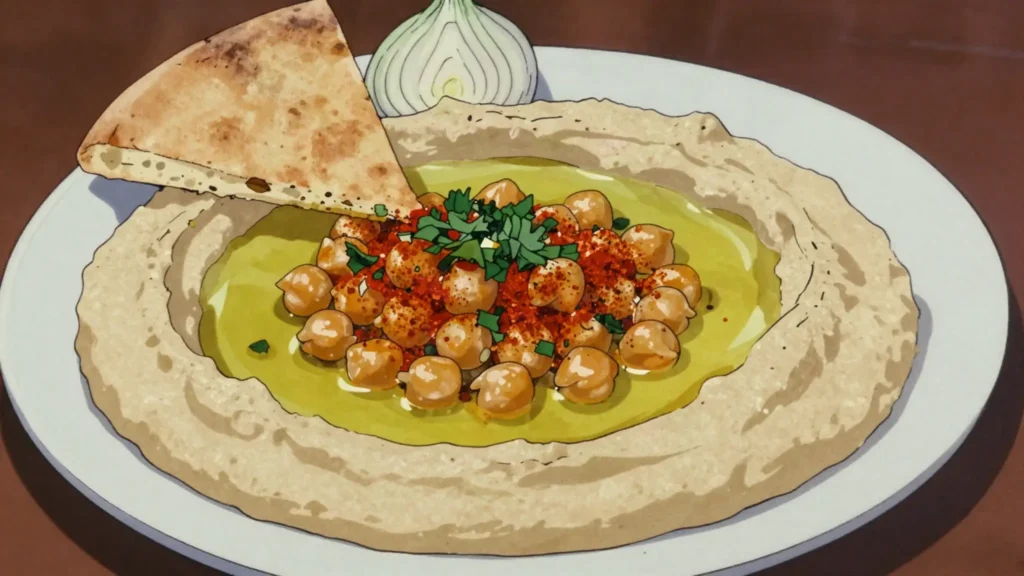
- Spread on a shallow plate, dragging a spoon in a spiral to make a well. Pool the olive oil in it, scatter the reserved chickpeas, dust with paprika and parsley, and serve at room temperature with hot bread.
Technique
- Bicarbonate of soda raises the pH so the pectin in the skins dissolves. Without it you must peel the chickpeas by hand, which cooks in Beirut do when they want the very smoothest texture.
- Ice water is the emulsifier here: cold water whipped into hot tahina and chickpea paste lightens the colour and the texture at once. Tap water at room temperature gives a heavier dip.
- Tahina should be Levantine, made from hulled Ethiopian or Humera sesame, pourable and only lightly bitter. Dark, gritty, over-roasted tahina turns hummus muddy.
- Never serve hummus fridge-cold. Take it out an hour ahead or the tahina sets waxy on the tongue.
Substitutions
- Tinned chickpeas will do at a push: use 700 g drained, simmer 20 minutes with ½ tsp bicarbonate until falling apart, and blend hot.
- Out of lemons, use 40 ml verjuice or 2 tbsp citric-acid solution, but the fresh perfume is lost.
Variations
- Hummus bi tahina topped with pine nuts fried in butter, the Beirut restaurant standard.
- Msabbaha, where the chickpeas are left whole and warm, dressed with tahina, lemon and cumin.
- Hummus beiruti, chopped through with parsley, garlic, chilli and pickle.
History
A dish of mashed chickpeas, tahini, lemon and garlic with roots across the medieval Levant and Egypt; recipes resembling hummus appear in Arabic cookbooks from as early as the 13th century, well before national borders in the region existed in their current form. Its exact point of origin is not settled among food historians, and its modern national identity is genuinely and sometimes heatedly contested among several countries with long, overlapping culinary histories in the region, Israel included, where it is a staple of both Jewish and Arab kitchens. What is not disputed is that hummus has been an everyday Levantine food for centuries, eaten across class lines as both a home dish and a street and restaurant staple, long before it became the internationally exported dip most of the world now knows.
Frequently asked questions
What is Hummus?
Hummus is a salad & side from Israel: warm chickpea-tahini plates wiped with pita; hummusiot debate toppings. A dish of mashed chickpeas, tahini, lemon and garlic with roots across the medieval Levant and Egypt; recipes resembling hummus appear in Arabic cookbooks from as early as the 13th century, well before national borders in the region existed in their current form. Its exact point of origin is not settled among food historians, and its modern national identity is genuinely and sometimes heatedly contested among several countries with long, overlapping culinary histories in the region, Israel included, where it is a staple of both Jewish and Arab kitchens. What is not disputed is that hummus has been an everyday Levantine food for centuries, eaten across class lines as both a home dish and a street and restaurant staple, long before it became the internationally exported dip most of the world now knows.
How long does Hummus take to make?
Hummus takes 20 min plus overnight soak of preparation and 1 hr 30 min of cooking. The recipe makes 4–6 servings. It is rated easy to make.
What can I substitute in Hummus?
Yes, within limits. Tinned chickpeas will do at a push: use 700 g drained, simmer 20 minutes with ½ tsp bicarbonate until falling apart, and blend hot. Out of lemons, use 40 ml verjuice or 2 tbsp citric-acid solution, but the fresh perfume is lost.
What is the most important thing to get right in Hummus?
Blend the hot chickpeas alone for 2 minutes to a stiff, pale paste, scraping down twice. Working hot is essential; cold chickpeas never go silky.