
Ingredients
Dough
- 1.5 kgwhite maize, or 1.5 kg fresh corn dough
- water
To cook
- 1 tspsalt
- water
Wrapping
- dried maize husks or plantain leaves, soaked
- string
To serve
- fried fish
- shito
- pepper and onion sauce
Directions
- Soak the maize for two days, then wash it and grind it wet to a smooth dough. Most people buy the dough ready-ground.
- Mix the dough with enough water to make it soft, cover it, and leave it at room temperature for 2 to 3 days to sour.
- This is a lactic ferment, the same process as a sourdough starter, and it is the entire character of kenkey. It should smell sharply sour and pleasant.
- In warm weather two days is enough; in a cool kitchen it can take four. Judge it by the smell and the taste rather than the clock.
- Now the half-cooking, which is the step that defines the method. Take half the soured dough and cook it in a pot with a little water, stirring hard, for about 15 minutes until it forms a stiff, cooked paste called aflata.
- Beat it hard as it thickens, because it stiffens quickly and lumps will not come out later.
- Mix the hot cooked aflata back into the remaining raw soured dough, working it together thoroughly with a wooden spoon and then by hand once cool enough.
- Cooking half and leaving half raw is what gives kenkey its texture: the cooked part binds it and the raw part keeps the sour tang and finishes in the steaming.
- Add the salt and knead until completely smooth.
- Divide into balls about the size of a fist.
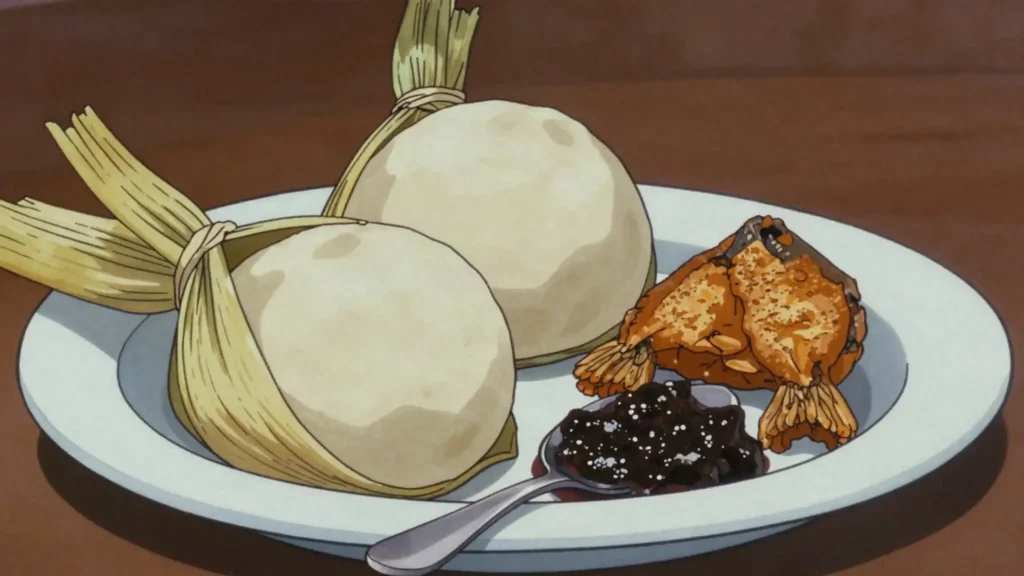
- Wrap each ball in soaked maize husks or plantain leaves, folding them around it, and tie firmly.
- Ga kenkey is wrapped in maize husks and Fante kenkey in plantain leaves, and the two taste and look noticeably different.
- Stack the wrapped balls in a large pot with a rack or a bed of husks in the bottom and water below.
- Steam them for 2 to 3 hours, topping the water up, until firm right through.
- Give them the full time. An under-steamed kenkey is soft and pasty in the middle and it does not keep.
- Cool them in their wrappings, which is how they are sold and stored.
- Serve at room temperature, unwrapped at the table, with fried fish, shito and a raw pepper and onion sauce.
- It keeps for days unrefrigerated in its wrapping, which is why it became a staple, and the same dough is used to make ice kenkey.
Technique
- Ga kenkey is paler and sourer; Fante kenkey is darker, saltier and steamed longer.
- It is eaten with the hands, pinched off in pieces and dipped.
- Ready-made fermented corn dough is sold in African shops and cuts three days off the process.
Substitutions
- Ready-fermented corn dough from an African grocer.
- Foil in place of leaves, at a real cost to the flavour.
Variations
- Fante kenkey, in plantain leaves.
- Ice kenkey, blended cold with milk and sugar as a drink.
- Dokono, the closely related Jamaican descendant.
History
A fermented corn dough, wrapped in corn husk or plantain leaf and steamed or boiled, closely related to Ghanaian banku but differing in its fermentation length and wrapping method, developed among the Ga people of coastal Ghana, with the fermentation process, allowing the corn dough to sour over one or more days before cooking, both developing its distinctive tangy flavour and historically helping preserve the dough slightly longer than an unfermented version would keep. Its wrapping in leaves before cooking, rather than being cooked loose, gives kenkey a distinctive dense, compact shape once unwrapped and serves a practical function in cooking and transporting the dough as a self-contained portion. It is traditionally eaten alongside grilled or fried fish and a spicy pepper sauce, forming one of coastal Ghana’s most iconic everyday meal combinations.
Frequently asked questions
What is Kenkey?
Kenkey is a main from Ghana: sour steamed corn dough in husks, eaten with fried fish and shito. A fermented corn dough, wrapped in corn husk or plantain leaf and steamed or boiled, closely related to Ghanaian banku but differing in its fermentation length and wrapping method, developed among the Ga people of coastal Ghana, with the fermentation process, allowing the corn dough to sour over one or more days before cooking, both developing its distinctive tangy flavour and historically helping preserve the dough slightly longer than an unfermented version would keep. Its wrapping in leaves before cooking, rather than being cooked loose, gives kenkey a distinctive dense, compact shape once unwrapped and serves a practical function in cooking and transporting the dough as a self-contained portion. It is traditionally eaten alongside grilled or fried fish and a spicy pepper sauce, forming one of coastal Ghana’s most iconic everyday meal combinations.
How long does Kenkey take to make?
Kenkey takes 30 min plus 3 days fermenting of preparation and 2 hr of cooking. The recipe makes 8 balls. It is rated medium to make.
What can I substitute in Kenkey?
Yes, within limits. Ready-fermented corn dough from an African grocer. Foil in place of leaves, at a real cost to the flavour.
What is the most important thing to get right in Kenkey?
This is a lactic ferment, the same process as a sourdough starter, and it is the entire character of kenkey. It should smell sharply sour and pleasant.