
Ingredients
The ants
- 500 gwinged queen leafcutter ants
- gathered or bought
- water, for rinsing
To toast
- 3 tablespoonscoarse salt
- a heavy clay or iron pan
- or a heavy baking tray
Sometimes served with
- a cold beer
- aguardiente
- arepas
Directions
- Remove the wings if they are still attached. Remove the legs and head if you prefer. Rinse them briefly in cold water.
- Drain them thoroughly in a sieve. Pat them dry on a clean cloth. Put the ants in a bowl with the salt. Toss them so the salt coats them. Let them sit for about ten minutes. Heat a heavy dry pan over a medium heat.
- Add the salted ants in a single layer. Do not crowd the pan at any point. Shake the pan constantly as they toast. Give them about eight minutes in total.
- Take them off before they blacken. Break one open to check the first batch. Spread them on a heavy baking tray. Heat the oven to 160C before toasting.
- Roast them for about fifteen minutes. Shake the tray every five minutes. Tip them out onto a tray to cool. Do not judge the texture while hot.
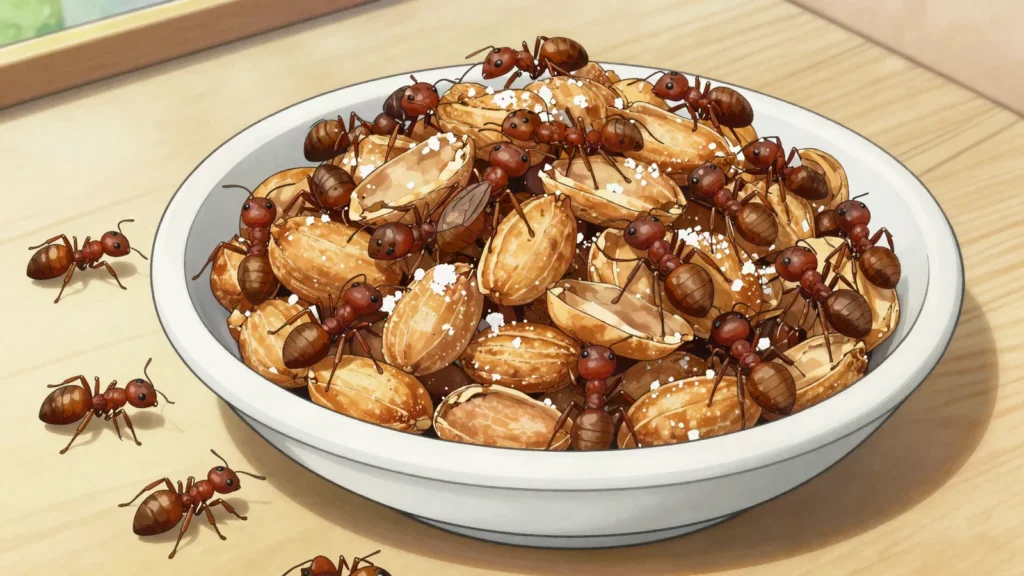
- Let them cool completely first. Serving them is done in a bowl. Tip them into a small bowl or dish. Add a little more salt if they need it. A cold beer goes alongside them.
- Keep them somewhere cool and dry. They soften if they take up any damp. Toast them briefly again to crisp them.
Technique
- Insects contain tropomyosin, a protein also found in shellfish, and cross-reactivity is documented, so anyone with a shellfish or dust mite allergy may react and should not eat them.
- Only the winged queens are eaten, and they emerge for just a few weeks a year with the first spring rains, usually between March and May; they are caught by hand at the nest openings during that flight, which is slow skilled work and part of why they are expensive.
- They are widely described locally as an aphrodisiac and given as gifts and at weddings, but that reputation is traditional rather than evidenced.
Substitutions
- Bought toasted ants are sold ready to eat in Santander and need no cooking.
- An oven at 160C toasts them evenly in place of a pan.
Variations
- Some cooks leave the head and legs on and others remove them.
- They are ground into sauces and spread on arepas in some households.
- Similar toasted ants are eaten in parts of Brazil and Mexico.
History
A Guane tradition of Santander; winged queen leafcutter ants are gathered in the spring rains around San Gil and Barichara, then toasted in salt.
Frequently asked questions
What is Hormigas culonas?
Hormigas culonas is a snack from Colombia: toasted big-bottomed queen ants eaten salted, like nuts. A Guane tradition of Santander; winged queen leafcutter ants are gathered in the spring rains around San Gil and Barichara, then toasted in salt.
How long does Hormigas culonas take to make?
Hormigas culonas takes 30 minutes of preparation and 20 minutes of cooking. The recipe makes serves 6 as a snack. It is rated medium to make.
What can I substitute in Hormigas culonas?
Yes, within limits. Bought toasted ants are sold ready to eat in Santander and need no cooking. An oven at 160C toasts them evenly in place of a pan.
What is the most important thing to get right in Hormigas culonas?
Add the salted ants in a single layer. Do not crowd the pan at any point. Shake the pan constantly as they toast. Give them about eight minutes in total.