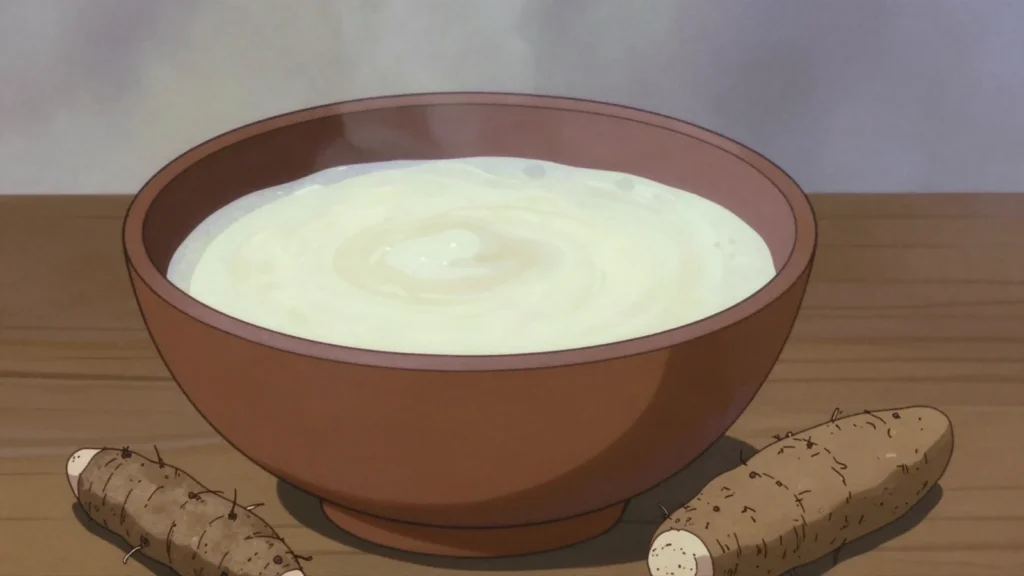

An Amazonian fermented cassava drink, sour and milky, served in gourds and offered to visitors on arrival. Communities that make it traditionally chew boiled cassava to start the fermentation.
It is a household and ceremonial drink of particular Amazonian communities, it produces alcohol, and cassava must be processed correctly to remove its cyanogenic glycosides before any of it begins.
What goes into it
- cassava
- water
- sometimes sweet potato
How it is made
Cassava is peeled, boiled and mashed. A portion is chewed and returned to the mash, because saliva supplies the amylase that converts starch to fermentable sugar, and the mass then sits covered for one to several days while wild yeasts ferment it. It is thinned with water, strained by hand and served cloudy.
How long it takes: one to five days of fermentation
How it is eaten
From a gourd, offered to every arriving guest; refusing it is a discourtesy.
History
Brewed by Amazonian communities who traditionally chew boiled cassava to start fermentation; offered to visitors on arrival.
Frequently asked questions
What is Masato?
Masato is a wine & spirit from Peru: amazonian fermented cassava drink, sour and milky, served in gourds. Brewed by Amazonian communities who traditionally chew boiled cassava to start fermentation; offered to visitors on arrival.
How is Masato made?
Cassava is peeled, boiled and mashed. A portion is chewed and returned to the mash, because saliva supplies the amylase that converts starch to fermentable sugar, and the mass then sits covered for one to several days while wild yeasts ferment it. It is thinned with water, strained by hand and served cloudy. It takes one to five days of fermentation.
Can I make Masato at home?
No, and the atlas gives no method for it. It is a household and ceremonial drink of particular Amazonian communities, it produces alcohol, and cassava must be processed correctly to remove its cyanogenic glycosides before any of it begins.
What goes into Masato?
Cassava, water, sometimes sweet potato.
How is Masato eaten?
From a gourd, offered to every arriving guest; refusing it is a discourtesy.