
Ingredients
Cassava
- 3 kgbitter cassava
- water
Equipment
- a fine grater
- a matapi or strong cloth and weight
- a flat iron griddle
- a coarse sieve
Directions
- Peel the cassava completely, taking off the brown bark and the pink layer beneath it, and cut out the woody central cord.
- Grate it finely into a wet mash.
- Press the mash hard in a matapi, or under a heavy weight in a strong cloth, for at least two hours, until no more liquid comes out at all.
- The liquid pressed out is toxic and must be discarded. Bitter cassava holds cyanogenic glycosides that concentrate in that juice, and this pressing is what makes the root edible in the first place.
- Never keep, reuse or cook with the pressed liquid.
- Break the dry pressed cake up and push it through a coarse sieve into loose crumbs.
- Heat a flat iron griddle over a moderate flame and use no fat at all.
- Spread the crumbs across the hot griddle in a thin layer.
- Stir and turn them constantly with a flat wooden paddle for 20 to 30 minutes.
- Constant movement is essential. The meal has to dry and toast evenly, and anything left sitting scorches while the rest of it stays damp.
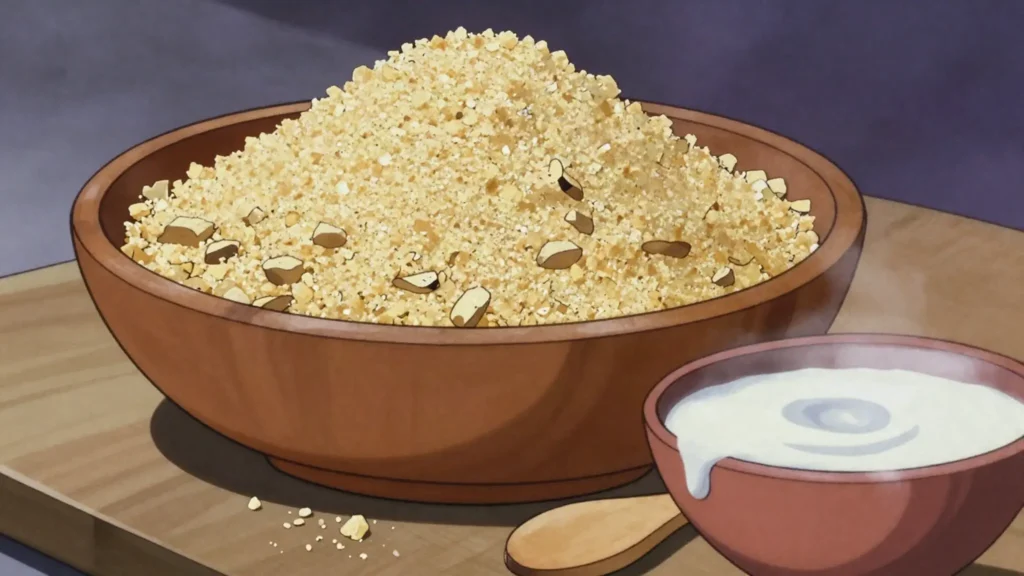
- It is ready when it is completely dry, pale golden, and rattles across the griddle like sand.
- Cool completely and store airtight, where it keeps for months.
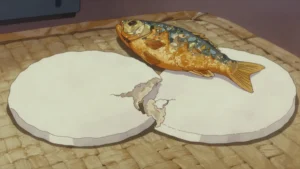
- Eat it sprinkled over fish and stews, or in a bowl with milk and sugar, which is how Kalinago households eat it for breakfast.
- The technique is older than European contact and is still practised in the Kalinago Territory.
Technique
- The pressing and the toasting together are what make bitter cassava safe. Neither step is optional and neither can be shortened.
- Coarse and fine grades are made from the same batch by sieving, and both are used differently.
- It is the same family of preparation as Brazilian farinha de mandioca and West African garri.
Substitutions
- Ready-made farine or farinha de mandioca, sold in Caribbean and Brazilian shops.
- Sweet cassava, which needs the same pressing and holds far less glycoside.
Variations
- Coarse farine, for sprinkling over stews.
- Fine farine, mixed with milk and sugar as a breakfast porridge.
- Toasted darker for a nuttier meal.
History
Kalinago households grate bitter cassava, press out its toxic juice and toast the meal on a griddle, a technique older than European contact.
Frequently asked questions
What is Farine?
Farine is a bread & pastry from Dominica: toasted cassava meal eaten with fish, milk or sugar. Kalinago households grate bitter cassava, press out its toxic juice and toast the meal on a griddle, a technique older than European contact.
How long does Farine take to make?
Farine takes 3 hr of preparation and 30 min of cooking. The recipe makes about 1 kg. It is rated hard to make.
What can I substitute in Farine?
Yes, within limits. Ready-made farine or farinha de mandioca, sold in Caribbean and Brazilian shops. Sweet cassava, which needs the same pressing and holds far less glycoside.
What is the most important thing to get right in Farine?
The liquid pressed out is toxic and must be discarded. Bitter cassava holds cyanogenic glycosides that concentrate in that juice, and this pressing is what makes the root edible in the first place.