
Ingredients
Dough
- 600 gplain flour
- 350 mlwarm water
- or 350 ml warm milk
- 10 gdried yeast
- 2 tablespoonssugar
- 11/2 teaspoons salt
- 3 tablespoonsoil or melted butter
To cook
- a heavy dry pan or griddle
- a little oil, for wiping
- maize meal, for dusting, optional
To serve
- butter
- jam
- tea
- or a meat stew
Directions
- Warm the water to just above body temperature. It should feel barely warm to a clean finger. Stir the yeast and sugar into it. Let it stand for five minutes until it foams.
- Put the flour and salt in a large bowl. Add the yeasted water and the oil. Bring it together into a soft dough. Turn it out onto a floured surface. Knead it for a good ten minutes. It should become smooth and elastic.
- Put the dough in an oiled bowl. Cover it over with a clean cloth. Leave it somewhere warm for about an hour. It should roughly double in size.
- Divide it into ten even pieces. Roll each one into a smooth ball. Press it down to about two centimetres thick. Aim for rounds about ten centimetres across. Set them out on a floured tray. Cover them over with a clean cloth. Let them rise for about thirty minutes. They should look visibly puffed.
- Heat a heavy pan over a low heat. Lay a few breads in without crowding. Cook them for about seven minutes. Do not move them while the crust forms. Turn them over very carefully. Give them another seven minutes.
- Press the side and it should spring back. The inside should be cooked right through. Set them out onto a wire rack. Let them cool for a few minutes. They firm up slightly as they cool.
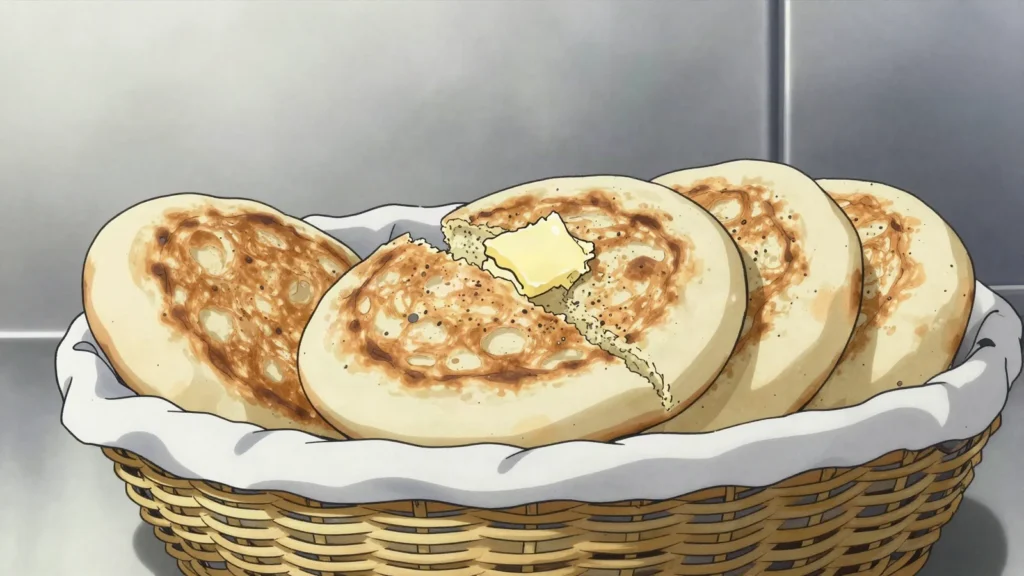
- Use your fingers rather than a knife. Butter both cut sides generously. The butter melts into the warm crumb. Warm them on a dry pan to refresh them.
Technique
- Diphaphatha are associated with the town of Kanye in southern Botswana and are sold at roadsides and bus stops.
- They are cooked on a dry heavy pan rather than in an oven, and the heat must be low and steady or the outside burns before the inside cooks.
- They are thick enough to split and butter, which puts them closer to an English muffin than to a flatbread.
Substitutions
- Milk in place of water gives a softer and richer bread.
- A heavy cast iron pan works best, and a thin pan gives scorched patches.
Variations
- Some cooks dust them with maize meal for a slightly gritty crust.
- A version made without sugar is eaten alongside savoury stews.
- Magwinya, the fried dough balls, are the other Botswana bread snack.
History
Thick griddle-baked flatbread cooked on a dry pan, associated with the town of Kanye and eaten with tea or stew.
Frequently asked questions
What is Diphaphatha?
Diphaphatha is a bread & pastry from Botswana: griddled flat muffin-like breads, split and buttered. Thick griddle-baked flatbread cooked on a dry pan, associated with the town of Kanye and eaten with tea or stew.
How long does Diphaphatha take to make?
Diphaphatha takes 20 minutes plus rising of preparation and 30 minutes of cooking. The recipe makes about 10 breads. It is rated medium to make.
What can I substitute in Diphaphatha?
Yes, within limits. Milk in place of water gives a softer and richer bread. A heavy cast iron pan works best, and a thin pan gives scorched patches.
What is the most important thing to get right in Diphaphatha?
Heat a heavy pan over a low heat. Lay a few breads in without crowding. Cook them for about seven minutes. Do not move them while the crust forms. Turn them over very carefully. Give them another seven minutes.