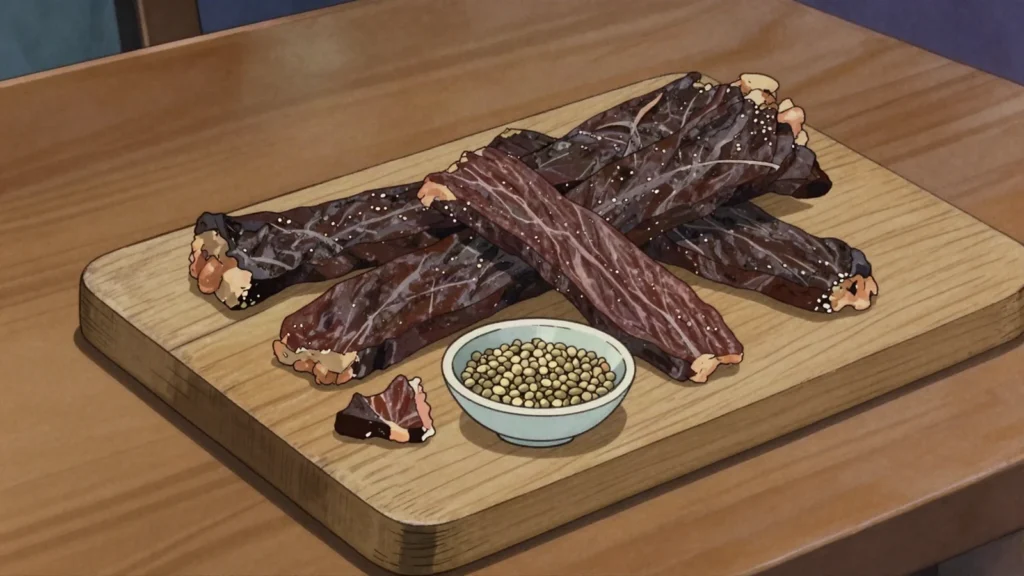

Botswana’s biltong: strips of beef or game rubbed with salt, vinegar and coriander and hung to dry in the Kalahari wind. The dry heat makes hanging meat outdoors a reliable way to keep it, and the result is chewy, dark and heavily seasoned.
Drying raw meat safely depends on humidity low enough to pull water out faster than bacteria multiply, and the Kalahari supplies that. In a damp climate the same recipe spoils from the inside while the outside looks finished.
What goes into it
- beef, or game such as kudu or springbok
- coarse salt
- vinegar
- coriander seed, toasted and cracked
- black pepper
How it is made
Strips cut along the grain are wetted with vinegar, which drops the surface pH straight away, then rubbed with salt and cracked coriander and left a few hours. They are hung in moving air out of direct sun and dry over days, losing more than half their weight. The vinegar and the speed of the dry are what keep it safe, not the salt alone.
How long it takes: three days to a week, depending on thickness and humidity
How it is eaten
Torn and eaten as it is with beer, or pounded and stirred into seswaa and stews.
History
Botswana’s biltong, cured with salt, vinegar and coriander; the dry Kalahari climate makes hanging meat outdoors a reliable preservation method.
Frequently asked questions
What is Segwapa?
Segwapa is a charcuterie & cured from Botswana: strips of beef or game salted, spiced and air-dried in the desert wind. Botswana’s biltong, cured with salt, vinegar and coriander; the dry Kalahari climate makes hanging meat outdoors a reliable preservation method.
How is Segwapa made?
Strips cut along the grain are wetted with vinegar, which drops the surface pH straight away, then rubbed with salt and cracked coriander and left a few hours. They are hung in moving air out of direct sun and dry over days, losing more than half their weight. The vinegar and the speed of the dry are what keep it safe, not the salt alone. It takes three days to a week, depending on thickness and humidity.
Can I make Segwapa at home?
No, and the atlas gives no method for it. Drying raw meat safely depends on humidity low enough to pull water out faster than bacteria multiply, and the Kalahari supplies that. In a damp climate the same recipe spoils from the inside while the outside looks finished.
What goes into Segwapa?
Beef, or game such as kudu or springbok, coarse salt, vinegar, coriander seed, toasted and cracked, black pepper.
How is Segwapa eaten?
Torn and eaten as it is with beer, or pounded and stirred into seswaa and stews.