
Ingredients
Dough
- 300 gstrong white flour
- 200 gfine semolina
- 7 gdried yeast
- 1 teaspoonsugar
- 1 teaspoonsalt
- about 350 ml warm water
- 2 tablespoonsolive oil
To shape
- extra semolina, for dusting
- a clean cloth
To serve
- butter and honey
- or khlii, preserved meat
- or salad and cheese, as a sandwich
Directions
- Use fine semolina rather than the coarse kind. Warm the water until it is comfortably lukewarm. Water that is too hot will kill the yeast outright. Stir the yeast and sugar into a little of the water. Leave it for ten minutes until it froths on top. Put the flour, semolina and salt in a large bowl.
- Pour in the yeasted water and the olive oil. Add the rest of the water gradually as you mix. Bring it together into a soft dough. Kneading it takes about ten minutes. Turn the dough onto a lightly floured surface.
- Knead it steadily until it is smooth and elastic. It should be soft and slightly tacky to the touch. Oil the bowl and turn the dough in it. Cover it over with a damp cloth. Leave it somewhere warm until it has doubled. Divide it into about twelve equal pieces.
- Roll each one into a smooth tight ball. Dust the work surface with semolina. Flatten each ball with a rolling pin or your palm. Roll them out to about half a centimetre thick. Aim for rounds of about twelve centimetres.
- Dust both sides with semolina. That dusting stops them sticking to the cloth. Lay the rounds on a semolina-dusted cloth. Cover them with another cloth. Leave them for thirty to forty minutes. They should look visibly puffed and lighter. Heat a heavy frying pan or a tagine base. Use a medium heat rather than a high one. Do not add any oil at all to the pan.
- Lay one bread carefully into the hot pan. Cook it for about two minutes on the first side. Small bubbles should appear across the surface. Turn it over with a spatula or your fingers. Now it should begin to inflate. Press gently around the edges with a cloth.
- Turn it once more and cook it briefly. The whole thing takes about four minutes. Stack the cooked breads in a cloth-lined basket. Cover them as they come off the pan. The trapped steam keeps them soft and pliable. Fill it with salad, cheese or preserved meat. They keep two days in a sealed bag. Warm them briefly in a dry pan to soften them again.
Technique
- The ferran, the communal wood-fired bakery oven, is still used in Moroccan neighbourhoods for bread and for slow-cooked dishes.
- Batbout could be made entirely on the stovetop, which is what made it a household bread rather than a bakery one.
Substitutions
- All plain flour can be used, though the semolina gives the characteristic texture.
- Wholemeal flour can replace some of the white for a darker bread.
Variations
- Some households make them much larger and cut them into wedges.
- A version enriched with milk and butter is softer and richer.
- Harcha is the related Moroccan semolina pan bread and is quite different in texture.
History
Cooked on the stovetop rather than in the neighbourhood oven, which made it the everyday bread of homes without access to a ferran.
Frequently asked questions
What is Batbout?
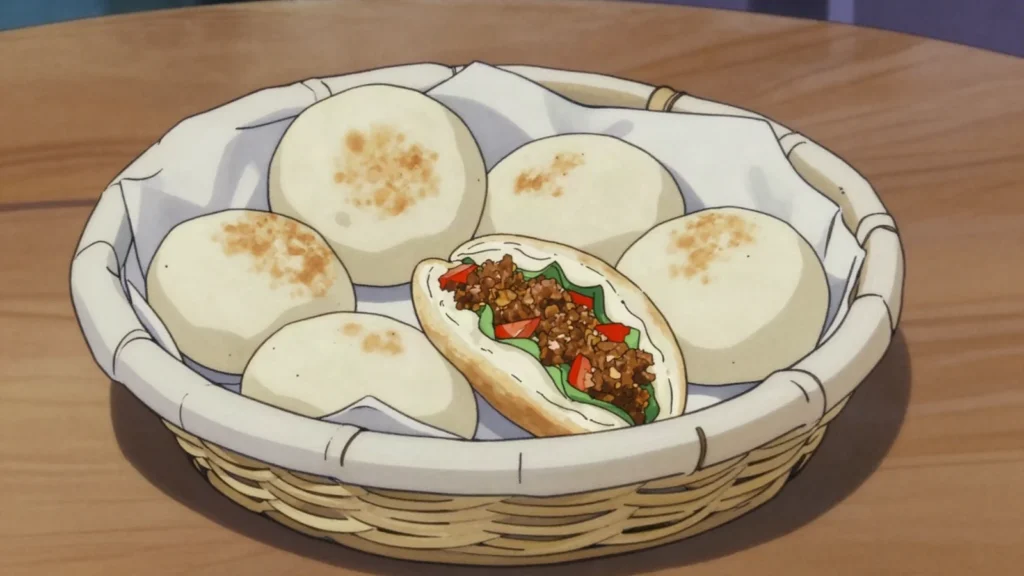
Batbout is a bread & pastry from Morocco: soft pocket bread cooked in a dry pan, split and stuffed as a sandwich. Cooked on the stovetop rather than in the neighbourhood oven, which made it the everyday bread of homes without access to a ferran.
How long does Batbout take to make?
Batbout takes 25 minutes plus 1 hour rising of preparation and 25 minutes of cooking. The recipe makes about 12 breads. It is rated medium to make.
What can I substitute in Batbout?
Yes, within limits. All plain flour can be used, though the semolina gives the characteristic texture. Wholemeal flour can replace some of the white for a darker bread.
What is the most important thing to get right in Batbout?
Use fine semolina rather than the coarse kind. Warm the water until it is comfortably lukewarm. Water that is too hot will kill the yeast outright. Stir the yeast and sugar into a little of the water. Leave it for ten minutes until it froths on top. Put the flour, semolina and salt in a large bowl.