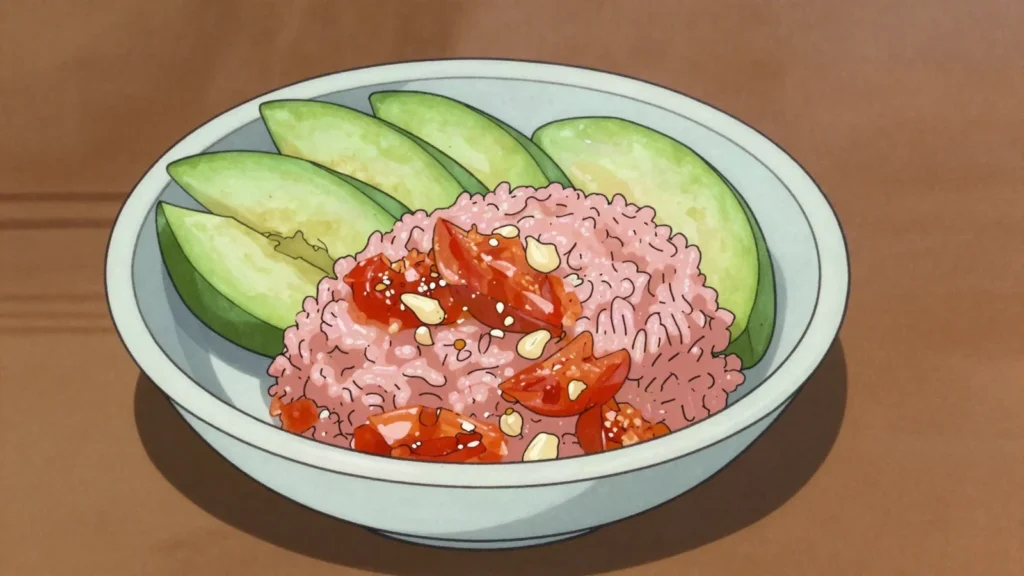

Fermented rice and small shrimp turned pink and sour, sautéed before eating. It is a speciality of Rizal province, particularly Angono, where a restaurant of the same name made it known beyond the town.
It is an ambient ferment of raw shellfish in a sealed jar, kept safe by a salt ratio measured against the catch, and shellfish additionally concentrate marine biotoxins that fermenting does not destroy.
What goes into it
- small shrimp, whole
- cooked rice
- salt
- angkak — red yeast rice
How it is made
Whole small shrimp are salted and packed into a jar in layers with cooked rice and angkak, then sealed. Lactic bacteria acidify the mass over one to two weeks while the angkak turns it pink. It is always sautéed with garlic and tomato before it is eaten.
How long it takes: one to two weeks in the jar
How it is eaten
Sautéed with garlic and tomato as a condiment with grilled fish, or with green mango.
History
A speciality of Rizal province, particularly Angono, where a restaurant of the same name made it known.
Frequently asked questions
What is Balaw-balaw?
Balaw-balaw is a fermented & pickled from Philippines: fermented rice and small shrimp turned pink and sour, sauteed before eating. A speciality of Rizal province, particularly Angono, where a restaurant of the same name made it known.
How is Balaw-balaw made?
Whole small shrimp are salted and packed into a jar in layers with cooked rice and angkak, then sealed. Lactic bacteria acidify the mass over one to two weeks while the angkak turns it pink. It is always sautéed with garlic and tomato before it is eaten. It takes one to two weeks in the jar.
Can I make Balaw-balaw at home?
No, and the atlas gives no method for it. It is an ambient ferment of raw shellfish in a sealed jar, kept safe by a salt ratio measured against the catch, and shellfish additionally concentrate marine biotoxins that fermenting does not destroy.
What goes into Balaw-balaw?
Small shrimp, whole, cooked rice, salt, angkak — red yeast rice.
How is Balaw-balaw eaten?
Sautéed with garlic and tomato as a condiment with grilled fish, or with green mango.