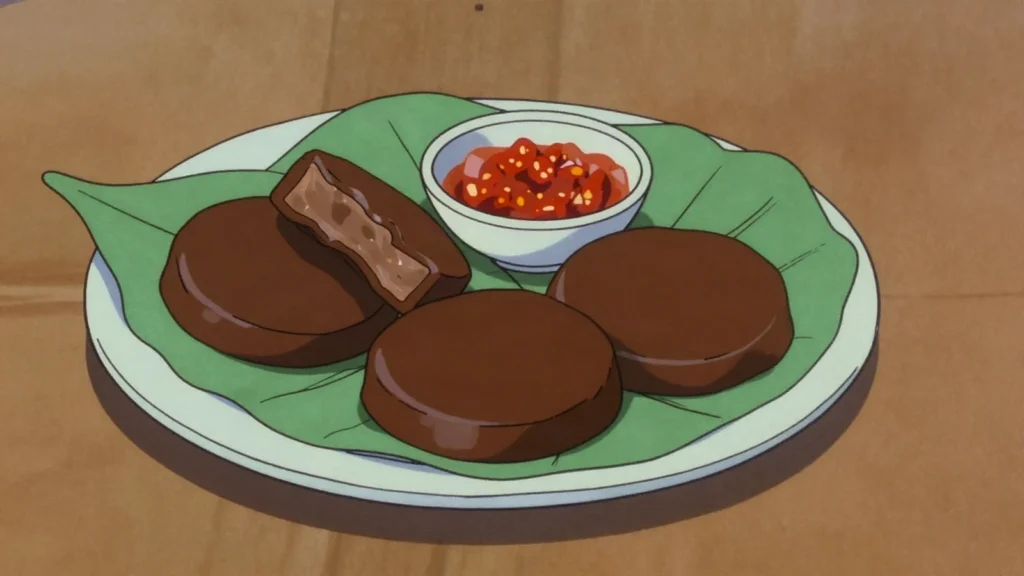

A pungent, sticky fermented soybean cake of the Sema Naga, wrapped in leaves and smoked over the hearth, then cooked with pork or chilli. Its smell has caused real disputes in mainland Indian cities, and at least one court case.
It is an alkaline Bacillus ferment of a high-protein bean held warm for days, where the leaf wrapping and the hearth carry the inoculum and the temperature; it is the same risk class as the region’s other seed ferments.
What goes into it
- soybeans
- leaves for wrapping
- hearth smoke
How it is made
Soybeans are boiled soft, drained and wrapped warm in leaves, then set in a basket above the hearth for several days while Bacillus species ferment them into a sticky, ammoniacal mass. The fermented beans are then pounded into a cake and smoked and dried over the fire, after which they keep for months.
How long it takes: three to seven days of fermenting, then smoking
How it is eaten
Pounded into a chutney with chilli, or cooked with smoked pork and bamboo shoot.
History
Sumac-dark ferment of the Sema Naga, wrapped in leaves and smoked over the hearth; its smell has caused disputes in mainland Indian cities.
Frequently asked questions
What is Axone?
Axone is a fermented & pickled from India: naga fermented soybean cake, pungent and sticky, cooked with pork or chilli. Sumac-dark ferment of the Sema Naga, wrapped in leaves and smoked over the hearth; its smell has caused disputes in mainland Indian cities.
How is Axone made?
Soybeans are boiled soft, drained and wrapped warm in leaves, then set in a basket above the hearth for several days while Bacillus species ferment them into a sticky, ammoniacal mass. The fermented beans are then pounded into a cake and smoked and dried over the fire, after which they keep for months. It takes three to seven days of fermenting, then smoking.
Can I make Axone at home?
No, and the atlas gives no method for it. It is an alkaline Bacillus ferment of a high-protein bean held warm for days, where the leaf wrapping and the hearth carry the inoculum and the temperature; it is the same risk class as the region’s other seed ferments.
What goes into Axone?
Soybeans, leaves for wrapping, hearth smoke.
How is Axone eaten?
Pounded into a chutney with chilli, or cooked with smoked pork and bamboo shoot.