
Ingredients
Seed
- roasted ground wattleseed, from a reputable supplier
To use in
- bread and damper
- shortbread and biscuits
- ice cream and panna cotta
- rubs for meat
- coffee and stout
Equipment
- an airtight jar
- a fine sieve, for infusions
Optional
- cream or milk, for infusing
Directions
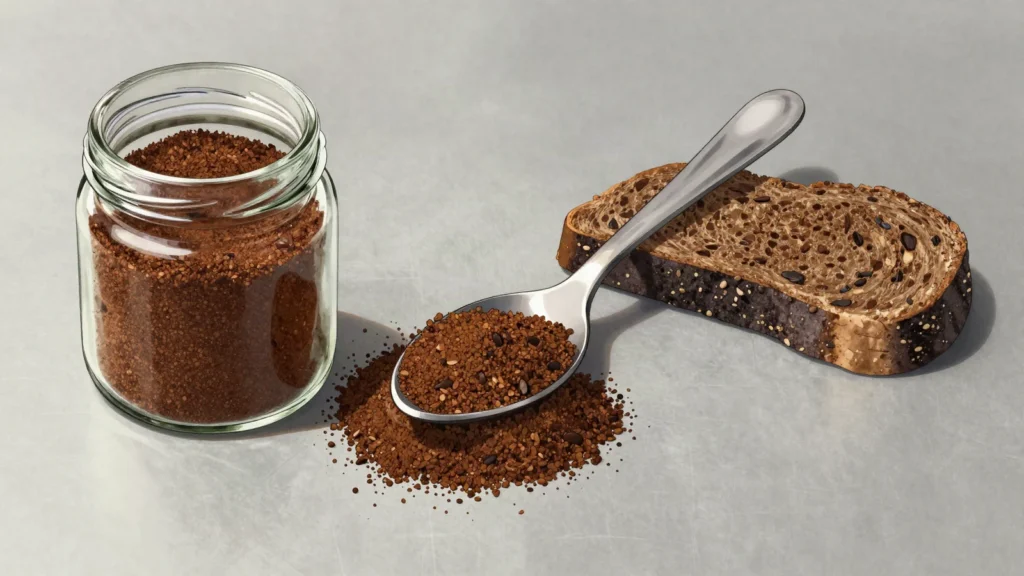
- Wattleseed is roasted ground acacia seed, tasting of coffee, chocolate and hazelnut, and it was an Aboriginal staple ground into damper for millennia before the bush-food industry revived it from the 1980s.
- Now the first and most important point, which is about species.
- Only certain acacia species are used as food, and not all acacias are edible.
- Australia has around a thousand acacia species and only a small number are used for seed. Some others contain compounds that are genuinely harmful, and identification matters.
- The food species include Acacia victoriae, Acacia murrayana and Acacia colei among a handful of others, and commercial wattleseed comes from these.
- Do not gather and eat acacia seed on your own identification. Buy it from an established supplier who states the species.
- Now the second point, which is about whose knowledge this is.
- Wattleseed is Aboriginal food and the knowledge of which species to use, when to harvest and how to process them is Aboriginal knowledge developed over a very long time.
- The commercial bush-food industry has grown substantially and the question of whether Aboriginal people share properly in that has been raised repeatedly and is not settled.
- Buying from Indigenous-owned enterprises is a reasonable response, and several exist and say so clearly.
- Now the roasting, which is what makes it what it is.
- Wattleseed is always roasted before use.
- Raw seed is hard, bland and difficult to digest. Roasting develops the coffee and chocolate notes entirely, in the same way roasting transforms a coffee bean.
- It is sold ready-roasted and ground, which is what almost everyone uses.
- If you have whole roasted seed, grind it fresh, since the aroma fades once ground.
- Store it airtight, away from light and heat.
- Now the flavour, which is worth describing accurately.
- It tastes of roasted coffee, cocoa and hazelnut, with a faint bitterness behind.
- It is not sweet and it is not a spice in the aromatic sense, and it behaves more like coffee or cocoa than like cinnamon.
- That is the useful way to think about using it: put it where you would put coffee or a dark chocolate note.
- Now the quantity, which is the thing people get wrong.
- Use it sparingly, roughly a teaspoon or two per batch of baking.
- Too much makes things bitter and gritty. It is assertive and a little is enough, and this is the commonest mistake with it.
- Now the texture, which requires a decision.
- Ground wattleseed does not dissolve and it stays as fine dark specks.
- That is fine in bread, biscuits and rubs, where the flecks look right.
- For anything smooth, infuse it instead.
- To infuse, steep a tablespoon in warm cream or milk for 20 minutes, then strain it through a fine sieve.
- Steeping rather than stirring it in is what gives ice cream or panna cotta the flavour without a gritty texture, and it is worth the extra step.
- Do not boil an infusion hard, which draws out bitterness.
- Now the traditional use, which is damper.
- Add a couple of teaspoons to a simple soda bread or damper dough.
- Damper is the unleavened bush bread cooked in ashes, and wattleseed was ground into it long before wheat arrived.
- Now the modern uses, which are mostly about that coffee note.
- It goes into shortbread, biscuits, brownies and chocolate cake, where it deepens the chocolate.
- It is excellent in ice cream and in panna cotta, infused rather than stirred.
- It is used in rubs for kangaroo, beef and lamb, often with pepperberry and lemon myrtle.
- It is brewed into stout and porter by several Australian breweries, which suits it exactly.
- It is also used as a coffee extender or substitute, which is one of its oldest colonial-era uses.
- Now a small practical note about it.
- It contains no caffeine at all, despite tasting strongly of coffee.
- That makes it genuinely useful in evening desserts where a coffee flavour is wanted without the effect.
- It is high in protein and fibre and it has a low glycaemic index, which is part of why it has been promoted commercially.
- It keeps a year in a sealed jar, though the aroma fades and it is best used within six months.
Technique
- Only a small number of acacia species are used as food and identification matters.
- Benefit-sharing with Aboriginal communities is a live and unresolved issue in the bush food industry.
- It contains no caffeine despite the coffee flavour.
Substitutions
- There is no real substitute, though a little instant coffee and cocoa approximates the note.
- Whole roasted seed ground fresh, if you can get it.
Variations
- Infused into cream for desserts.
- In a rub with pepperberry and lemon myrtle.
- Baked into damper, which is the traditional use.
History
An Aboriginal staple ground into damper for millennia, revived by the bush-food industry from the 1980s.
Frequently asked questions
What is Wattleseed?
Wattleseed is a sauce & condiment from Australia: roasted ground acacia seed tasting of coffee and hazelnut; used in baking. An Aboriginal staple ground into damper for millennia, revived by the bush-food industry from the 1980s.
How long does Wattleseed take to make?
Wattleseed takes 10 min of preparation and 15 min of cooking. The recipe makes a small jar, used a teaspoon at a time. It is rated easy to make.
What can I substitute in Wattleseed?
Yes, within limits. There is no real substitute, though a little instant coffee and cocoa approximates the note. Whole roasted seed ground fresh, if you can get it.
What is the most important thing to get right in Wattleseed?
Do not gather and eat acacia seed on your own identification. Buy it from an established supplier who states the species.