
Ingredients
Cream
- 3 litreswhole raw cow or yak milk, as fresh and as fat-rich as you can get
- 1wide shallow pan, at least 30 cm across
- 1long-handled ladle
To serve
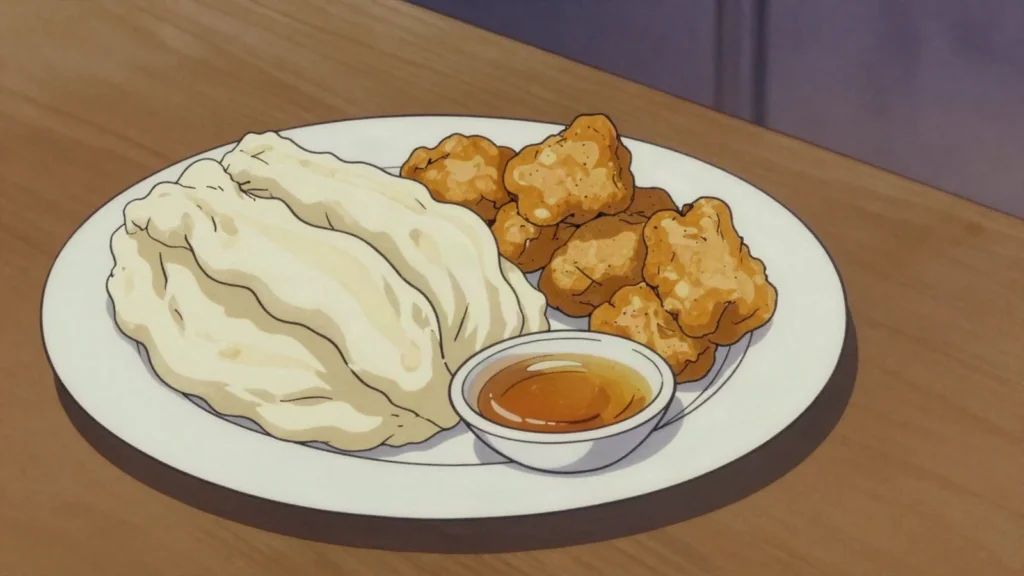
- 8boortsog (fried dough pieces) or slices of fried bread
- 4 tbspsugar or 3 tbsp wild honey
- Suutei tsai (salted milk tea), to drink
Directions
- Pour the milk into the wide pan; it should stand no more than 6–8 cm deep. Depth is what decides the thickness of the crust.
- Set it over the lowest possible heat and bring it slowly to 85–90°C (185–195°F) over about 30 minutes. It must steam and tremble but never break into a boil.
- Once it steams, start aerating: fill the ladle, lift it 40–50 cm above the pan and pour the milk back in a thin stream. Repeat for 10–15 minutes until the surface carries a stiff head of foam.
- Hold it at that bare simmer for another 30–40 minutes without stirring the body of the milk. A wrinkled skin will set and thicken over the foam.
- Take the pan off the heat and leave it completely undisturbed in a cool place, ideally 8–12 C, overnight for 10–12 hours. Do not move, tilt or cover it tightly.
- By morning a thick, buttery, slightly wrinkled layer will have set right across the surface. Slide a knife around the edge to free it.
- Lift the whole disc off in one piece with the ladle or a flat skimmer, drain it for a few minutes, then fold it in half or roll it up and set it on a plate.
- Serve at room temperature, torn onto hot fried boortsog with sugar or honey, with salted milk tea. Keep any surplus covered in the fridge for 4 days, or clarify it into shar tos, the yellow butter used for cooking.
- Save the thin milk left underneath: Mongolian households boil it down for curds or use it to start the next batch of tarag.
Technique
- Aeration is not decoration. Pouring from height whips air and fat into the surface, and it is that foam, set by long gentle heat, that becomes the honeycomb texture of true urum.
- Never stir once the skin starts to form and never let the milk boil; both break the crust and leave you with scorched milk and a thin film.
- Autumn milk from animals on late summer pasture is the fattest, which is why urum is an autumn and Tsagaan Sar food, and why ultra-pasteurised supermarket milk will not work.
- Urum is the top of a whole dairy chain: what is skimmed becomes butter and shar tos, and the remaining milk becomes tarag and aaruul.
Substitutions
- No raw milk: use 2 litres whole non-homogenised pasteurised milk enriched with 1 litre double cream, which gives a close, if slightly softer, crust.
- Buffalo milk kaymak from a Turkish or Balkan shop is the nearest ready-made equivalent.
- Fried bread or thick toasted flatbread stands in for boortsog.
Variations
- Ordog urum, the thicker autumn version left two nights to set.
- Urum stirred with sugar and flour into a sweet paste for Tsagaan Sar tables.
- Yak-milk urum from the Khangai mountains, denser and distinctly grassy.
History
Made by simmering and cooling milk overnight so the fat sets; it tops the Tsagaan Sar table beside stacked boortsog cakes.
Frequently asked questions
What is Urum?
Urum is a cheese & dairy from Mongolia: thick clotted cream skimmed off slowly simmered milk, spread on fried bread. Made by simmering and cooling milk overnight so the fat sets; it tops the Tsagaan Sar table beside stacked boortsog cakes.
How long does Urum take to make?
Urum takes 15 min of preparation and 1 hr simmering plus 12 hr cooling of cooking. The recipe makes about 250 g clotted cream, 4 servings. It is rated medium to make.
What can I substitute in Urum?
Yes, within limits. No raw milk: use 2 litres whole non-homogenised pasteurised milk enriched with 1 litre double cream, which gives a close, if slightly softer, crust. Buffalo milk kaymak from a Turkish or Balkan shop is the nearest ready-made equivalent. Fried bread or thick toasted flatbread stands in for boortsog.
What is the most important thing to get right in Urum?
Set it over the lowest possible heat and bring it slowly to 85–90°C (185–195°F) over about 30 minutes. It must steam and tremble but never break into a boil.