
Ingredients
The swallow
- 500 gmillet flour
- or maize flour
- or a mixture of both
- about 1.5 litres water
- adjust as you go
- a pinch of salt, optional
The ayoyo soup
- 300 gjute leaves
- ayoyo, fresh or frozen
- or 200 g dried ayoyo
- 1onion, chopped
- 3 clovesgarlic
- 2tomatoes, chopped
- 2 tablespoonsground dried fish
- or ground crayfish
- 1hot chilli
- 1 litrewater or stock
- 1 teaspoonkanwa, potash
- optional, see the note
- salt, to taste
Sometimes served with
- a separate pepper soup
- with goat or dried fish
- smoked fish, flaked
- or beef, stewed
To serve
- a bowl of drinking water
- a bowl for washing hands
- shared or individual bowls
Directions
- Take small lumps if you are new to it. Never give large lumps to a small child. Discard flour that smells musty or stale. Store it airtight and completely dry.
- Wash the ayoyo leaves thoroughly. Strip them from any tough stems. Chop them finely or blend them briefly. Put the water or stock in a pot. Add the chopped onion and the garlic. Add the tomatoes and the whole chilli. Add the ground dried fish or crayfish.
- Bring it to a boil and simmer ten minutes. Add salt and taste it carefully. Add the kanwa now if you are using it. Cook the leaves for five to eight minutes. Take it off the heat while still green. The soup should be loose and slippery.
- Set the soup aside and keep it hot. Bring most of the water to a boil. Use a heavy pot with a thick base. Thin pots scorch the mash badly. Mix some flour with cold water separately. Make a smooth thin slurry in a bowl. About a fifth of the flour is enough. Pour that slurry into the boiling water. Stir it constantly as you pour.
- Let that porridge boil for five minutes. That makes a thin porridge base. Add it in handfuls, not all at once. Stir hard and constantly with a strong spoon. It becomes stiff and hard to stir. Hold the pot steady with a cloth. A sliding pot of hot mash is a burn risk. Press out lumps against the pot side. Fold the dough over on itself repeatedly.
- Cook it for about ten to fifteen minutes. It must cook through to lose that taste. Add hot water if it is too stiff. Add a little more flour if too loose. Wet a bowl or a ladle with cold water. Scoop a portion into the wet bowl. Swirl it to form a smooth round mound. Turn it out onto a plate at once. The mash is scalding hot at this stage.
- Serve the soup beside it or over it. Wash your right hand before eating. Eating is done with the right hand. Pinch, roll, dip and then swallow. Do not chew, which is the instruction. Make soup ahead and make the mash fresh.
Technique
- Swallow foods are pinched, dipped and swallowed without chewing, and that carries a genuine choking risk for anyone unpractised. Take small lumps, never give large ones to a young child, and keep water on the table. The slipperiness of ayoyo is exactly what carries it down.
- Make the soup first and the mash last. Tuo zaafi stiffens and goes rubbery within a couple of hours and does not reheat well; the soup keeps for days.
- The koko stage — making a thin porridge from a fifth of the flour before adding the rest — is what makes the final mash smooth. Skip it and you get lumps that never disperse.
- Tuo zaafi is deliberately softer than banku or fufu. It should hold a shape but wobble, and being slightly wet is correct rather than a fault.
- Do not overcook the ayoyo. Five to eight minutes keeps it green and slippery; longer destroys both. The slipperiness is the working principle of the meal, not a fault to cook away.
- Kanwa, or potash, softens vegetables and increases slipperiness because it is alkaline. It also destroys some vitamins, should be used sparingly, and must be food grade — never garden or industrial potash. Many cooks leave it out entirely and the soup is fine without it.
- Stirring the mash is genuinely hard work and the pot will try to slide. Wedge it or hold it with a cloth; a moving pot of scalding stiff mash is a real burn risk.
- A mixture of millet and maize flour gives the best texture. Millet alone can be gritty and maize alone gluey; together they balance.
- The name comes from Hausa tuwon zafi, hot mash, and related dishes run across Nigeria, Niger and Burkina Faso. The atlas records the family and adjudicates no origin claim.
Substitutions
- Maize flour alone replaces the millet mixture and is what many households use; the result is slightly gluier.
- Frozen ayoyo replaces fresh and is the easiest route outside West Africa; dried ayoyo needs soaking first.
- Molokhia leaves, sold in Middle Eastern shops, are the same plant under another name.
- Ground crayfish replaces ground dried fish closely.
- Okra soup replaces ayoyo where jute leaf is unavailable and gives similar slipperiness.
- Kanwa can be left out entirely and the soup still works.
Variations
- Tuo zaafi with bito, a soup made from dried baobab leaf, is common in the far north.
- A version served with dried okra soup rather than ayoyo is equally traditional.
- Nigerian tuwo shinkafa uses rice flour and tuwo masara uses maize, both eaten with their own soups.
- Some households serve it with a separate goat pepper soup alongside the ayoyo.
- Banku and kenkey are the southern Ghanaian fermented maize relatives, quite different in flavour.
- A version with a little cassava flour worked in gives a smoother and stretchier mash.
History
From Hausa tuwon zafi, hot mash; the northern Ghanaian millet or maize staple eaten with ayoyo and dried-fish soups.
Frequently asked questions
What is Tuo zaafi?
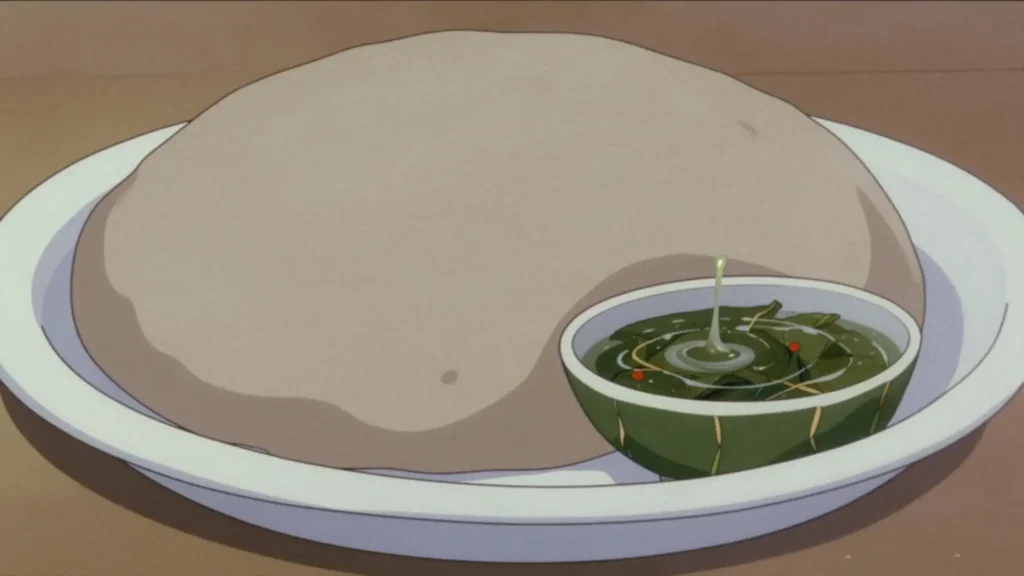
Tuo zaafi is a main from Ghana: soft millet-corn swallow with ayoyo jute-leaf soup, northern staple. From Hausa tuwon zafi, hot mash; the northern Ghanaian millet or maize staple eaten with ayoyo and dried-fish soups.
How long does Tuo zaafi take to make?
Tuo zaafi takes 20 minutes of preparation and 45 minutes of cooking. The recipe makes serves 6. It is rated medium to make.
What can I substitute in Tuo zaafi?
Yes, within limits. Maize flour alone replaces the millet mixture and is what many households use; the result is slightly gluier. Frozen ayoyo replaces fresh and is the easiest route outside West Africa; dried ayoyo needs soaking first. Molokhia leaves, sold in Middle Eastern shops, are the same plant under another name. Ground crayfish replaces ground dried fish closely. Okra soup replaces ayoyo where jute leaf is unavailable and gives similar slipperiness. Kanwa can be left out entirely and the soup still works.
What is the most important thing to get right in Tuo zaafi?
Take small lumps if you are new to it. Never give large lumps to a small child. Discard flour that smells musty or stale. Store it airtight and completely dry.