
Ingredients
Base
- 250 gwhite maize kernels
- 150 gcacao beans
- 1 tspground cinnamon
- 4cloves
- a pinch of achiote, for colour, optional
To serve
- 1.5 litrescold water
- 150 gsugar, or to taste
- ice
Equipment
- a comal or heavy dry pan
- a grinder or a metate
- a jícara, the gourd bowl
- a wooden whisk
To serve
- cold, from a gourd, at fiestas
Directions
- Toast the maize kernels on a comal or in a heavy dry pan, stirring constantly. Take them well past golden, to a deep brown, which is what gives tiste its dark colour and its roasted character. This takes 20 minutes or more and it cannot be hurried.
- Stir them without stopping once they begin to colour, since they go from brown to burnt in under a minute and burnt maize makes the whole batch acrid. They are ready when they are deep brown throughout and smell strongly of toasted corn.
- Toast the cacao separately, since it needs less time and burns faster than maize. About 10 minutes is enough, and the skins will loosen and crack. Rub the toasted beans between your hands or in a cloth to remove the papery skins, and winnow them away. Removing the skins matters, since they are bitter and papery and they will not grind smooth.
- Grind the toasted maize, cacao, cinnamon and cloves to a fine powder. Traditionally this is done on a metate, the stone grinding slab, and Nicaraguan markets sell ready-ground tiste powder. Grind it as fine as your grinder will manage, in batches. Sift it if you can and re-grind anything that will not pass. It keeps for weeks, and it is made in quantity rather than for one drink.
- Whisk several spoonfuls of the powder into cold water with the sugar. Use cold water rather than hot. Tiste is a cold drink and heating it makes something closer to a chocolate atole, which is a different thing.
- Whisk it hard, and traditionally this is done with a wooden whisk spun between the palms. Whisk it vigorously to raise a foam, which is part of the presentation. Let it stand a few minutes so the coarser particles settle.
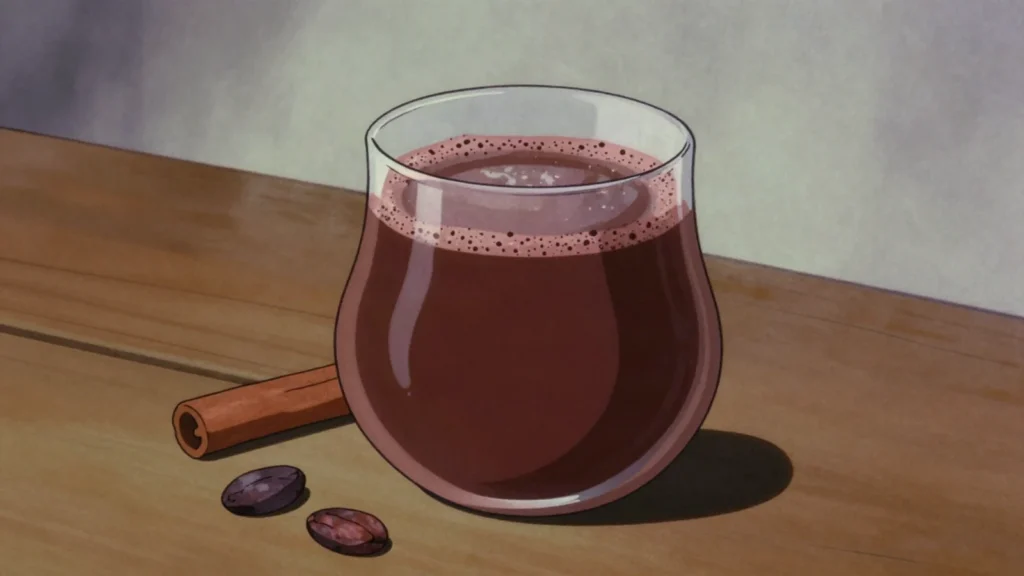
- Taste it and adjust the sugar. It should be gritty in a pleasant way, faintly bitter from the cacao, smoky from the toasted maize and only moderately sweet. Serve it very cold over ice, in a jícara if you have one. The gourd bowl is traditional and it is still used at fiestas and in the market, and it keeps the drink cool. Stir it as you drink, since it settles continuously.
Technique
- Pinolillo is the closely related everyday Nicaraguan maize and cacao drink.
- Ready-ground tiste powder is sold in Nicaraguan markets.
- It separates on standing and is stirred before drinking.
Substitutions
- Ready-ground tiste or pinolillo powder.
- Unsweetened cocoa powder and toasted cornmeal, which is a rough approximation.
Variations
- Pinolillo, lighter and less toasted.
- With more cacao, for a richer drink.
- Made with milk instead of water, which is a modern version.
History
A colonial-era cacao and maize drink of the Pacific lowlands, still served in gourds at fiestas and named from the Nahuatl textli.
Frequently asked questions
What is Tiste?
Tiste is a drink from Nicaragua: cold drink of toasted maize and cacao, whisked and drunk from a jicara. A colonial-era cacao and maize drink of the Pacific lowlands, still served in gourds at fiestas and named from the Nahuatl textli.
How long does Tiste take to make?
Tiste takes 30 min plus cooling of preparation and 30 min of cooking. The recipe makes 6 glasses. It is rated medium to make.
What can I substitute in Tiste?
Yes, within limits. Ready-ground tiste or pinolillo powder. Unsweetened cocoa powder and toasted cornmeal, which is a rough approximation.
What is the most important thing to get right in Tiste?
Stir them without stopping once they begin to colour, since they go from brown to burnt in under a minute and burnt maize makes the whole batch acrid. They are ready when they are deep brown throughout and smell strongly of toasted corn.