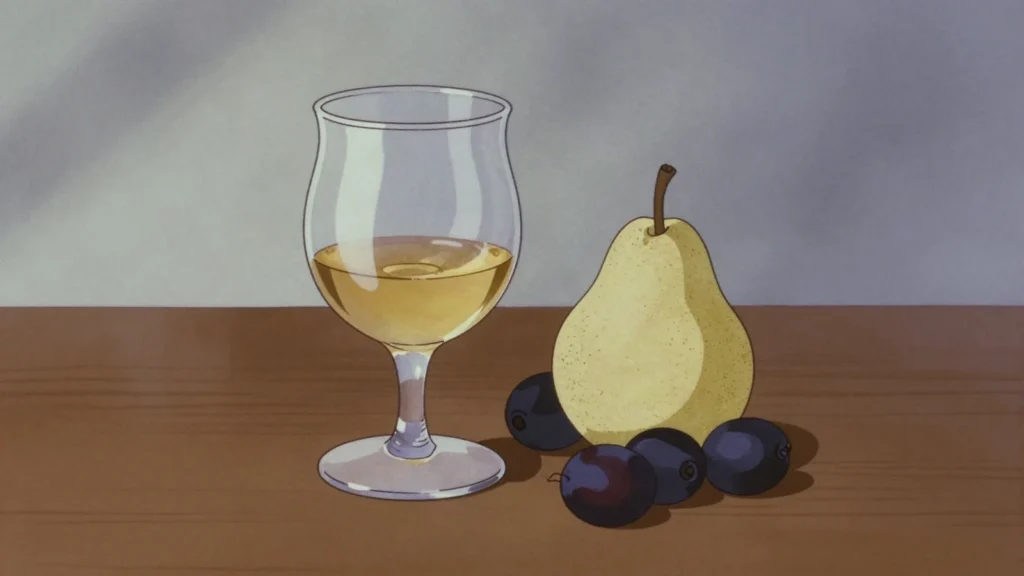

Strong Hungarian fruit brandy of apricot, plum or pear, protected as Hungarian in the EU since 2008. Only fruit grown in Hungary qualifies, and by law nothing may be added — no sugar, no flavouring, no colour.
Distilling is a criminal offence without a licence, and the cut that separates drinkable spirit from methanol-bearing heads is exactly the step home distillers get wrong.
What goes into it
- ripe Hungarian fruit — apricot, plum, pear, cherry or quince
- nothing else
How it is made
Ripe fruit is mashed and fermented on its own sugars for two to four weeks, then distilled twice in copper pot stills. The distiller cuts away the volatile head and the weak tail and keeps only the heart. The spirit rests in glass or wood for months before bottling, and by law nothing is added to it at any point.
How long it takes: weeks to ferment, then months of resting
How it is eaten
In a small tulip glass at room temperature, before a meal or after one.
History
Fruit brandy protected as Hungarian in the EU since 2008; only fruit grown in Hungary qualifies, with no added sugar or flavouring.
Frequently asked questions
What is Pálinka?
Pálinka is a wine & spirit from Hungary: strong fruit brandy of apricot, plum or pear. Fruit brandy protected as Hungarian in the EU since 2008; only fruit grown in Hungary qualifies, with no added sugar or flavouring.
How is Pálinka made?
Ripe fruit is mashed and fermented on its own sugars for two to four weeks, then distilled twice in copper pot stills. The distiller cuts away the volatile head and the weak tail and keeps only the heart. The spirit rests in glass or wood for months before bottling, and by law nothing is added to it at any point. It takes weeks to ferment, then months of resting.
Can I make Pálinka at home?
No, and the atlas gives no method for it. Distilling is a criminal offence without a licence, and the cut that separates drinkable spirit from methanol-bearing heads is exactly the step home distillers get wrong.
What goes into Pálinka?
Ripe Hungarian fruit — apricot, plum, pear, cherry or quince, nothing else.
How is Pálinka eaten?
In a small tulip glass at room temperature, before a meal or after one.