Ingredients
The leaves
- 3 tablespoonsdried mosukujane leaves
- lemon bush
- or a large handful fresh
The water
- 1 litrewater
Sometimes added
- sugar or honey, to taste
- a slice of lemon
- a little milk
- a pinch of ginger
To serve
- hot in cups
- for a cold
- or simply to drink
Directions
- Keep them out of the light as well. Pick over all the dried leaves. Discard any stalks or other debris. It takes only a moment to do it.
- Rub the leaves between your fingers. Crush them as they go into the pot. Bring all the water to a boil. Take it off and let it stand a minute. Put the crushed leaves in a pot. Pour the hot water over the leaves.
- Cover the pot over immediately. A lid keeps them all in the pot. Cover it over every single time. Steeping it takes about ten minutes.
- Let it steep for about ten minutes. Shorter gives a weak thin tea. Taste it if you are at all unsure. It is often brewed strong for a cold.
- Adjust the leaves rather than the time. Pour it all through a fine sieve. Discard all of the spent leaves. Add sugar or honey to your taste. Honey is common when drinking it for a cold.
- Squeeze a little lemon juice into it. Grate a little fresh ginger into the pot. Let it steep along with the leaves. It is common when drinking it for a cold.
- Stir a little milk into the cup. Serving it is always done hot. Pour it out into warm clean cups. Serve it hot rather than warm. It keeps a few hours in a warm pot. Make it fresh wherever you can.
Technique
- Only pick wild leaves you can identify with certainty, and learn from someone who knows the plant rather than from a book alone. In Botswana the knowledge is passed on from childhood, which is how it is learned properly.
- It is drunk for colds, coughs and fevers, a long established and widespread household use — but traditional use is not the same as proven treatment, and the atlas records the use rather than endorsing it. Medicinal plants are not automatically harmless: some interact with medications, so anyone on regular medication should check first, and pregnant people should be cautious with herbal teas. A cup or two a day is ordinary use; concentrated preparations are a different matter.
- Crush the leaves between your fingers as they go into the pot, which breaks the cells and releases the aromatic oils, and cover the pot while it steeps — those oils evaporate with the steam, and a lid makes a real difference. Use water just off the boil, since fully boiling water drives the oils off and brings out bitterness.
Substitutions
- Fresh leaves work in place of dried, using a large handful.
- Ginger grated into the pot adds warmth and is common when drinking it for a cold.
Variations
- The leaves are dried in the shade rather than the sun, which keeps more of the aromatic oils.
- It is brewed strong for a cold and lighter for drinking; adjust the leaves rather than the steeping time.
- Some drink it plain, some sweeten it with honey, and some add milk; all are done.
History
Gathered in the Botswana bush and drunk for colds and coughs as much as for pleasure.
Frequently asked questions
What is Mosukujane?
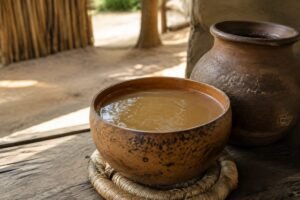
Mosukujane is a drink from Botswana: aromatic wild bush tea steeped from dried lemon-scented leaves. Gathered in the Botswana bush and drunk for colds and coughs as much as for pleasure.
How long does Mosukujane take to make?
Mosukujane takes 5 minutes of preparation and 10 minutes of cooking. The recipe makes serves 4. It is rated easy to make.
What can I substitute in Mosukujane?
Yes, within limits. Fresh leaves work in place of dried, using a large handful. Ginger grated into the pot adds warmth and is common when drinking it for a cold.
What is the most important thing to get right in Mosukujane?
Adjust the leaves rather than the time. Pour it all through a fine sieve. Discard all of the spent leaves. Add sugar or honey to your taste. Honey is common when drinking it for a cold.