
Ingredients
Melons
- 6to 8 small watermelons, 15 to 20 cm across, thin-skinned and just ripe
Brine
- 6 litreswater
- 420 gcoarse non-iodised salt — a 7% brine
Optional
- a few blackcurrant or cherry leaves
- 2 headsdill with stems
- 1small piece horseradish root
Equipment
- a crock, barrel or food-grade bucket
- a plate and a weight
Directions
- Choose small melons that are just ripe, not soft. Overripe melons collapse into pulp in the brine within a fortnight, and a fully unripe one never sours properly — the window is narrow and it is the hardest part of the whole thing.
- Wash them and prick each one deeply eight or ten times with a skewer, right through the rind into the flesh.
- Those holes are what let the brine in and the gas out. Unpricked melons float, ferment only at the skin, and can build enough pressure inside to split.
- Dissolve the salt in the water to a 7 percent brine. It needs to be this strong: a whole melon is mostly sugar and water, and a weaker brine is diluted to nothing by the first week.
- Pack the melons into the crock with the leaves, dill and horseradish, and pour over the brine to cover by 5 cm.
- Weigh them down with a plate. Melons float hard, so the weight must be a real one.
- Keep at room temperature for a week. It will foam and fizz vigorously; skim the foam daily.
- Move to a cold cellar or a cold room, 2 to 8°C (36 to 46°F), for three to five weeks more.
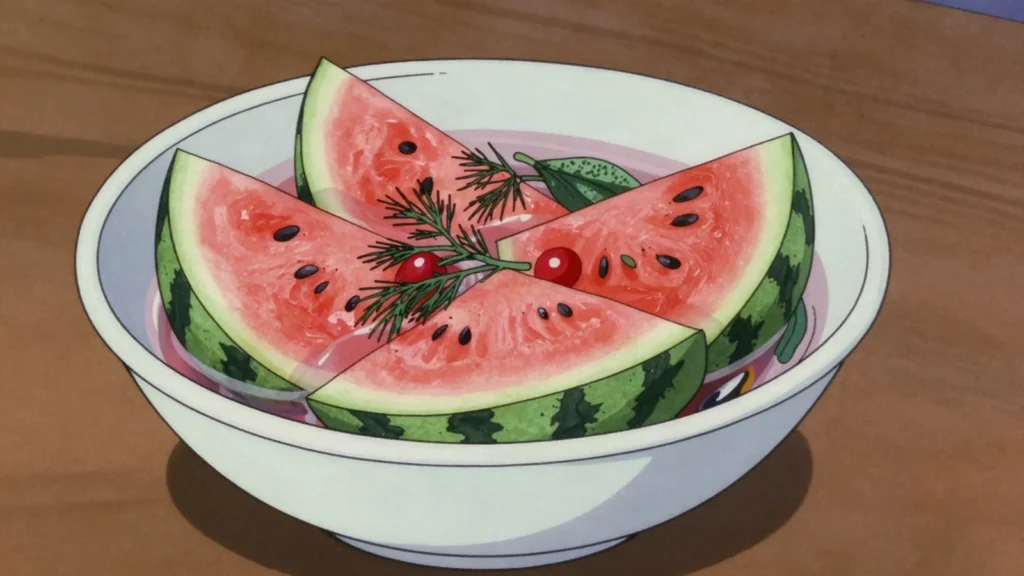
- They are ready when the flesh is sour, slightly fizzy and stained pink-grey, and the rind gives under a thumb. Cut into wedges and eat rind and all, with black bread and vodka.
- They keep two or three months cold. Once out of the brine they must be eaten within a day.
Technique
- Small, just-ripe, thin-skinned melons. Everything depends on this.
- Prick deeply and weigh them down hard.
- Seven percent brine and a cold room after the first week.
Substitutions
- Melons cut into wedges and fermented in jars, which is faster and far easier to manage.
- A few slices of apple or a head of cabbage in the crock, as is done in Kherson.
- Sugar or honey added, which makes a sweeter, fizzier melon.
Variations
- The Russian solyonye arbuzy from the Volga is the same preserve.
- The brine is drunk cold, as with every Slavic ferment.
History
A southern Ukrainian preserve from the Kherson melon fields, barrelled whole for winter.
Frequently asked questions
What is Kvasheni kavuny?
Kvasheni kavuny is a fermented & pickled from Ukraine: small whole watermelons fermented in salt brine, sour and fizzy. A southern Ukrainian preserve from the Kherson melon fields, barrelled whole for winter.
How long does Kvasheni kavuny take to make?
Kvasheni kavuny takes 30 min plus 3 to 6 weeks fermenting of preparation and no cooking at all. The recipe makes fills a 10-litre crock. It is rated medium to make.
What can I substitute in Kvasheni kavuny?
Yes, within limits. Melons cut into wedges and fermented in jars, which is faster and far easier to manage. A few slices of apple or a head of cabbage in the crock, as is done in Kherson. Sugar or honey added, which makes a sweeter, fizzier melon.
What is the most important thing to get right in Kvasheni kavuny?
Choose small melons that are just ripe, not soft. Overripe melons collapse into pulp in the brine within a fortnight, and a fully unripe one never sours properly — the window is narrow and it is the hardest part of the whole thing.