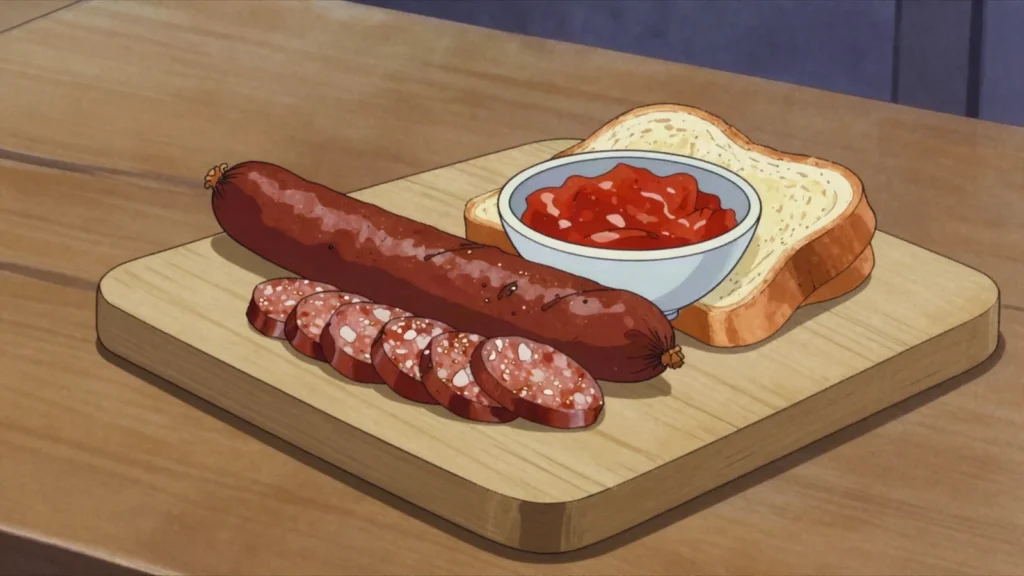

A flat, dark, air-dried Bulgarian sausage of pork and beef, heavy with cumin and black pepper, pressed between boards as it dries so it ends up oval in section. The Panagyurishte and Smyadovo types are protected regional specialities.
This is raw meat cured over weeks at ambient temperature, where safety rests on nitrite level, water activity and pH targets measured with instruments — not judged by look — and a failed batch is botulism rather than a bad flavour.
What goes into it
- pork
- beef
- pork fat
- salt and curing salt
- cumin
- black pepper
- allspice
- beef casing
How it is made
Coarsely minced meat and fat are mixed with salt and spices, packed into wide casings and hung in a cold, airy room. Over several weeks the sausage is repeatedly pressed flat between wooden boards, which drives out air pockets and evens the dry, while it loses around 40% of its weight and a white surface mould develops.
How long it takes: 40 to 60 days of drying
How it is eaten
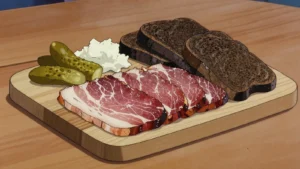
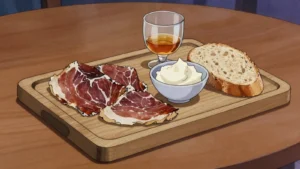
Sliced thin as meze with rakia, or in a sandwich with lyutenitsa.
History
Pressed flat between boards as it dries; the Panagyurishte and Smyadovo types are protected regional specialities.
Frequently asked questions
What is Lukanka?
Lukanka is a charcuterie & cured from Bulgaria: flattened, air-dried pork-and-beef sausage with cumin and pepper. Pressed flat between boards as it dries; the Panagyurishte and Smyadovo types are protected regional specialities.
How is Lukanka made?
Coarsely minced meat and fat are mixed with salt and spices, packed into wide casings and hung in a cold, airy room. Over several weeks the sausage is repeatedly pressed flat between wooden boards, which drives out air pockets and evens the dry, while it loses around 40% of its weight and a white surface mould develops. It takes 40 to 60 days of drying.
Can I make Lukanka at home?
No, and the atlas gives no method for it. This is raw meat cured over weeks at ambient temperature, where safety rests on nitrite level, water activity and pH targets measured with instruments — not judged by look — and a failed batch is botulism rather than a bad flavour.
What goes into Lukanka?
Pork, beef, pork fat, salt and curing salt, cumin, black pepper, allspice, beef casing.
How is Lukanka eaten?
Sliced thin as meze with rakia, or in a sandwich with lyutenitsa.