
Ingredients
Rice
- 800 glong grain rice
- rinsed and drained
- water, for boiling
- 1 teaspoonsalt
Pouches
- young palm leaves
- coconut or lontar
- or 12 muslin bags
- or foil parcels
Sometimes added
- 400 mlcoconut milk
- in place of some water
- 2pandan leaves
To serve
- grilled or stewed meat
- vegetable dishes
- sambal
- at feasts and holidays
Directions
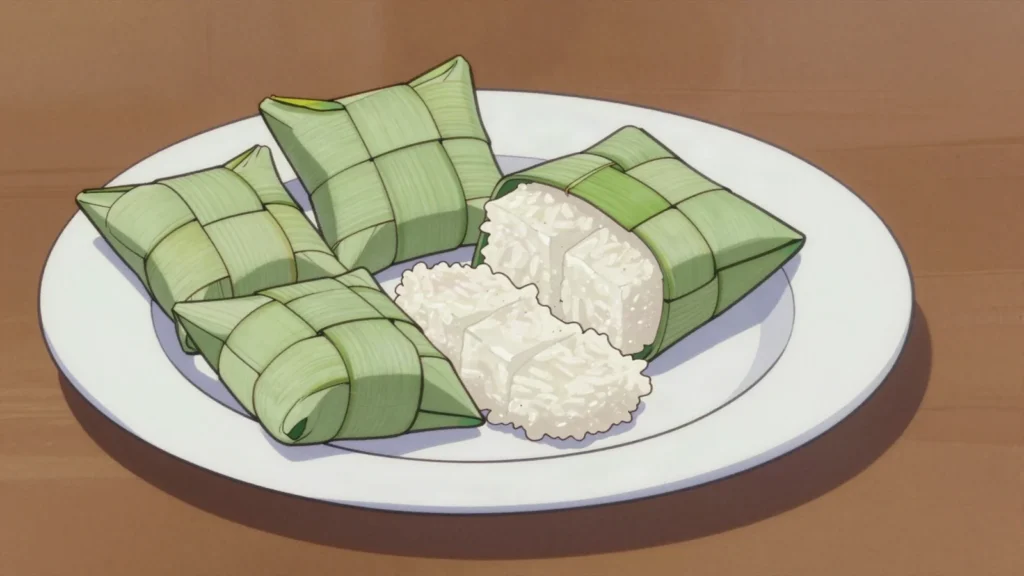
- Take two long strips of young leaf. Fold each strip over into a loop. Work them around until a pouch forms. Fill them half full and tie them. Rinse the rice until the water runs clear.
- Drain the rinsed rice very thoroughly. Some cooks soak it for an hour first. Spoon rice in through that opening. Fill the pouch only about halfway up.
- Shake it a little to settle the rice. Add salt to the rice as you fill. Put the pouches in a very large pot. Cover them well with plenty of water. Add a good amount of salt to the water.
- Bring the pot up to a rolling boil. The pouches must stay under the water. Top up with boiling water as it reduces. Boiling them takes several hours.
- Let it boil steadily for three hours. Some cooks give them a full four hours. Check on it every half hour or so. Judging when they are done takes a test. Lift the pouches out of the water. Hang them or set them on a rack.
- Let them drain for at least an hour. Draining thoroughly is what makes it keep.
- Cut the pouch open with a knife. Turn the solid rice block out of it. Cut it into thick slices or cubes. Serve grilled or stewed meat with it. It keeps three days at room temperature.
Technique
- Raw rice half fills the woven pouch and swells as it boils, expanding to fill it completely and compressing against the weave into a dense block far firmer than boiled rice, which holds its shape when cut.
- The pouch must be only half to two thirds filled, since rice roughly doubles; overfilling bursts it open and underfilling gives a loose soft result.
- The pouches travel and keep without a container, which suited journeys and communal meals and feeds a crowd in portions already made; thorough draining after boiling is what makes them keep.
Substitutions
- Muslin bags or foil parcels give the same compression without the leaf flavour.
- Some of the water can be replaced with coconut milk for a richer rice.
Variations
- Ketupat across the Malay world is the same preparation under another name.
- Different regions weave diamonds, squares and triangles.
- It is made for Christmas, Ramadan and feasts alike in Timor-Leste.
History
Rice steamed inside a woven palm-leaf pouch, shared with the wider Malay world and eaten at feasts, Christmas and Ramadan.
Frequently asked questions
What is Katupa?
Katupa is a salad & side from Timor-Leste: rice steamed in woven palm-leaf pouches. Rice steamed inside a woven palm-leaf pouch, shared with the wider Malay world and eaten at feasts, Christmas and Ramadan.
How long does Katupa take to make?
Katupa takes 1 hour plus weaving of preparation and 3 hours of cooking. The recipe makes about 12 pouches. It is rated hard to make.
What can I substitute in Katupa?
Yes, within limits. Muslin bags or foil parcels give the same compression without the leaf flavour. Some of the water can be replaced with coconut milk for a richer rice.
What is the most important thing to get right in Katupa?
Bring the pot up to a rolling boil. The pouches must stay under the water. Top up with boiling water as it reduces. Boiling them takes several hours.