
Ingredients
Cabbage
- 3 kgwhite cabbage, shredded fine
- 60 gcoarse non-iodised salt — 2% of the cabbage weight
- 2carrots, grated
- 1 tbspcaraway seed
- 6juniper berries, crushed
Optional
- 1apple, quartered
- a few bay leaves
Directions
- Shred the cabbage as finely as you can and weigh it, then take exactly 2% of that weight in salt. Weighing is the only measurement that matters here — too little and it goes soft, too much and the ferment stalls.
- Toss with the salt, carrot, caraway and juniper and leave 30 minutes.
- Now work it hard by the handful for ten minutes, squeezing until the cabbage collapses to about half its volume and sits in a pool of its own liquid. In Poland this was traditionally done by treading it in a barrel, and the principle is the same: crush it until it makes its own brine.
- Pack it into the crock a handful at a time, pressing each layer down firmly so the brine rises above the cabbage.
- Lay whole outer leaves on top, then a plate and a weight, so every shred sits below the liquid.
- Cover loosely and ferment at cool room temperature, 16 to 20°C (61 to 68°F), for about four weeks. Skim any white film off the surface as it appears.
- Pierce down to the bottom with a clean wooden spoon handle every few days in the first week, which releases trapped carbon dioxide and stops it turning bitter.
- Taste from week three. When it is sour enough, move it somewhere cold. It keeps for months and underpins bigos and kapuśniak all winter.
Technique
- Two percent by weight, on a scale.
- Pierce it to release gas in the first week. Trapped CO2 gives a bitter edge that never fully goes.
- Everything below the brine, always.
Substitutions
- Dill seed or bay in place of juniper.
- Grated beetroot for a pink crock.
- A splash of brine from a working crock to speed the start.
Variations
- The German Sauerkraut, Czech kysané zelí and Latvian skābēti kāposti are the same preserve.
- Stewed with sausage, prunes and mushrooms into bigos, which improves over several reheatings.
History
Polish households shredded and trod cabbage into barrels each autumn; it underpins bigos and kapuśniak.
Frequently asked questions
What is Kapusta kiszona?
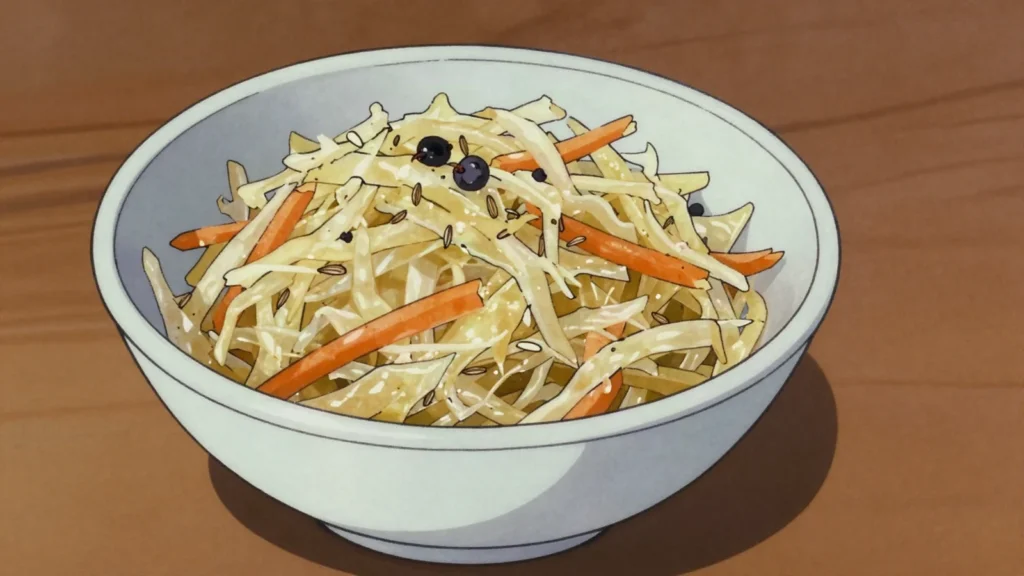
Kapusta kiszona is a fermented & pickled from Poland: salt-fermented cabbage eaten raw in salads or stewed with meat. Polish households shredded and trod cabbage into barrels each autumn; it underpins bigos and kapuśniak.
How long does Kapusta kiszona take to make?
Kapusta kiszona takes 40 min plus 4 weeks fermenting of preparation and no cooking at all. The recipe makes fills a 5-litre crock. It is rated easy to make.
What can I substitute in Kapusta kiszona?
Yes, within limits. Dill seed or bay in place of juniper. Grated beetroot for a pink crock. A splash of brine from a working crock to speed the start.
What is the most important thing to get right in Kapusta kiszona?
Shred the cabbage as finely as you can and weigh it, then take exactly 2% of that weight in salt. Weighing is the only measurement that matters here — too little and it goes soft, too much and the ferment stalls.