
Ingredients
Grapes and regions
- Cabernet Sauvignon, Syrah, Merlot and Petit Verdot from the Upper Galilee and Golan Heights
- old-vine Carignan and Marselan from the Judean foothills
- Chardonnay, Sauvignon Blanc and Roussanne from high-altitude Judean Hills vineyards
- indigenous Marawi (Hamdani) and Dabouki, revived since 2014
Cellar
- selected or ambient yeast
- sulphur dioxide, about 30–50 mg per litre
- bentonite clay for fining, keeping the wine vegetarian
- French oak barriques, 225 litres, a portion new
To serve
- a stemmed tulip glass
- reds at 16–18°C (60–65°F), whites at 8–10C
- a decanter for young Galilee reds
Directions
- Harvest at night or at first light between late July and October, far earlier than in Europe, because the Mediterranean and desert heat pushes sugar up fast while acidity falls away.
- Sort the fruit, destem and crush. For red wine the juice stays with the skins; for white it is pressed off immediately and settled cold.
- Cool the must. Temperature control is the central technical problem of winemaking in a hot country and is why the modern Israeli industry only became serious in the 1980s with the planting of the Golan Heights.
- Ferment reds at 26–28°C (80–80°F) for 7–10 days with pump-overs twice daily to extract colour and tannin; ferment whites at 14–16°C (55–60°F) in stainless steel for 2–3 weeks.
- Press the reds off the skins, then allow malolactic fermentation to soften the acidity.
- Mature reds in French oak for 12–18 months, racking every few months. Whites are held on their lees, in steel or partly in barrel.
- For a kosher wine, every stage from crushing onward is carried out only by Sabbath-observant Jews; wine intended to remain kosher when poured by anyone else is flash-pasteurised to about 80°C (175°F) and labelled mevushal. Vineyards also observe orlah, no fruit for the first three years, and the sabbatical shmita year.
- Fine with bentonite, filter lightly, bottle, and age a further 6–12 months before release.
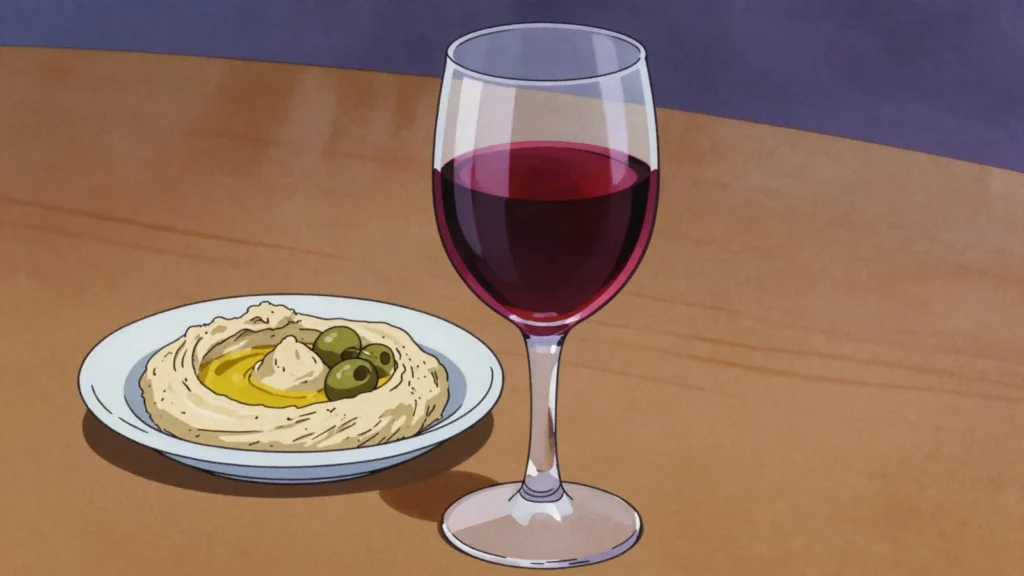
- Serve reds at 16–18°C (60–65°F), decanting young Galilee Cabernet for an hour; serve whites and the revived Marawi at 8–10C with mezze, grilled vegetables and fresh cheeses.
Technique
- Wine has been made in this land for millennia, but the modern industry dates to Baron Edmond de Rothschild’s investment at Rishon LeZion and Zichron Ya’akov in the 1880s, which is why the early style was so French.
- Not all Israeli wine is kosher and kosher certification says nothing about quality; several respected boutique wineries are deliberately non-kosher, while many of the best are certified.
- Altitude does the work that latitude cannot. The best vineyards sit at 700–1200 metres in the Golan and Judean Hills, where cold nights preserve acidity.
- The revival of indigenous Marawi and Dabouki grapes, from vines identified in Palestinian villages, has become the most interesting development of the last decade.
Substitutions
- For a similar profile from elsewhere, look to Lebanese Bekaa Valley reds or warm-climate Carignan from the Languedoc.
- If a recipe or a pairing calls for a crisp Mediterranean white and no Israeli bottle is available, a Greek Assyrtiko sits in a similar place.
Variations
- Golan Heights Winery, Yarden and Galil Mountain define the northern style; Tzora, Domaine du Castel and Flam the Judean Hills.
- Yayin Kafrit, small-scale village wine, is made in clay and concrete without oak.
- Sweet late-harvest Gewurztraminer and dessert wines from the Golan are a long-standing speciality.
History
Baron Edmond de Rothschild funded the first modern wineries in the 1880s; boutique estates and Golan plantings revived quality from the 1980s.
Frequently asked questions
What is Israeli wine?
Israeli wine is a wine & spirit from Israel: mediterranean reds and whites from the Galilee, Golan and Judean hills. Baron Edmond de Rothschild funded the first modern wineries in the 1880s; boutique estates and Golan plantings revived quality from the 1980s.
How long does Israeli wine take to make?
Israeli wine takes n/a, this is a winery process of preparation and harvest to release: 1 to 3 years of cooking. The recipe makes one 750 ml bottle, from about 1.2 kg of grapes. It is rated hard to make.
What can I substitute in Israeli wine?
Yes, within limits. For a similar profile from elsewhere, look to Lebanese Bekaa Valley reds or warm-climate Carignan from the Languedoc. If a recipe or a pairing calls for a crisp Mediterranean white and no Israeli bottle is available, a Greek Assyrtiko sits in a similar place.
What is the most important thing to get right in Israeli wine?
Cool the must. Temperature control is the central technical problem of winemaking in a hot country and is why the modern Israeli industry only became serious in the 1980s with the planting of the Golan Heights.