
Ingredients
- 600 gLao or Thai long-grain glutinous rice (khao niaw)
- Cold water, to cover by 5 cm
- 1 pinchsalt, optional and not traditional
Equipment
- 1bamboo steaming basket (huad) and its conical pot (maw nueng), or a metal steamer lined with muslin
- 1tip khao (lidded bamboo serving basket) or a cloth-lined bowl
Directions
- Rinse the rice in two changes of cold water until it runs cloudy rather than milky, then cover with cold water by 5 cm and soak 8 hours or overnight. In Laos this is the last job of the evening.
- Squeeze a grain between finger and thumb: properly soaked rice crushes to paste with no hard core. Under-soaked rice steams chalky in the centre and no amount of extra time fixes it.
- Drain the rice thoroughly in a colander for 5 minutes. Wet rice sticks to the basket and steams unevenly.
- Fill the conical pot one third with water and bring to a rolling boil. Tip the drained rice into the damp bamboo basket, shaping it into a low mound, and set the basket over the pot so no steam escapes at the join.
- Steam uncovered, or under a loose lid, for 15 minutes, until the top surface darkens and turns glossy.
- Flip the whole mass over in one motion, jerking the basket upwards so the rice turns as a single cake, and steam 10–15 minutes more. It is done when every grain is translucent and a pinch pulls away in a springy, shiny lump.
- Turn the rice out onto a clean board or bamboo mat and paddle it back and forth for about a minute to drive off steam. Skipping this leaves the bottom layer soggy.
- Pack the rice into a tip khao, close the lid and let it settle 5 minutes. Serve warm; eat by pinching off a walnut-sized piece with the right hand and rolling it into a firm ball to dip and scoop.
Technique
- Glutinous rice contains almost no amylose, which is why it is steamed and never boiled. Boiling turns it to porridge.
- The bamboo basket matters: it wicks away surface moisture as the rice cooks, giving separate, chewy grains. A metal steamer traps condensation, so line it with muslin and leave the lid slightly ajar.
- Sticky rice hardens as it cools but revives completely with 5 minutes back in the steamer. Never microwave it in a bowl of water.
- Lao households eat sticky rice at every meal and treat it as the plate as much as the food: it is used to pinch up salads, dips and grilled things.
Substitutions
- If you can only find Chinese short-grain sweet rice, soak just 4 hours and steam 20 minutes; the grains will be rounder and stickier but perfectly usable.
- No bamboo basket: line a metal steamer with a double layer of muslin, spread the rice 4 cm deep and fold the cloth over the top.
Variations
- Khao niaw dam, made with black glutinous rice, soaked 24 hours and steamed longer, eaten with coconut cream.
- Khao niaw mamuang, the sweet version dressed in salted coconut cream and served with ripe mango.
History
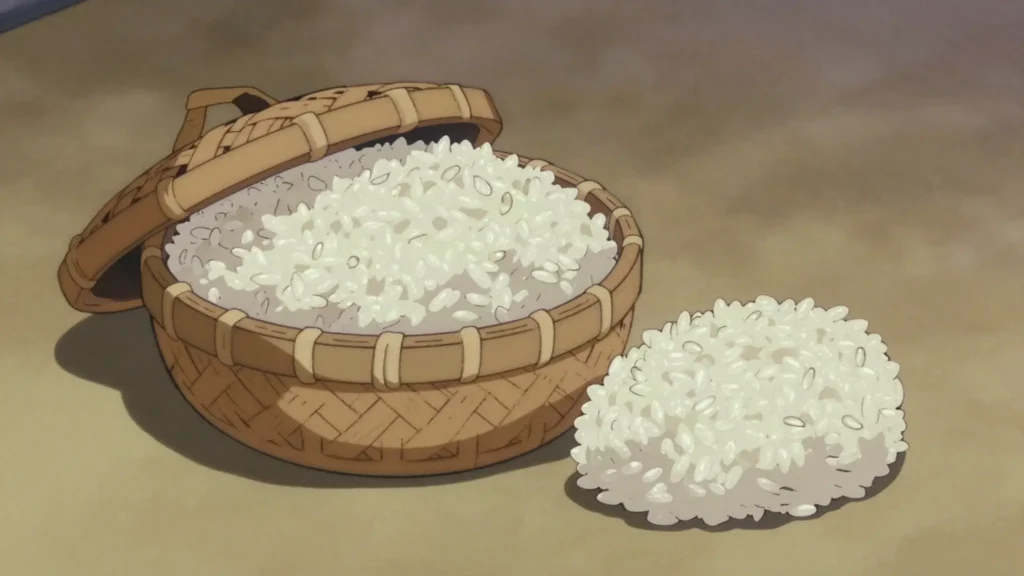
Laos has the world’s highest per-person consumption of glutinous rice; it is steamed in bamboo and served in woven tip khao baskets.
Frequently asked questions
What is Sticky Rice?
Sticky Rice is a salad & side from Laos: steamed glutinous rice rolled by hand, the true Lao staple. Laos has the world’s highest per-person consumption of glutinous rice; it is steamed in bamboo and served in woven tip khao baskets.
How long does Sticky Rice take to make?
Sticky Rice takes 10 min plus overnight soak of preparation and 35 min of cooking. The recipe makes 4 servings. It is rated easy to make.
What can I substitute in Sticky Rice?
Yes, within limits. If you can only find Chinese short-grain sweet rice, soak just 4 hours and steam 20 minutes; the grains will be rounder and stickier but perfectly usable. No bamboo basket: line a metal steamer with a double layer of muslin, spread the rice 4 cm deep and fold the cloth over the top.
What is the most important thing to get right in Sticky Rice?
Rinse the rice in two changes of cold water until it runs cloudy rather than milky, then cover with cold water by 5 cm and soak 8 hours or overnight. In Laos this is the last job of the evening.