
Ingredients
What goes into the still (industrial)
- Muscat of Alexandria grapes grown between 1,600 and 3,000 m in the Cinti and Tarija valleys
- wild and cultured yeasts for a cool 10–15 day fermentation
- copper alembic pot stills, or in larger houses continuous column stills
- stainless steel or glass tanks for a short rest before bottling
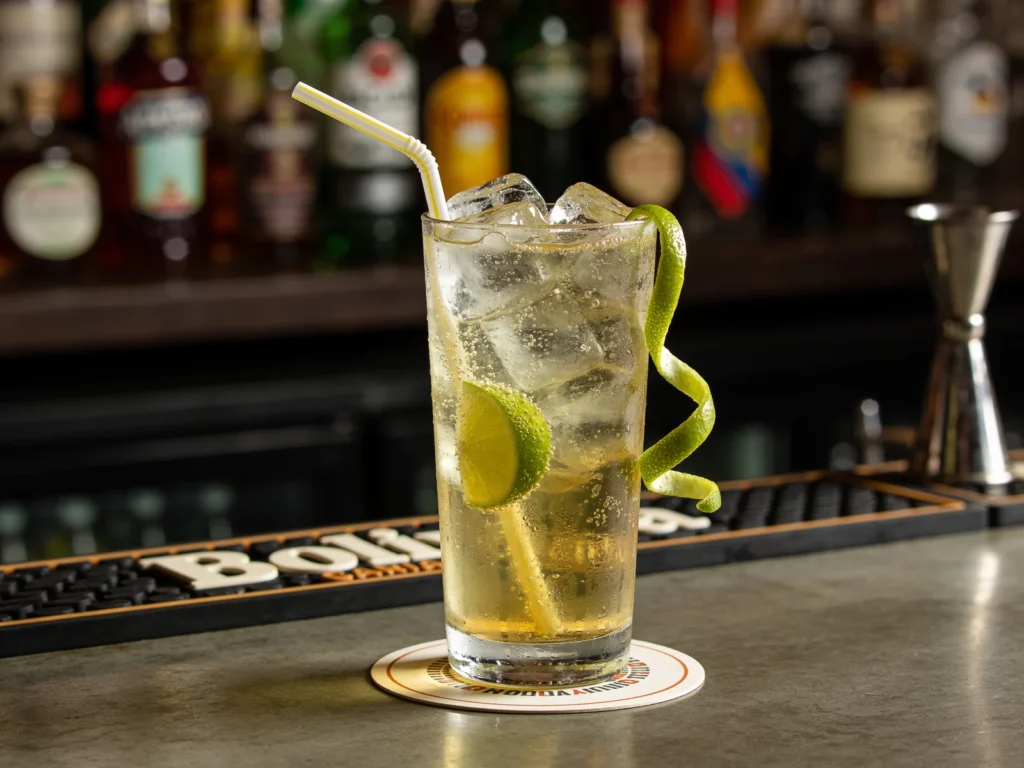
Chuflay, the national serve
- 60 mlSingani (Singani de Altura or Primera)
- 120 mlginger ale, or lemon-lime soda
- 1lime wedge
- ice cubes, to fill
- 1long lime twist
Neat serve
- 45 mlGran Singani, at 10–12°C (50–55°F)
- a tulip glass
Directions
- Understand what it is: Singani is a grape brandy, made only from Muscat of Alexandria and only in a defined high-altitude zone of southern Bolivia, protected by denomination of origin since 1988. It is not a rum, and it is not pisco, though it sits close to Peruvian and Chilean brandies in style.
- The grapes are grown at extreme altitude, where thin air and hard ultraviolet light thicken the skins and concentrate the aromatic compounds — this is why Singani smells so intensely of white flowers, peach and citrus peel.
- They are picked in February and March, pressed and fermented cool and slowly for ten to fifteen days to preserve those aromatics.
- The wine is distilled, usually once, to about 40 percent. The distiller cuts hard, keeping only a narrow aromatic heart; the heads and tails are discarded or redistilled.
- The spirit rests a few months in inert stainless steel or glass, never in oak. Singani is bottled clear and unaged, which is why it tastes of the grape rather than the barrel.
- For a chuflay, fill a highball with ice, pour the Singani over, then top with ginger ale. Squeeze the lime wedge in and drop it into the glass.
- Stir once with a bar spoon, add the long twist and serve. Do not shake — the point is a long, cold, aromatic highball.
- To taste it neat, use a tulip glass at cellar temperature and let it sit two minutes; it should smell floral and grapey with no burn on the nose. Bolivians drink it this way at altitude and mixed in the lowlands.
Technique
- Do not attempt home distilling. It is illegal without a licence in most countries and badly cut spirit carries a real risk of methanol poisoning.
- Singani is graded by the altitude of the vineyard and the quality of the cut: Singani de Altura is the base category at 1,600 m and above, with Primera and Gran Singani above it.
- It is the only spirit made this way at this altitude, and the Cinti valley vines, some trained up native molle trees, are among the oldest continuously farmed in South America.
- Chuflay is said to be named after a ‘short fly’ — a British railway engineer’s improvised drink of Singani and ginger ale when the gin ran out. The story is repeated everywhere in Bolivia and is impossible to verify.
Substitutions
- No Singani where you live: a Peruvian pisco Italia or Torontel, made from the same Muscat family, is the nearest match in aroma, though it is generally rounder and less floral.
- Ginger ale is the classic mixer, but Bolivians frequently use lemon-lime soda, which makes a sweeter, lighter chuflay.
Variations
- Yungueñito: 60 ml Singani shaken hard with 90 ml fresh orange juice and a teaspoon of sugar, served in a chilled coupe.
- Poncho Negro: Singani lengthened with cold black tea, sugar and lemon, drunk in the Yungas.
History
Distilled in the Cinti and Tarija valleys since the 16th century to supply Potosi’s silver mines; US regulators recognised it as distinctly Bolivian.
Frequently asked questions
What is Singani?
Singani is a wine & spirit from Bolivia: aromatic brandy distilled from high-altitude Muscat of Alexandria grapes. Distilled in the Cinti and Tarija valleys since the 16th century to supply Potosi’s silver mines; US regulators recognised it as distinctly Bolivian.
How long does Singani take to make?
Singani takes 5 min of preparation and Harvest to bottle, about 6 months of cooking. The recipe makes 1 bottle to serve many, plus 1 chuflay. It is rated easy to make.
What can I substitute in Singani?
Yes, within limits. No Singani where you live: a Peruvian pisco Italia or Torontel, made from the same Muscat family, is the nearest match in aroma, though it is generally rounder and less floral. Ginger ale is the classic mixer, but Bolivians frequently use lemon-lime soda, which makes a sweeter, lighter chuflay.
What is the most important thing to get right in Singani?
The spirit rests a few months in inert stainless steel or glass, never in oak. Singani is bottled clear and unaged, which is why it tastes of the grape rather than the barrel.