
Ingredients
Brew
- 1 kgdried mogwana berries (Grewia flava), rinsed
- 1 kgbrown sugar
- 4 litresclean water, at blood heat
- 200 gsorghum malt meal, or 7 g baker’s yeast for a reliable start
Equipment
- 1food-grade plastic drum or clay pot of 8 litres
- 1clean cotton cloth and string
- 1long wooden stirring stick
Directions
- Sort the berries, discarding any mouldy fruit, and rinse in cold water. Crush them lightly with a wooden pestle so the skins split but the stones stay whole.
- Dissolve the sugar in 1 litre of hot water, then top up with cool water until the whole batch sits at about 35°C (95°F) — warm enough to start the ferment, cool enough not to kill it.
- Tip the crushed berries into the drum, pour over the sweet water, and stir with the clean wooden stick.
- Stir in the sorghum malt meal or the yeast. Traditionally a cupful of a previous batch goes in instead, carrying its own wild yeasts.
- Cover the mouth with the cloth tied down against flies, and stand the drum somewhere warm and shaded, around 25 to 30°C (85°F).
- Stir once each morning. By day two the surface should be foaming and smelling of cider; by day three it turns sharp and yeasty.
- Taste from day three. When the sweetness has mostly gone and the brew is tart with a light fizz, it is ready — typically 3 days in summer heat, 5 in winter.
- Strain through cloth into jugs and drink cold within a day or two, cloudy and unfiltered, straight from a cup.
Technique
- Khadi is a home brew, and it is exactly the kind of drink that gets adulterated. Nothing belongs in it but berries, sugar, water and a yeast starter — never battery acid, methylated spirits or tobacco, all of which have been reported in illicit versions and are genuinely dangerous.
- It keeps fermenting in the jug. After about three days it turns vinegary and flat, so it is brewed in small batches and drunk young.
- Strength lands roughly between 3 and 6 percent alcohol depending on time and temperature; there is no way to know accurately without a hydrometer reading before and after.
Substitutions
- Mogwana berries are hard to buy outside southern Africa. Raisins plus a handful of dried hibiscus give a similar sugar-and-tartness balance, though not the same resinous fruit note.
Variations
- Some brewers add a few crushed marula fruits in season for extra aroma.
- A stronger household version doubles the sugar and ferments a full week, giving a much sharper, headier drink.
History
Made in western Botswana from motlhatswa berries gathered in the bush; long informal, it has been promoted as a marketable Botswana product.
Frequently asked questions
What is Khadi?
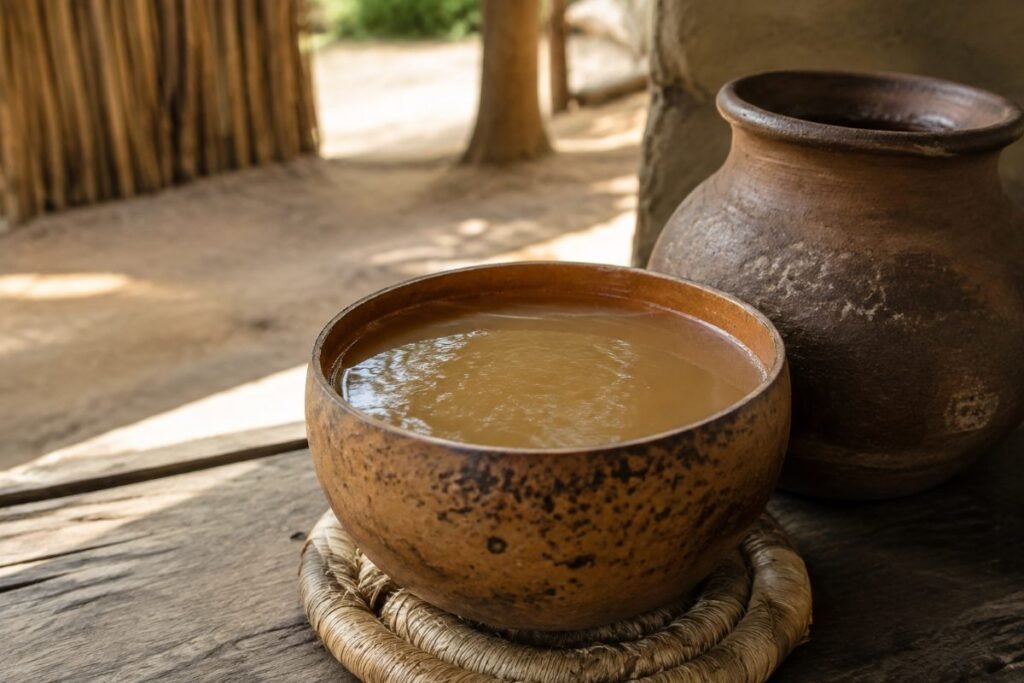
Khadi is a wine & spirit from Botswana: country brew of wild grewia berries fermented with sugar, sharp and cloudy. Made in western Botswana from motlhatswa berries gathered in the bush; long informal, it has been promoted as a marketable Botswana product.
How long does Khadi take to make?
Khadi takes 30 min of preparation and 3 to 5 days fermenting of cooking. The recipe makes about 4 litres. It is rated medium to make.
What can I substitute in Khadi?
Yes, within limits. Mogwana berries are hard to buy outside southern Africa. Raisins plus a handful of dried hibiscus give a similar sugar-and-tartness balance, though not the same resinous fruit note.
What is the most important thing to get right in Khadi?
Dissolve the sugar in 1 litre of hot water, then top up with cool water until the whole batch sits at about 35°C (95°F) — warm enough to start the ferment, cool enough not to kill it.