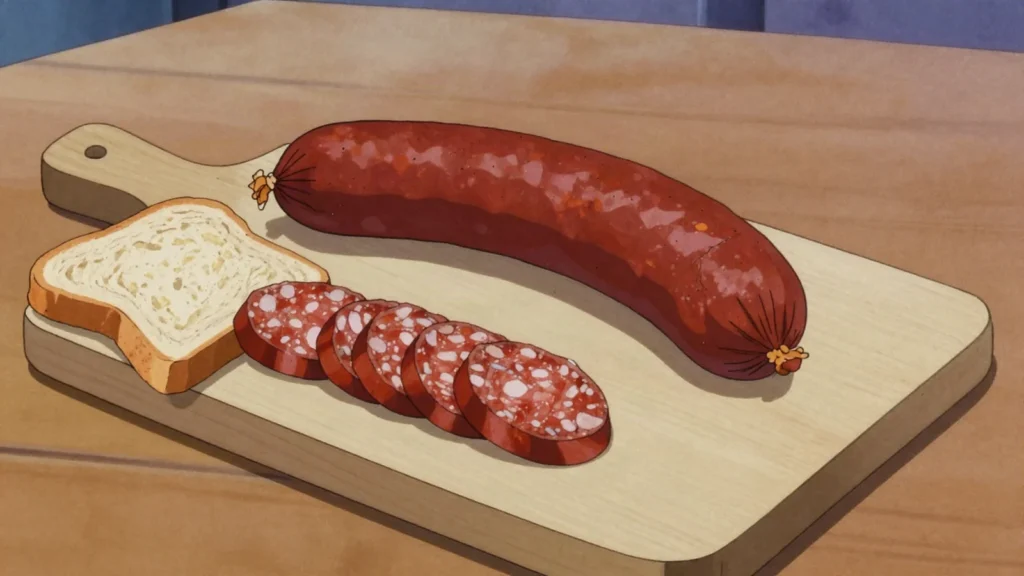

Paprika-cured pork sausage, eaten sliced raw when fully cured or cooked into stews when soft. It became red only after American peppers reached Spain; smoked pimentón from La Vera in Extremadura has coloured it since the sixteenth century.
It is a fermented raw-meat cure where safety depends on nitrite level, pH and water activity hitting measured targets in the first days, and a failure is botulism rather than a poor flavour.
What goes into it
- pork shoulder and fat
- salt and curing salt
- pimentón — smoked or sweet paprika, in quantity
- garlic
- natural casings
How it is made
Chopped pork and fat are mixed with salt, garlic and a great deal of pimentón, rested a day, then stuffed into casings and hung in a cool airy room. Bacteria drop the pH over the first days, and the sausage then dries for weeks or months, losing a third or more of its weight. The paprika’s oils coat the meat and slow oxidation as well as colouring it.
How long it takes: three weeks to several months, depending on diameter
How it is eaten
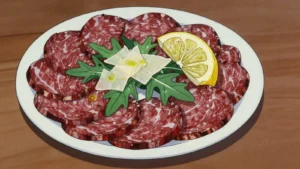
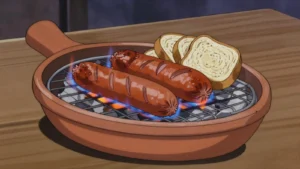
Sliced thin with bread and wine when cured, or cut into lentils, cocido and eggs when soft.
History
It became red only after American peppers reached Spain; smoked pimentón from La Vera in Extremadura has coloured it since the sixteenth century.
Frequently asked questions
What is Chorizo?
Chorizo is a charcuterie & cured from Spain: paprika-cured pork sausage, eaten sliced raw or cooked in stews. It became red only after American peppers reached Spain; smoked pimentón from La Vera in Extremadura has coloured it since the sixteenth century.
How is Chorizo made?
Chopped pork and fat are mixed with salt, garlic and a great deal of pimentón, rested a day, then stuffed into casings and hung in a cool airy room. Bacteria drop the pH over the first days, and the sausage then dries for weeks or months, losing a third or more of its weight. The paprika’s oils coat the meat and slow oxidation as well as colouring it. It takes three weeks to several months, depending on diameter.
Can I make Chorizo at home?
No, and the atlas gives no method for it. It is a fermented raw-meat cure where safety depends on nitrite level, pH and water activity hitting measured targets in the first days, and a failure is botulism rather than a poor flavour.
What goes into Chorizo?
Pork shoulder and fat, salt and curing salt, pimentón — smoked or sweet paprika, in quantity, garlic, natural casings.
How is Chorizo eaten?
Sliced thin with bread and wine when cured, or cut into lentils, cocido and eggs when soft.