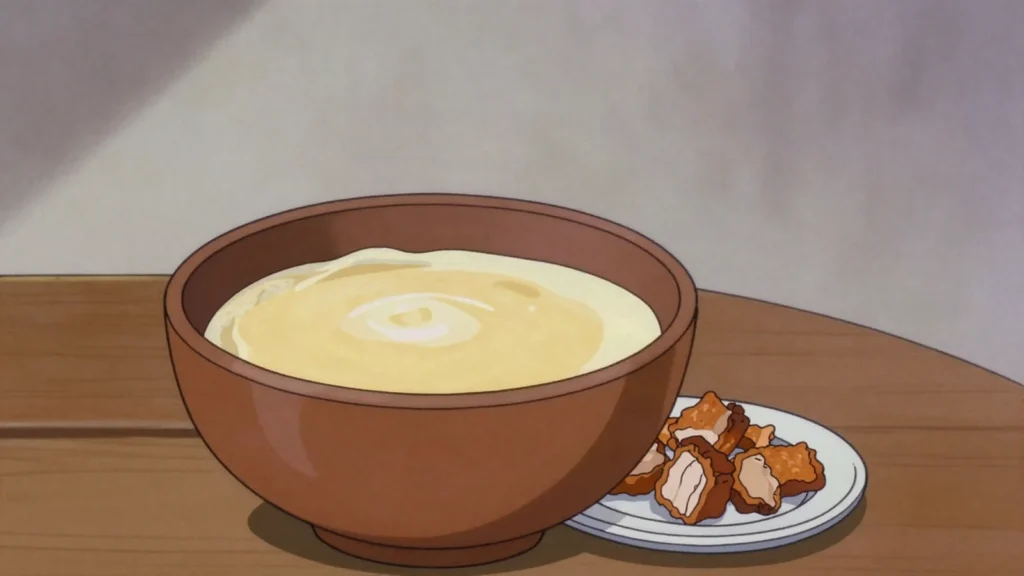

The maize beer of the Cochabamba valley, sold in chicherías that fly a white flag from a pole when a fresh batch is ready. It is cloudy, faintly sour, low in alcohol and drunk from a wide bowl, with the first splash tipped onto the ground for the earth.
Brewing alcohol at home is licensed or restricted in most countries, and the fermentation depends on the resident culture of jars used for generations.
What goes into it
- maize, often the willkaparu variety
- water
How it is made
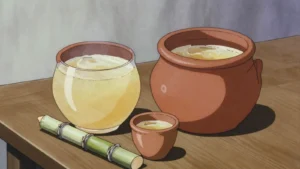
Maize is sprouted and dried to make malt, ground, and boiled for hours into a sweet wort. That wort is cooled and left to ferment in large clay jars, where wild yeasts and lactic bacteria already living in the porous walls of the jar take it over. The character of a chichería’s chicha comes from its own jars as much as its maize.
How long it takes: several days from grinding to serving
How it is eaten
From a bowl or a cut-down plastic cup at a chichería, alongside fried pork; the first pour goes to the Pachamama.
History
Cochabamba valley chicherias fly a white flag when a fresh batch is ready; the maize is ground, boiled and fermented in clay jars.
Frequently asked questions
What is Chicha cochabambina?
Chicha cochabambina is a wine & spirit from Bolivia: fermented maize beer drunk from a bowl at roadside chicherias. Cochabamba valley chicherias fly a white flag when a fresh batch is ready; the maize is ground, boiled and fermented in clay jars.
How is Chicha cochabambina made?
Maize is sprouted and dried to make malt, ground, and boiled for hours into a sweet wort. That wort is cooled and left to ferment in large clay jars, where wild yeasts and lactic bacteria already living in the porous walls of the jar take it over. The character of a chichería’s chicha comes from its own jars as much as its maize. It takes several days from grinding to serving.
Can I make Chicha cochabambina at home?
No, and the atlas gives no method for it. Brewing alcohol at home is licensed or restricted in most countries, and the fermentation depends on the resident culture of jars used for generations.
What goes into Chicha cochabambina?
Maize, often the willkaparu variety, water.
How is Chicha cochabambina eaten?
From a bowl or a cut-down plastic cup at a chichería, alongside fried pork; the first pour goes to the Pachamama.