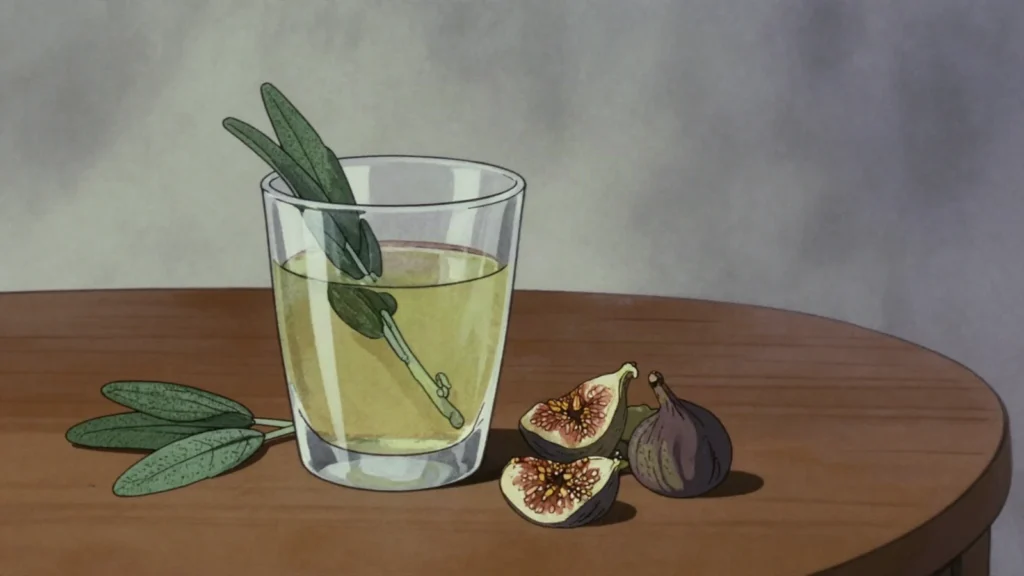

Grape brandy infused with Dalmatian mountain herbs and drunk as an aperitif. Island and coastal households steep sage, rue, myrtle and whatever else the karst gives them in loza for weeks, so no two bottles are alike.
The base is a distilled spirit, illegal to make without a licence, and some of the traditional herbs — rue and wormwood among them — are toxic in quantity and dosed by long practice.
What goes into it
- loza — grape pomace brandy
- sage, rue, myrtle, rosemary, wormwood and other karst herbs
- sometimes honey
How it is made
Herbs picked from the hillside are put into a demijohn of grape brandy and left in the light for several weeks, then strained out. The infusion is the easy part; the loza underneath it is distilled from grape pomace in a copper still, which is where the drink actually comes from.
How long it takes: weeks of steeping, on top of a distilled base
How it is eaten
In a small glass before a meal, or offered to a guest on arrival.
History
An herbal brandy, made by infusing a base grape or fruit spirit with a mixture of Mediterranean herbs, most closely associated with Croatia’s Dalmatian coast, where wild herbs including sage, rosemary and wormwood grow abundantly along the rocky coastal terrain and have long been incorporated into regional home-distilled spirits. Its exact composition of herbs varies considerably by household, island and region along the Croatian coast, with families and small producers often closely guarding their own particular herb blend as a point of local pride and distinction from neighboring villages’ versions. Travarica remains closely tied to Dalmatian hospitality and social customs, traditionally offered to guests as a welcoming drink, similarly to slivovitz and other regional Balkan spirits used to mark hospitality.
Frequently asked questions
What is Travarica?
Travarica is a wine & spirit from Croatia: grape brandy infused with Dalmatian mountain herbs, drunk as aperitif. An herbal brandy, made by infusing a base grape or fruit spirit with a mixture of Mediterranean herbs, most closely associated with Croatia’s Dalmatian coast, where wild herbs including sage, rosemary and wormwood grow abundantly along the rocky coastal terrain and have long been incorporated into regional home-distilled spirits. Its exact composition of herbs varies considerably by household, island and region along the Croatian coast, with families and small producers often closely guarding their own particular herb blend as a point of local pride and distinction from neighboring villages’ versions. Travarica remains closely tied to Dalmatian hospitality and social customs, traditionally offered to guests as a welcoming drink, similarly to slivovitz and other regional Balkan spirits used to mark hospitality.
How is Travarica made?
Herbs picked from the hillside are put into a demijohn of grape brandy and left in the light for several weeks, then strained out. The infusion is the easy part; the loza underneath it is distilled from grape pomace in a copper still, which is where the drink actually comes from. It takes weeks of steeping, on top of a distilled base.
Can I make Travarica at home?
No, and the atlas gives no method for it. The base is a distilled spirit, illegal to make without a licence, and some of the traditional herbs — rue and wormwood among them — are toxic in quantity and dosed by long practice.
What goes into Travarica?
Loza — grape pomace brandy, sage, rue, myrtle, rosemary, wormwood and other karst herbs, sometimes honey.
How is Travarica eaten?
In a small glass before a meal, or offered to a guest on arrival.