
Ingredients
The drink
- 400 mlpipeno, young white wine
- 2large scoops pineapple ice cream
- 1 tablespoongrenadine
Sometimes added
- a dash of fernet
- a splash of bitters
To serve
- a tall wide glass, about 500 ml
- a long spoon
Directions
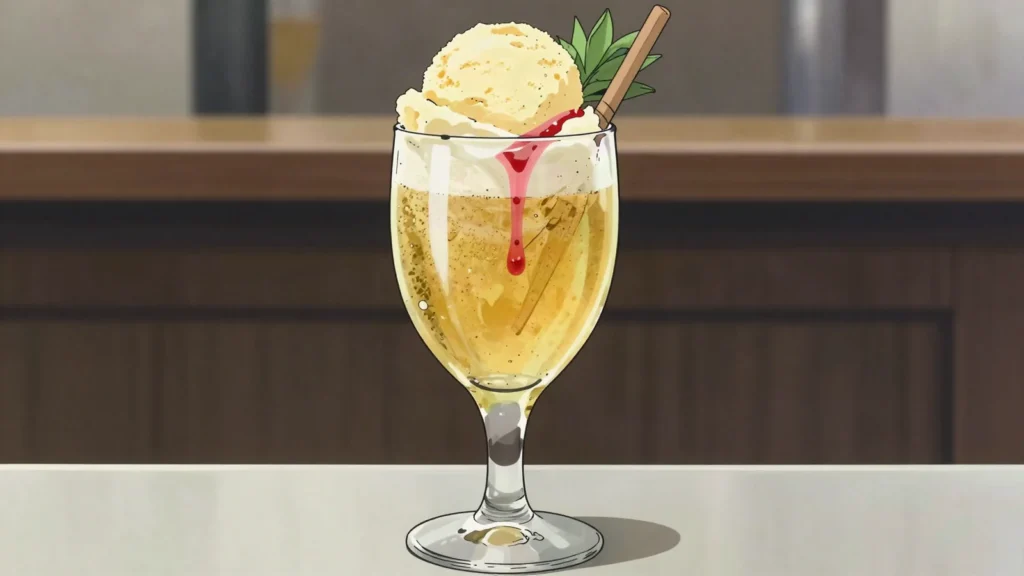
- Take a tall wide glass of about half a litre.
- Chill the glass first if you have room in the freezer.
- Pour the wine in until the glass is about two-thirds full.
- Drop the scoops of ice cream in on top.
- Add a dash of fernet if you want it bitterer. Do not stir it, which ruins the layered look.
Technique
- La Piojera is a long-standing working-class bar near the Mercado Central in Santiago and is the place most associated with the drink.
- Pipeno is protected in Chile as a traditional wine style made from country grapes and sold young.
Substitutions
- A soft, slightly sweet white wine such as an off-dry chenin or a young moscatel is the nearest substitute for pipeno.
- Pineapple sorbet replaces the ice cream and gives a lighter drink.
Variations
- The replica is the same drink served in a smaller glass.
- Some bars use fernet in place of grenadine for a bitter version.
- A red wine version called terremoto tinto is occasionally served.
History
A cocktail combining cheap fermented white wine, called pipeño, with pineapple ice cream and often a splash of grenadine, its name meaning earthquake in Spanish, generally explained as referencing the drink’s strong, disorienting effect on those who drink it, similar to the shaking and unsteadiness of an actual earthquake, a fitting reference in a country that experiences frequent significant seismic activity. Its exact date and place of invention within Chile is not precisely documented, though it developed as a specifically Chilean bar drink, likely sometime in the mid-1900s, using pipeño, an inexpensive, lightly fermented young wine associated with Chile’s central wine-growing regions. A smaller follow-up serving is often called a réplica, or aftershock, continuing the earthquake theme.
Frequently asked questions
What is Terremoto?
Terremoto is a cocktail from Chile: young pipeño wine with pineapple ice cream; the ‘earthquake’. A cocktail combining cheap fermented white wine, called pipeño, with pineapple ice cream and often a splash of grenadine, its name meaning earthquake in Spanish, generally explained as referencing the drink’s strong, disorienting effect on those who drink it, similar to the shaking and unsteadiness of an actual earthquake, a fitting reference in a country that experiences frequent significant seismic activity. Its exact date and place of invention within Chile is not precisely documented, though it developed as a specifically Chilean bar drink, likely sometime in the mid-1900s, using pipeño, an inexpensive, lightly fermented young wine associated with Chile’s central wine-growing regions. A smaller follow-up serving is often called a réplica, or aftershock, continuing the earthquake theme.
How long does Terremoto take to make?
Terremoto takes 5 minutes of preparation and none of cooking. The recipe makes 1 large glass. It is rated easy to make.
What can I substitute in Terremoto?
Yes, within limits. A soft, slightly sweet white wine such as an off-dry chenin or a young moscatel is the nearest substitute for pipeno. Pineapple sorbet replaces the ice cream and gives a lighter drink.
What is the most important thing to get right in Terremoto?
Add a dash of fernet if you want it bitterer. Do not stir it, which ruins the layered look.