
Ingredients
Ferment
- 750 gglutinous rice, white or black
- 1to 2 ragi tapai cakes, about 6 g, crushed to a fine powder
- banana leaves, for wrapping, or a clean jar
To serve
- eaten by the spoonful, or
- with coconut milk and palm sugar
Directions
- Rinse the rice until the water runs nearly clear, then soak for four hours or overnight and drain thoroughly.
- Steam over boiling water for 30 to 40 minutes until each grain is translucent and cooked through but still distinct. Boiled rice is too wet and turns to porridge in the jar.
- Spread the rice on a tray and cool it completely to room temperature. This is the step people rush: warm rice kills the ragi culture, and every failed tapai is a batch that was inoculated too hot.
- Crush the ragi cake to a fine powder and dust it evenly over the cooled rice, mixing through with clean dry hands.
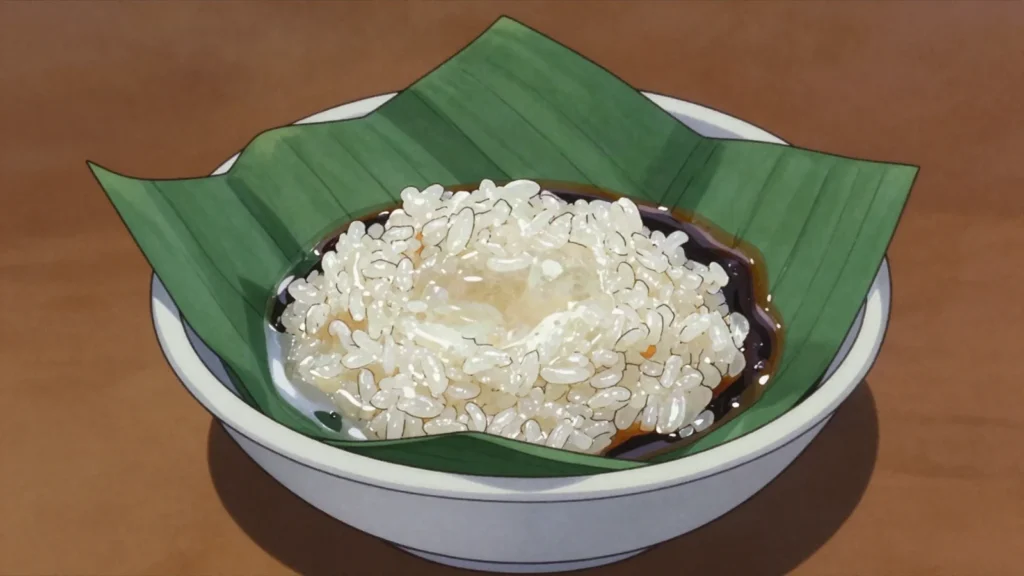
- Wrap portions in banana leaves, or pack loosely into a clean jar without pressing down — the culture needs a little air to start.
- Keep at 28 to 32°C (82 to 90°F) for two to three days. An oven with only the light on works well.
- It is ready when sweet liquid has collected around the rice, the grains have softened, and it smells of wine and sweetness with only a faint alcoholic edge. Refrigerate at once — left warm it keeps going, past sweet into sour and strongly alcoholic.
- Eat cold by the spoonful, or with coconut milk and palm sugar.
Technique
- Cool the rice completely before adding the starter. This is the whole recipe.
- Everything clean and free of oil, hands dry. Oil and stray bacteria are what turn a batch sour and slimy rather than sweet.
- Refrigerate the moment it tastes right. Tapai is a two-day ferment caught at the sweet point, not a preserve.
Substitutions
- Any Southeast Asian ragi or Chinese jiuqu starter ball; there is no home substitute for it.
- Black glutinous rice, which gives tapai pulut hitam — darker and nuttier.
- Boiled sweet cassava for tapai singkong, using the same starter and method.
Variations
- The liquid pressed off becomes brem, a sweet low-strength rice wine.
- Thai khao mak and Chinese jiuniang are the same ferment under other names.
History
Made with ragi starter cakes and wrapped in leaves; the same ferment underlies brem and the archipelago’s rice wines.
Frequently asked questions
What is Tapai?
Tapai is a fermented & pickled from Indonesia: cassava or glutinous rice fermented with yeast into a sweet, slightly boozy mash. Made with ragi starter cakes and wrapped in leaves; the same ferment underlies brem and the archipelago’s rice wines.
How long does Tapai take to make?
Tapai takes 30 min plus 2 to 3 days fermenting of preparation and 40 min of cooking. The recipe makes makes about 800 g. It is rated easy to make.
What can I substitute in Tapai?
Yes, within limits. Any Southeast Asian ragi or Chinese jiuqu starter ball; there is no home substitute for it. Black glutinous rice, which gives tapai pulut hitam — darker and nuttier. Boiled sweet cassava for tapai singkong, using the same starter and method.
What is the most important thing to get right in Tapai?
Cool the rice completely before adding the starter. This is the whole recipe.