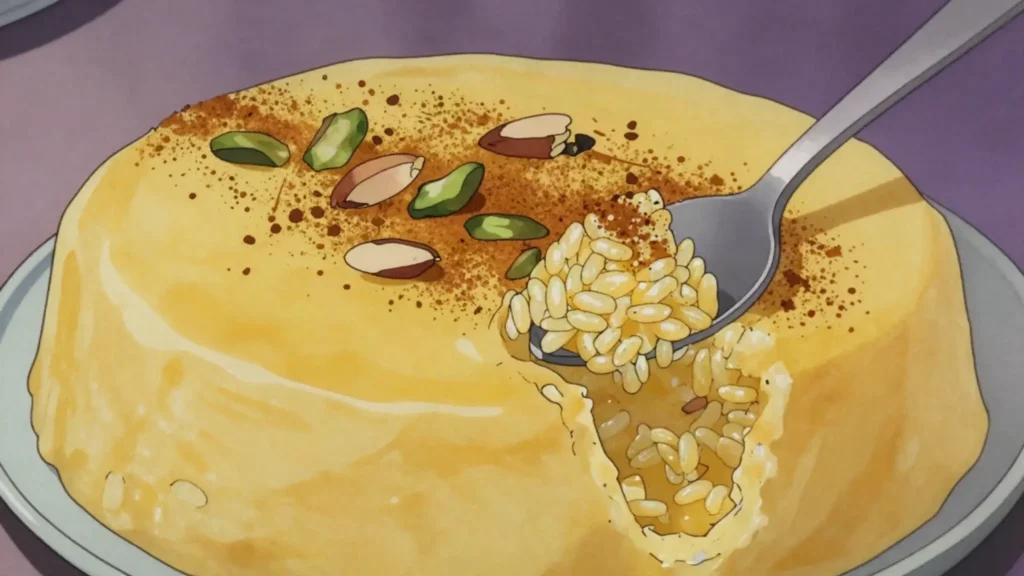

Ingredients
Rice
- 200 gshort-grain white rice
- 1.5 litreswater
To sweeten
- 400 gcaster sugar
Saffron
- a generous pinch of saffron, about 1 tsp threads
- 4 tbsphot water, to steep
To enrich
- 80 gbutter
- 80 gslivered almonds
- 3 tbsprosewater
To decorate
- ground cinnamon
- slivered pistachios
- slivered almonds
Equipment
- a heavy wide pot
- shallow serving dishes
Directions
- Crush the threads between your fingers or in a small mortar. Steep the crushed saffron in the hot water for at least twenty minutes.
- Use a short-grain rice, which breaks down properly. Rinse it several times until the water runs almost clear. Soak it in cold water for two hours. Drain the soaked rice thoroughly. Put the drained rice and the water in a heavy wide pot.
- Bring the whole pot up to the boil. Stir it every few minutes as it cooks. Cook it for forty-five minutes to an hour. The grains must break down completely.
- Stir the sugar into the softened rice. Simmer it for twenty minutes, stirring often. Stir in the saffron and its steeping water. Add the butter and stir it in until melted. Add the slivered almonds as well.
- Simmer it for another fifteen minutes. It should be thick but should still fall from a spoon. Take the pot off the heat entirely. Stir in the rosewater off the heat. Taste it and adjust if you want more. Setting it is done in shallow dishes. Pour it into shallow dishes or into individual bowls.
- Let it cool at room temperature for an hour. Wait until a skin has formed on the surface. Dust ground cinnamon over it through a fine sieve. Use a stencil, or trace lines and patterns with your fingers.
- Scatter slivered pistachios and almonds around the pattern. Refrigerate it for at least three hours. Serve it cold, in small portions. It keeps for three days in the fridge.
Technique
- Add the sugar only once the rice has fully broken down, since early sugar stops it softening.
- Steep the crushed saffron in hot water first, as threads added directly waste their colour.
- Add the rosewater off the heat, since heat drives off its aroma.
Substitutions
- Any short-grain white rice; long-grain will not break down properly.
- Ghee in place of butter.
Variations
- With more rosewater for a stronger scent.
- Made less sweet, which some households prefer.
- Decorated with an elaborate cinnamon pattern for an occasion.
History
A saffron-scented rice pudding, sweetened generously and topped with cinnamon, slivered almond and pistachio, traditionally prepared as a votive offering dish in Iranian Shia Muslim tradition, cooked and distributed to family, neighbors and the poor in fulfillment of a nazr, a vow or promise made to God, often in gratitude for a wish granted or a hoped-for outcome. That specific charitable and devotional context distinguishes sholeh zard from most other desserts, since it is traditionally prepared not simply to be eaten by the cook’s own household but specifically to be shared outward as an act of religious observance. Its generous use of saffron, one of the world’s most expensive spices by weight and long cultivated in Iran specifically, reflects the dish’s traditional association with a meaningful, deliberate offering rather than an everyday casual treat.
Frequently asked questions
What is Sholeh zard?
Sholeh zard is a dessert from Iran: saffron rice pudding decorated with cinnamon and almonds; votive offering. A saffron-scented rice pudding, sweetened generously and topped with cinnamon, slivered almond and pistachio, traditionally prepared as a votive offering dish in Iranian Shia Muslim tradition, cooked and distributed to family, neighbors and the poor in fulfillment of a nazr, a vow or promise made to God, often in gratitude for a wish granted or a hoped-for outcome. That specific charitable and devotional context distinguishes sholeh zard from most other desserts, since it is traditionally prepared not simply to be eaten by the cook’s own household but specifically to be shared outward as an act of religious observance. Its generous use of saffron, one of the world’s most expensive spices by weight and long cultivated in Iran specifically, reflects the dish’s traditional association with a meaningful, deliberate offering rather than an everyday casual treat.
How long does Sholeh zard take to make?
Sholeh zard takes 20 min plus 2 hours soaking of preparation and 1 hour 30 min of cooking. The recipe makes 8 servings. It is rated medium to make.
What can I substitute in Sholeh zard?
Yes, within limits. Any short-grain white rice; long-grain will not break down properly. Ghee in place of butter.
What is the most important thing to get right in Sholeh zard?
Bring the whole pot up to the boil. Stir it every few minutes as it cooks. Cook it for forty-five minutes to an hour. The grains must break down completely.