
Ingredients
The dough
- 500 gplain flour
- about 320 ml warm water
- 2 teaspoonsbaking powder
- 1 teaspoonsalt
- 1 tablespoonoil
- optional
To cook
- a tawa
- or a heavy flat pan
- a little oil or ghee
- a clean cloth
To serve
- torn by hand
- with curry
- or fried fish
- at breakfast
Directions
- Steam inflates it from inside. That puffing gives the soft texture. Let it cool a few seconds first. Do not burn your hands at all. Put the flour in a large bowl. Add the baking powder and salt. Whisk them together thoroughly first. The baking powder must spread evenly. Take a moment over the whisking. Add all the warm water gradually. Warm water gives a softer dough.
- Add it in just a splash at a time. Judging the dough takes a feel. Knead it for about five minutes. It should become smooth and elastic. Oil your hands if it sticks badly. Do not add any more flour to it. Cover it over and let it rest. Give it at least thirty full minutes.
- Divide the dough into equal balls. Make them about the size of a lime. Keep every one of them the same size. Roll them all smooth and tight. Cover the balls and rest them. Give them about ten more minutes.
- Roll each ball out on a floured surface. Roll it about half a centimetre thick. Keep it even across the circle. Roll out from the centre outward. Turn it a quarter turn between rolls. That keeps it both round and even.
- Heat the tawa until genuinely hot. It must be hot enough to puff the roti. Wait for longer before starting. Lay one rolled roti on the hot tawa. Give it about a minute on the first side.
- Turn the roti over with a spatula. Give it about one minute more. Brown spots appear underneath. Press the roti lightly with a cloth. Press gently around the edges. Work quickly and quite gently. Do not worry if some do not puff.
- Brush a little oil or ghee on it. Some cooks oil them and some do not. Oil keeps them softer for longer. Clap the hot roti between your hands. Use a cloth if it is far too hot. Keeping them soft is genuinely essential. Stack them under a clean cloth. The steam keeps them soft and pliable.
- Cover them the moment they come off. Keep the stack covered throughout. Serving them is always done hot. Serve them hot straight from the tawa. It keeps a day in a sealed bag. Warm it briefly on the tawa to soften it.
Technique
- Err on the wetter side with the dough, since a soft dough gives a soft roti and a firm one gives a tough roti; if it sticks, oil your hands rather than adding more flour, which would toughen it. Rest it thirty minutes, then rest the shaped balls ten minutes more — shaping tightens the gluten again and that second short rest relaxes it.
- The tawa must be genuinely hot enough to puff the roti: flick a few drops of water on and they should skitter and evaporate rather than sitting and steaming. A cool griddle gives a flat hard roti and dries it out. Press lightly around the edges with a cloth to trap the steam that inflates it.
- Stack the cooked rotis under a clean cloth the moment they come off, since the trapped steam keeps them soft and uncovered ones go stiff within minutes.
Substitutions
- Some cooks brush a little oil or ghee on each roti, which keeps them softer for longer and adds richness, and some do not; both are genuinely done.
- Not every roti puffs fully, and a flat one is still perfectly good with a slightly firmer texture — do not worry if some do not.
Variations
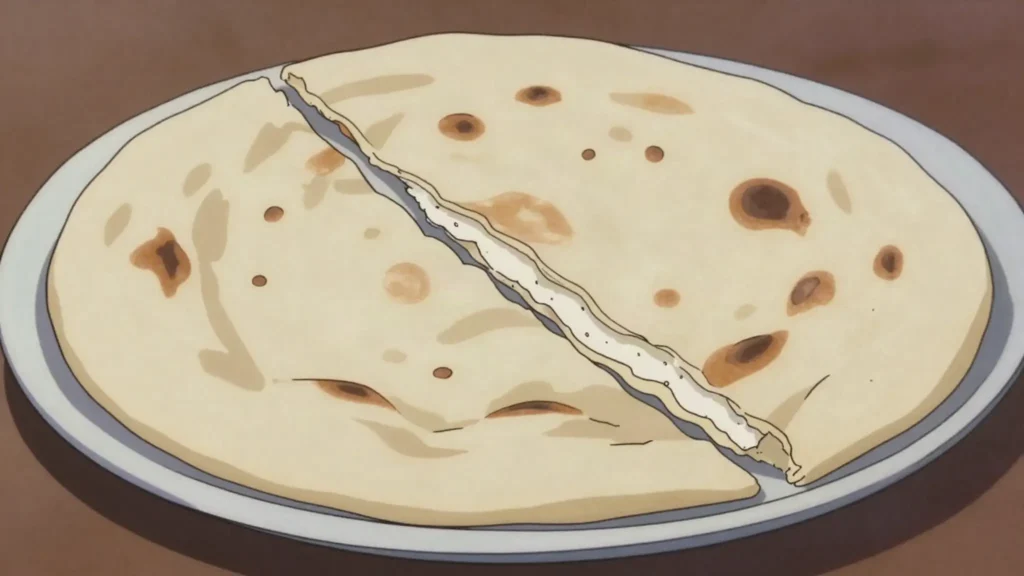
- Roll it about half a centimetre thick, thicker than most rotis, which is the defining feature and gives the soft bready interior — this is bread rather than a wrapper.
- Clap the hot roti two or three times between the hands to release the trapped steam and soften the whole bread — a genuine and satisfying step, but it is very hot, so let it cool a few seconds or use a cloth.
- Sada means plain, distinguishing it from paratha roti with its oiled layers and dhalpuri with its split pea filling, all made in the same kitchens. The atlas also carries Trinidadian sada roti, the same bread in a country sharing the same indenture history — Indian labourers came to Guyana from the 1830s to work the sugar plantations, often in harsh conditions and often unable to return.
History
The everyday roti of Indo-Guyanese homes, cooked on a tawa and eaten for breakfast.
Frequently asked questions
What is Sada roti?
Sada roti is a bread & pastry from Guyana: plain thick griddle flatbread torn and eaten with curries or fried fish. The everyday roti of Indo-Guyanese homes, cooked on a tawa and eaten for breakfast.
How long does Sada roti take to make?
Sada roti takes 20 minutes plus resting of preparation and 20 minutes of cooking. The recipe makes about 6 rotis. It is rated medium to make.
What can I substitute in Sada roti?
Yes, within limits. Some cooks brush a little oil or ghee on each roti, which keeps them softer for longer and adds richness, and some do not; both are genuinely done. Not every roti puffs fully, and a flat one is still perfectly good with a slightly firmer texture — do not worry if some do not.
What is the most important thing to get right in Sada roti?
Steam inflates it from inside. That puffing gives the soft texture. Let it cool a few seconds first. Do not burn your hands at all. Put the flour in a large bowl. Add the baking powder and salt. Whisk them together thoroughly first. The baking powder must spread evenly. Take a moment over the whisking. Add all the warm water gradually. Warm water gives a softer dough.