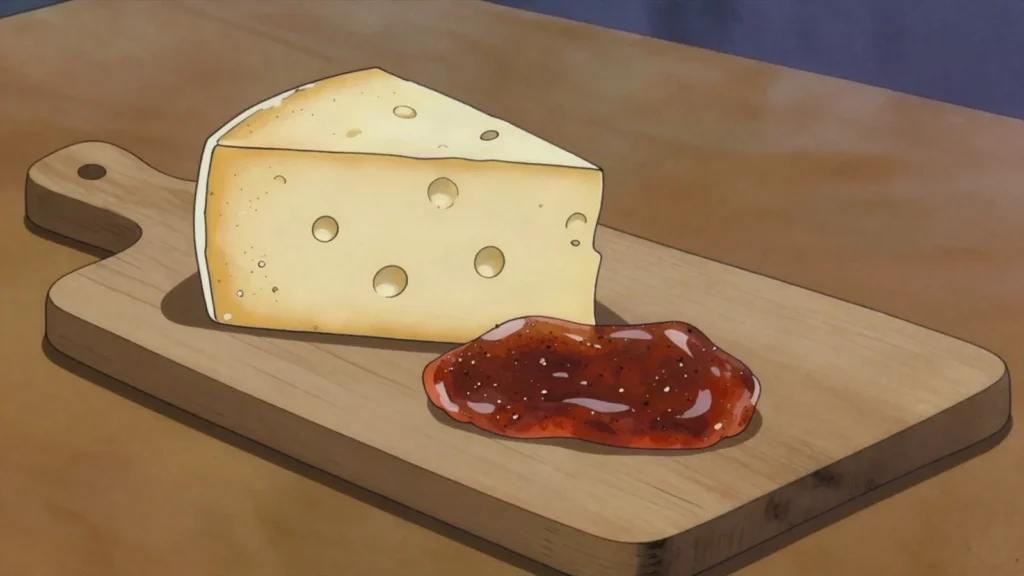

A semi-hard cow’s cheese with small holes, mild and buttery. It is made around Nueva Helvecia, the Swiss colony founded in Colonia department in 1862, whose settlers brought alpine dairying to Uruguay.
It is a pressed, ripened cheese needing a store held at a steady low temperature and humidity for weeks — a dairy process.
What goes into it
- cow’s milk
- rennet
- a starter culture
- salt
How it is made
The milk is set with rennet, the curd cut and part of the whey replaced with hot water to wash it, then pressed into wheels and brined. The wheels ripen for weeks to months in a cool store, and the small eyes come from gas produced by the ripening bacteria in the closed paste.
How long it takes: one to three months of ripening
How it is eaten
Sliced in sandwiches, melted, or with dulce de membrillo.
History
Made around Nueva Helvecia, the Swiss colony founded in Colonia department in 1862, whose settlers brought alpine dairying to Uruguay.
Frequently asked questions
What is Queso Colonia?
Queso Colonia is a cheese & dairy from Uruguay: semi-hard cow’s cheese with small holes, mild and buttery. Made around Nueva Helvecia, the Swiss colony founded in Colonia department in 1862, whose settlers brought alpine dairying to Uruguay.
How is Queso Colonia made?
The milk is set with rennet, the curd cut and part of the whey replaced with hot water to wash it, then pressed into wheels and brined. The wheels ripen for weeks to months in a cool store, and the small eyes come from gas produced by the ripening bacteria in the closed paste. It takes one to three months of ripening.
Can I make Queso Colonia at home?
No, and the atlas gives no method for it. It is a pressed, ripened cheese needing a store held at a steady low temperature and humidity for weeks — a dairy process.
What goes into Queso Colonia?
Cow’s milk, rennet, a starter culture, salt.
How is Queso Colonia eaten?
Sliced in sandwiches, melted, or with dulce de membrillo.