
Ingredients
Dough
- 1 kgstrong bread flour, W300 or higher
- 800 mlcold water
- 20 gsalt
- 3 gfresh yeast, or 1 g instant
- 30 mlolive oil
Tray
- olive oil, generously, for the teglia
Toppings
- crushed San Marzano tomatoes
- fior di latte, drained
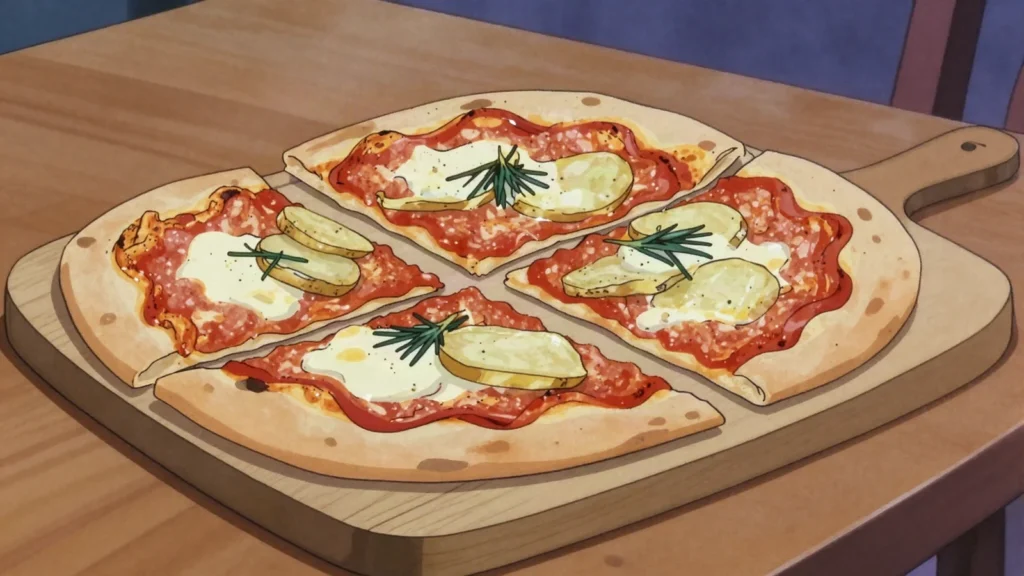
- potato sliced paper thin with rosemary
- courgette and mint
- mortadella and pistachio, added after baking
Equipment
- a rectangular metal teglia
- scissors, for cutting
Directions
- Mix the flour and most of the water and let it stand 30 minutes before adding anything else. This autolyse lets the flour hydrate on its own, which develops gluten with no work at all and makes a very wet dough manageable.
- Add the yeast, then the salt, then the remaining water gradually, working it in with wet hands. Add the last of the water slowly. A dough at this hydration will take it, but only if it goes in gradually. Work the olive oil in last, once the water is fully absorbed.
- Turn the bowl and repeat, four folds in all, then rest 30 minutes and do it again. Do four or five sets of folds over two hours. Take it out 3 to 4 hours before baking and let it come fully to room temperature. Cold dough will not stretch and it fights you all the way.
- Oil the teglia generously, far more than seems reasonable. That oil effectively fries the base in the tray, which is what gives al taglio its crisp golden underside.
- Tip the dough into the tray and stretch it gently with oiled fingertips, pushing outward from the centre to the corners. Use your fingertips and dimple it rather than pressing it flat. If it springs back, let it rest 15 minutes and try again rather than forcing it.
- Let it rest in the tray for 45 minutes to an hour until visibly puffy. Heat the oven as hot as it goes, at least 250°C (480°F), with a stone or steel on the bottom shelf.
- Bake the base with only tomato, or entirely bare, for 10 to 12 minutes until it is set and beginning to colour. Baking the base first is what stops it going soggy under wet toppings, and it is the key difference from a standard pizza. Cut it with scissors into rectangles, which is what the name refers to. Serve it warm, folded in half, eaten with the hands.
Technique
- The dough is easier with a strong flour, W300 or above, sold for long fermentation.
- A steel or stone under the tray transfers heat into the base and improves the crust considerably.
- Leftovers reheat well in a hot dry pan, base down.
Substitutions
- Strong white bread flour, accepting slightly less rise.
- A heavy rectangular roasting tin in place of a teglia.
Variations
- Pizza bianca, with only oil, salt and rosemary.
- Topped after baking with mortadella and pistachio.
- Pizza in pala, the long paddle-shaped Roman version.
History
A Roman format from the 1950s, refined from the 1980s by bakers such as Gabriele Bonci.
Frequently asked questions
What is Pizza al taglio?
Pizza al taglio is a street food from Vatican City: rectangular pizza baked in trays, cut with scissors and sold by weight. A Roman format from the 1950s, refined from the 1980s by bakers such as Gabriele Bonci.
How long does Pizza al taglio take to make?
Pizza al taglio takes 40 min plus 24 to 72 hr cold fermenting of preparation and 25 min of cooking. The recipe makes 1 large tray. It is rated hard to make.
What can I substitute in Pizza al taglio?
Yes, within limits. Strong white bread flour, accepting slightly less rise. A heavy rectangular roasting tin in place of a teglia.
What is the most important thing to get right in Pizza al taglio?
Tip the dough into the tray and stretch it gently with oiled fingertips, pushing outward from the centre to the corners. Use your fingertips and dimple it rather than pressing it flat. If it springs back, let it rest 15 minutes and try again rather than forcing it.