
Ingredients
Batter
- 250 gchickpea flour, sifted
- 1 litrewater
- 2 tbspolive oil
- 11/2 tsp salt
- black pepper
For frying
- 500 mlolive oil, or a neutral oil
To finish
- fine salt
- black pepper
Equipment
- a heavy pan
- a whisk
- shallow dishes or a tray, lightly oiled
To serve
- lemon wedges
- aioli, if wanted
Directions
- Sift the flour before you start, which genuinely helps. Some cooks whisk the flour into cold water first. Put the sifted chickpea flour in a large bowl. Add about a third of the water, cold. Whisk it into a completely smooth thick paste.
- Work out every lump at this stage. Whisk in the rest of the water gradually. Add the olive oil, salt and pepper. Strain the whole thing through a sieve into the pan. Straining is worth doing even if you think it is smooth.
- Set the pan over a medium heat. Whisk it continuously as it heats. It will begin to thicken after five or six minutes. Keep stirring, reaching into the corners of the pan. Cook it for fifteen to twenty minutes in total. Judging when it is done is by texture and taste.
- Taste a little: there should be no raw floury flavour. Setting it needs to be done fast. Oil the dishes or the tray very lightly. Scrape the hot mixture in immediately.
- Let it cool at room temperature until firm. Then refrigerate it for at least three hours. Turn the set block out onto a board. Cut it into batons about a centimetre thick. Traditional panisse are cut as short thick chips.
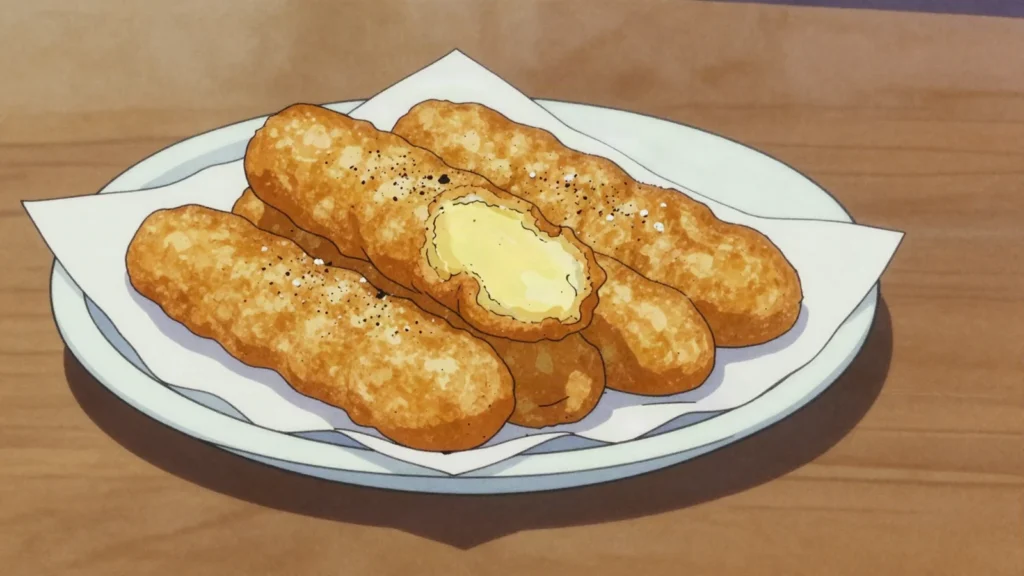
- Heat the oil in a wide pan to about 180C. Test with one baton: it should sizzle steadily. Fry them in batches without crowding the pan. Fry them for four or five minutes. Turn them so they colour on all sides. They should be deep golden and crisp outside. Lift them onto a rack lined with paper.
- Salt them heavily while they are still glistening. Salt will not stick once they cool. Grind black pepper over them as well. Serving them is done straight away. Serve them hot, piled in a paper cone or a bowl. They soften within fifteen minutes and are fried to order.
Technique
- Whisk the chickpea flour into cold water first, since lumps never cook out.
- Cook until it pulls away from the pan and tastes of no raw flour.
- Salt them the moment they come out of the oil, as salt will not stick once cool.
Substitutions
- A neutral oil for frying, though olive oil is traditional.
- The same batter baked thin as socca.
Variations
- Cut into rounds rather than batons.
- With rosemary or fennel seed in the batter.
- Baked rather than fried, which is lighter but less good.
History
Ligurian-Provençal cheap food of the coast, made from the same chickpea batter as socca.
Frequently asked questions
What is Panisse?
Panisse is a street food from Monaco: chickpea-flour cakes cut into batons and fried crisp, salted hot. Ligurian-Provençal cheap food of the coast, made from the same chickpea batter as socca.
How long does Panisse take to make?
Panisse takes 20 min plus 3 hours setting of preparation and 30 min of cooking. The recipe makes 24 batons. It is rated medium to make.
What can I substitute in Panisse?
Yes, within limits. A neutral oil for frying, though olive oil is traditional. The same batter baked thin as socca.
What is the most important thing to get right in Panisse?
Work out every lump at this stage. Whisk in the rest of the water gradually. Add the olive oil, salt and pepper. Strain the whole thing through a sieve into the pan. Straining is worth doing even if you think it is smooth.