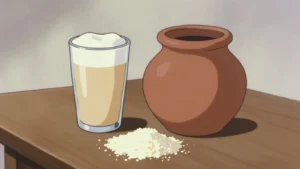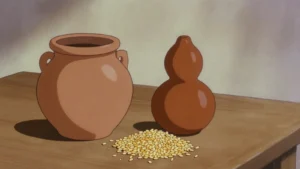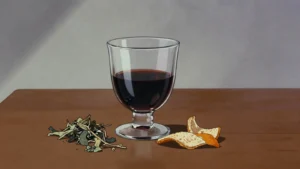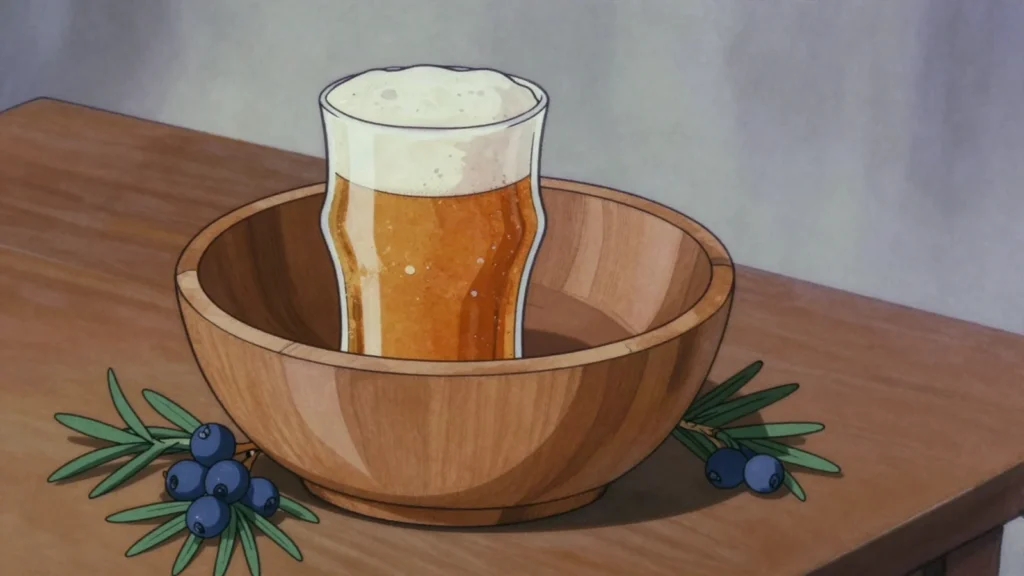

Strong home-brewed ale flavoured with juniper, cloudy and intensely fruity. Medieval Norwegian law required farmers to brew ale for Christmas, and western farms kept their own kveik yeast strains alive for generations.
Home brewing of alcohol is licensed or restricted in most of the atlas’s readership, and the character comes from a family kveik strain kept alive on a wooden ring for generations.
What goes into it
- barley malt
- juniper branches and berries
- kveik — a farmhouse yeast strain
- hops, sparingly
How it is made
The mash is made with juniper-infused water and run off through a bed of juniper twigs, which filters and flavours it at once. It is fermented with kveik, a family’s own yeast dried on a wooden ring and rehydrated each brew — a strain that ferments happily at 35°C (95°F) or above and finishes in a day or two, producing intense orange and tropical esters.
How long it takes: days rather than weeks, because kveik ferments so fast
How it is eaten
At room temperature from a wooden bowl or a mug, at Christmas and at weddings.
History
Medieval Norwegian law required farmers to brew ale for Christmas; western farms kept their own kveik yeast strains for generations.
Frequently asked questions
What is Norwegian farmhouse ale?
Norwegian farmhouse ale is a wine & spirit from Norway: strong home-brewed ale flavoured with juniper, cloudy and fruity. Medieval Norwegian law required farmers to brew ale for Christmas; western farms kept their own kveik yeast strains for generations.
How is Norwegian farmhouse ale made?
The mash is made with juniper-infused water and run off through a bed of juniper twigs, which filters and flavours it at once. It is fermented with kveik, a family’s own yeast dried on a wooden ring and rehydrated each brew — a strain that ferments happily at 35°C (95°F) or above and finishes in a day or two, producing intense orange and tropical esters. It takes days rather than weeks, because kveik ferments so fast.
Can I make Norwegian farmhouse ale at home?
No, and the atlas gives no method for it. Home brewing of alcohol is licensed or restricted in most of the atlas’s readership, and the character comes from a family kveik strain kept alive on a wooden ring for generations.
What goes into Norwegian farmhouse ale?
Barley malt, juniper branches and berries, kveik — a farmhouse yeast strain, hops, sparingly.
How is Norwegian farmhouse ale eaten?
At room temperature from a wooden bowl or a mug, at Christmas and at weddings.