
Ingredients
At the tree
- 1healthy coconut palm with an unopened flower spathe about 60–70 cm long
- Strips of coconut frond or soft cord, for binding the spathe
- 1very sharp thin knife, kept clean and sharpened daily
- 1clean 1.5 litre bottle or gourd, rinsed with boiling water
- A short length of frond midrib, shaped into a spout to guide the sap
To serve
- 1.5 litresfresh jekaro, chilled
- Ice
- 1lime, cut in wedges (optional)
Directions
- Choose an unopened spathe, the smooth pointed sheath that will become the flower cluster, on a palm in good condition. A tree is tapped on one or two spathes at a time so it keeps bearing nuts.
- Bind the spathe tightly along its length with frond strips so it cannot open and split. Over the next 2 to 3 weeks, bend it slowly downward a little each day, tapping and stroking it firmly along its length to bruise the tissue and start the sap moving.
- When the spathe hangs down and feels heavy and soft, slice a thin sliver, no more than 1–2 mm, off the tip with the sharp knife. Sap should bead on the cut face within minutes.
- Tie the bottle beneath the cut so the sap runs down the frond spout into the neck, and shade the bottle with a leaf. Direct sun in the bottle spoils the sap fast.
- Return morning and evening, every day. Each visit, shave another paper-thin sliver from the face to reopen the flow, and swap the bottle for a fresh, scalded one. A cut that is not reopened seals over in hours; a cut that is shaved too deeply kills the spathe.
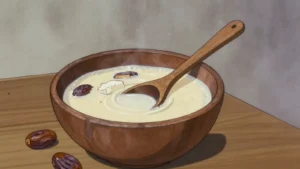
- Collect the morning bottle at first light. Fresh jekaro is cloudy, faintly sweet, about 12–15 percent sugar, and smells of coconut and flowers.
- Strain through a clean cloth to remove ants, grit and bits of fibre, and chill hard.
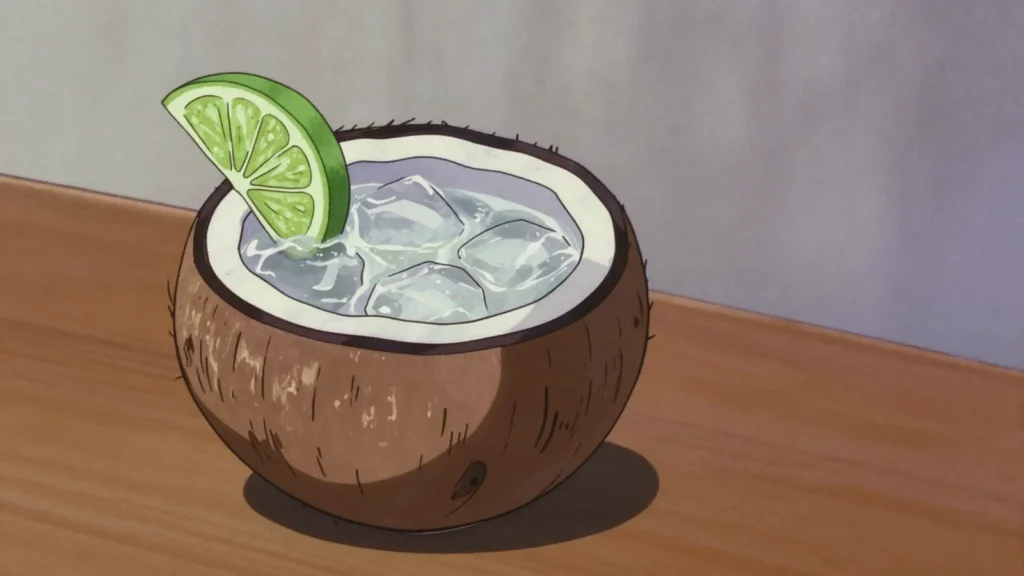
- Drink cold, within a few hours of collection, plain or over ice with a squeeze of lime. This is the everyday Marshallese morning drink, poured for guests and children alike.
Technique
- Jekaro is racing a clock. Wild yeasts on the spathe start work as soon as the sap leaves the tree, and in tropical heat it turns cloudy and yeasty within 3 to 6 hours and lightly alcoholic by evening; that fermented drink is jimanun, a different thing entirely, and one bound up in social rules of its own.
- Scalded bottles and a clean knife are what separate sweet jekaro from a bottle of sour toddy. Many tappers rinse the bottle with hot water and a little lime at every change.
- Boiled down, the same sap becomes jekamai, a dark coconut syrup poured over rice, breadfruit and doughnuts, and thickened further into a keeping sugar.
- Tapping is skilled, dangerous climbing work, learned young, and the tapper of a household is a recognised role.
Substitutions
- No palm to tap: bottled fresh coconut nectar or coconut blossom sap, kept refrigerated and drunk cold, is the honest stand-in; coconut water from the nut is a different drink, thinner and less sweet.
- For the syrup, unrefined coconut sugar dissolved in a little water is a workable substitute for jekamai.
Variations
- Jekamai: the sap simmered down for several hours to a thick brown syrup that keeps for months.
- Jimanun: the same sap left to ferment a day, sharp and lightly alcoholic.
- Jekaro is also mixed with grated coconut and poured over rice as a breakfast sweet.
History
A sweet sap harvested from the coconut palm’s flower stalk, closely related to Kiribati’s karewe and similar coconut sap traditions found across the wider Pacific Islands region, documented across the Marshall Islands for many generations as a significant traditional beverage reflecting the coconut palm’s outsized importance to daily life and diet across the country’s coral atolls. Harvesting jekaro requires the same careful, skilled technique of binding and cutting the flower stalk found across related Pacific coconut-sap traditions, allowing a slow, sustained flow of sweet sap to be collected over an extended period. Jekaro remains an important traditional drink across the Marshall Islands, consumed both fresh and fermented, closely tied to the broader cultural significance of the coconut palm across Pacific Islander life.
Frequently asked questions
What is Jekaro?
Jekaro is a drink from Marshall Islands: sweet coconut-blossom sap collected fresh each morning. A sweet sap harvested from the coconut palm’s flower stalk, closely related to Kiribati’s karewe and similar coconut sap traditions found across the wider Pacific Islands region, documented across the Marshall Islands for many generations as a significant traditional beverage reflecting the coconut palm’s outsized importance to daily life and diet across the country’s coral atolls. Harvesting jekaro requires the same careful, skilled technique of binding and cutting the flower stalk found across related Pacific coconut-sap traditions, allowing a slow, sustained flow of sweet sap to be collected over an extended period. Jekaro remains an important traditional drink across the Marshall Islands, consumed both fresh and fermented, closely tied to the broader cultural significance of the coconut palm across Pacific Islander life.
How long does Jekaro take to make?
Jekaro takes 20 min a day at the tree of preparation and 2–3 weeks to bring a spathe into flow, then twice-daily collection of cooking. The recipe makes about 1.5 litres a day from one tapped tree. It is rated hard to make.
What can I substitute in Jekaro?
Yes, within limits. No palm to tap: bottled fresh coconut nectar or coconut blossom sap, kept refrigerated and drunk cold, is the honest stand-in; coconut water from the nut is a different drink, thinner and less sweet. For the syrup, unrefined coconut sugar dissolved in a little water is a workable substitute for jekamai.