The big, fast, warm-blooded fish of the open ocean — tuna, bonito, swordfish — with dense red meat closer to beef than to cod: seared rare and eaten raw in Japan, grilled as steaks in the Mediterranean, tinned in oil everywhere, and dried and smoked into the katsuobushi that is the base of Japanese dashi.
Where it comes from
Tuna has been fished from the Mediterranean since the Phoenicians — the almadraba trap fisheries of Cadiz are three thousand years old — and from the Pacific for as long. Japan made it the most valuable fish in the world: the fatty belly of the bluefin, otoro, sells for prices that make headlines at Tokyo’s fish market, and Japanese demand drove bluefin to the edge of collapse in the late twentieth century. Skipjack, the small, abundant tuna, is what fills most tins; yellowfin and albacore sit between.
Its meat is dark, firm and rich in blood and fat because tuna is a warm-blooded, ceaselessly swimming predator, and that is why it takes to being cooked like meat — seared hard on the outside and left raw or rare within — or eaten raw. Cooked through it is dry and grey, which is the taste most people know from a tin, though tuna canned in good olive oil, particularly the belly (ventresca), is a delicacy in Spain and Italy. Katsuobushi — skipjack simmered, smoked, dried hard and shaved — is one of the two ingredients of dashi and the foundation of Japanese flavour.
Varieties
- Bluefin — The largest and fattiest; the sushi and sashimi tuna of Japan and the almadraba. Endangered from some stocks; farmed and ranched now.
- Yellowfin (ahi) — Leaner, milder red meat; for searing, poke and sashimi. The steak tuna.
- Albacore — Pale pink, mild; the ‘white’ tuna of premium tins and of Spanish and Basque conservas.
- Skipjack — Small, dark, strong; most tinned ‘light’ tuna, and the fish of katsuobushi.
- Bonito — Related, smaller, darker; grilled or seared in Spain and Japan, and tinned.
- Swordfish and marlin — Not tuna but cooked the same way: firm white-pink steaks grilled in Sicily and the Pacific.
In the kitchen
A fresh tuna steak wants a very hot pan or grill, a minute or two a side, and a rare centre; season with salt and pepper, sesame, or a soy-and-mirin glaze. Sliced raw for sashimi, cubed with soy, sesame oil and spring onion for Hawaiian poke, or chopped for a tartare, it needs sashimi-grade fish from a fishmonger who will vouch for it.
Tinned tuna in olive oil — the whole-piece Spanish and Italian kind — is an ingredient in its own right, in a salade niçoise, a pan bagnat, a Sicilian pasta with capers, a Spanish empanada, with white beans and red onion. Katsuobushi flakes are steeped in hot kombu water for dashi, or scattered over tofu, okonomiyaki and rice. Sicily grills swordfish with lemon and oregano or rolls it into involtini.
Choosing and keeping
Fresh tuna should be deep red to pink, glossy, firm and translucent, with no brown edges or rainbow sheen and no smell; it deteriorates fast and should be eaten the day it is bought. Ask for sushi-grade for raw use. It freezes reasonably well and most sashimi tuna has been frozen at sea.
Tinned tuna in olive oil keeps for years and improves for a while; buy pole-and-line or troll-caught skipjack and albacore, which are the sustainable choices, and avoid bluefin unless its origin is certified. Katsuobushi keeps for months sealed and loses aroma once opened.
Dishes with tuna
 Sándwich de migaCrustless layered white-bread sandwiches of ham and cheese, teatime
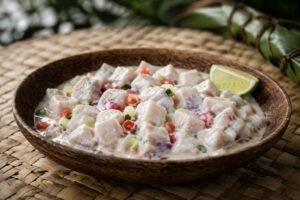 ʻOta ʻIkaRaw fish in citrus and coconut cream with cucumber and tomato
 Pastel com diabo dentroPastry with the devil inside: fried turnover of spicy tuna
 Matabacassava leaves slow-cooked in coconut milk, often with tunaTunisiaOmmek Houriamashed carrots with harissa, caraway and lemon, topped with tuna and eggSri LankaMalu PaanSoft bun stuffed with spiced fish and potato, sold from tuk-tuk bakeriesMaldivesRihaakuruThick brown paste from long-boiled tuna, intensely savoryMaldivesMas HuniShredded smoked tuna with coconut, onion and chili, scooped with roshi
Tuna and the large oily fish is tagged on 73 dishes from 30 countries in the atlas. These notes are written from general knowledge and carry no per-fact citation — see About.