The sweetest and most laborious shellfish — crab, lobster, crayfish, langoustine — boiled, cracked and picked, and the meat turned into cakes, bisques, curries and the celebration dishes of every coast that has them.
Where it comes from
Crabs and lobsters were once poor food — lobster was fed to prisoners in colonial New England, and crab was bait — until railways and refrigeration turned them into luxuries. Now the brown crab of Britain and France, the Dungeness of the American West Coast, the blue crab of Chesapeake Bay, the mud crab of Southeast Asia and the king and snow crabs of the North Pacific each anchor a regional cuisine, and lobster is the most expensive protein most people ever eat. Crayfish are their freshwater cousins, feasted on in Louisiana and Scandinavia.
The work is in the shell. A whole cooked crab yields perhaps a fifth of its weight in meat, in two kinds: the sweet white meat of the claws and legs, and the rich, strong brown meat of the body, which the British eat and the Americans mostly discard. Lobster gives more, from the tail and claws. Both make stock and bisque from the shells that is worth more than the meat, and the roe and tomalley, where they are eaten, are prized. Soft-shell crabs are blue crabs caught just after moulting and eaten whole, shell and all.
Varieties
- Brown crab (edible crab) — British and French; large claws, plenty of brown meat. Dressed crab, potted crab, crab sandwiches.
- Blue crab — Chesapeake and the American East and Gulf coasts; small, sweet, laborious. Crab cakes, she-crab soup, soft-shell crab.
- Dungeness — The West Coast crab; large, sweet, easy to pick. Cioppino, crab Louie, cracked with butter.
- Mud crab and blue swimmer — Southeast Asian and Australian; the crabs of Singapore chilli crab and Sri Lankan crab curry.
- King and snow crab — North Pacific; enormous legs of sweet meat, sold cooked and frozen.
- Lobster, langoustine, crayfish — Lobster for the table and thermidor; langoustines grilled or in a bisque; crayfish boiled in spiced water in Louisiana and with dill in Sweden.
In the kitchen
Cook live crab or lobster by plunging into a large pot of fiercely boiling, well-salted water — about 12–15 minutes for a large crab, 8–10 for a 500 g lobster — then cool. Kill first if you prefer, with a knife through the cross on the underside of a crab or between the eyes of a lobster. Crack claws with the back of a knife, lift the body from the shell, discard the feathery gills and the stomach sac, and pick.
White crab meat wants little: lemon, mayonnaise, a sliver of chilli, brown bread. Brown meat is rich and strong, best mixed with mustard, lemon and breadcrumbs or stirred into a pasta sauce. Crab and lobster shells simmered with tomato and brandy make bisque. Whole crabs in a sweet chilli-tomato sauce (Singapore), in a black pepper sauce, in a coconut curry (Sri Lanka, Kerala) or steamed with Old Bay (Maryland) are eaten with the hands.
Choosing and keeping
Buy live or freshly cooked from a fishmonger; a live crab should be heavy, lively and drawing its legs in when handled. Cooked crab should smell sweet and clean. Fresh picked crab meat keeps a day or two; pasteurised tub crab a week or two unopened. Frozen king and snow crab legs are already cooked and need only heating.
A whole cooked crab is a third the price of picked meat and yields it in twenty minutes with a pick and a small hammer. Keep the shells in the freezer for stock.
Dishes with crab
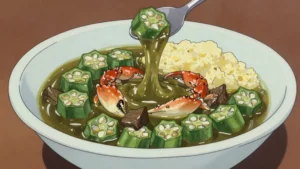 KalalouOkra stew with crab or beef, ladled over cornmeal
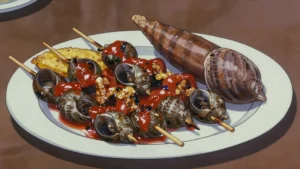 CaracolesGiant land snails grilled or stewed with tomato and hot pepper
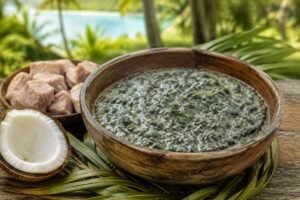 DemokTaro leaves stewed to a thick green mash with coconut milk and crab meat
 ChenillesForest caterpillars dried or fried, eaten by the handful with cassava
 Gboma dessiAfrican nightshade leaves stewed in palm oil with tomatoes and fish
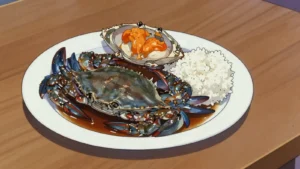 Ganjang GejangRaw blue crab marinated in soy sauce, sucked straight from the shell
 ZamnèTiny wild acacia seeds boiled soft and served with fried fish or meat
 KploBoiled cow skin cut into gelatinous strips and simmered in sauces
Crab, lobster and the large crustaceans is tagged on 103 dishes from 51 countries in the atlas. These notes are written from general knowledge and carry no per-fact citation — see About.