The most cultivated nut in the world — sweet, mild and versatile — eaten whole, ground into flour and marzipan, pressed into milk and oil, and at the heart of the pastry traditions of the Mediterranean, the Middle East and India.
Where it comes from
The almond was domesticated in the Levant in the Bronze Age, and the wild almond, bitter and poisonous with cyanide, had to be bred sweet before it was safe to eat in quantity; a few bitter almonds are still used, carefully, for flavour. It grew through Persia and the Mediterranean, and the Arabs planted it in Spain and Sicily and built a pastry tradition on it — marzipan, nougat, the almond milk that medieval Europe cooked with in Lent. California now grows most of the world’s almonds; Spain, Iran, Italy and Morocco grow the rest.
It is the pastry nut. Ground almonds make frangipane, macarons, financiers and the Italian and Spanish tortas; marzipan is almond paste and sugar; praline is almonds and caramel. In savoury cooking it thickens Spanish sauces (romesco, ajo blanco, picada), garnishes Moroccan tagines and Persian rice, and goes into Indian kormas and the Mughal sweets. Almond milk, made by soaking and blending the nuts, predates dairy alternatives by a thousand years.
Varieties
- Sweet almond (Nonpareil, California) — The standard nut; mild, smooth, pale. Whole, blanched, flaked, slivered or ground.
- Marcona — The Spanish almond: short, round, plump and sweet, usually fried in oil and salted. The finest eating almond.
- Valencia and other Spanish varieties — Longer, more flavoured than Californian; for turrón and pastry.
- Sicilian (Avola) — Prized for intense flavour; the almond of Sicilian pastry.
- Bitter almond — Contains cyanide; used in tiny quantities for flavour (amaretti, orgeat) and in almond extract. Not sold as food in some countries.
- Green almond — The whole young fruit picked in spring, fuzzy and soft; eaten with salt in the Mediterranean and Middle East.
In the kitchen
Blanch by pouring boiling water over shelled almonds, leaving a minute, and slipping off the skins. Toast in a dry pan or oven until golden — this transforms them and is worth doing for almost every use. Grind in a food processor in short pulses for almond flour, stopping before it turns to paste; or keep going with sugar for marzipan.
Flaked over a tagine or a pilaf; slivered and fried in butter for trout amandine; ground into a frangipane under fruit; blended with bread, garlic and oil for ajo blanco or with roasted peppers for romesco. Almonds pair with apricot, cherry, orange, honey, saffron and rosewater.
Choosing and keeping
Whole almonds in the skin keep best — a year in a sealed jar, longer in the fridge or freezer; blanched, flaked and ground almonds go stale faster and should be bought in small amounts. Rancid almonds taste bitter and paint-like.
A good almond is plump, unwrinkled and snaps cleanly. Marcona almonds are usually sold already fried and salted.
Dishes with almond
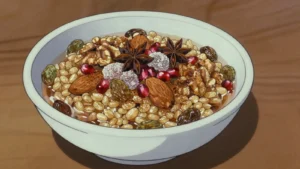 BurbaraBoiled wheat berries sweetened with sugar, cinnamon, raisins, nuts and pomegranate.
 RompopoThick yellow drink of egg yolk, milk, sugar and rum, sipped small
 KourabiedesButtery almond shortbread buried under thick icing sugar.
 Toucinho do ceuDense almond and egg-yolk cake, once enriched with lard as its name implies.
 FlødebollerChocolate-shelled marshmallow domes on marzipan bases.
 Zereshk polobarberry-jeweled saffron rice served with chicken
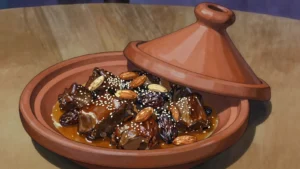 Mrouziahoneyed lamb tagine with raisins, almonds and ras el hanout
 Mansaflamb cooked in jameed yoghurt over shrak and rice; eaten communally
Almond is tagged on 234 dishes from 89 countries in the atlas. These notes are written from general knowledge and carry no per-fact citation — see About.