
Ingredients
Dough
- 500 gplain flour
- or 400 g plain and 100 g atta
- about 300 ml warm water
- 1 teaspoonsalt
- 2 tablespoonsoil
To layer
- 4 tablespoonsoil or melted ghee
- 2 tablespoonsflour, for dusting
To cook
- a heavy flat pan or tawa
- a little oil or ghee, for brushing
To serve
- a curry
- dhal
- chutney or achar
Directions
- Put the flour and salt in a bowl. Add the oil and rub it through. Add the warm water in gradually. Mix it with your hand as you pour. Bring it together into a soft dough. It should be soft and slightly sticky.
- Add a splash more water if it feels firm. Knead it for a good eight minutes. It should become smooth and elastic. Oil the surface of the dough lightly. Cover it over with a damp cloth.
- Let it rest for at least thirty minutes. An hour is considerably better. Divide the dough into sixteen even pieces. Roll each piece into a smooth ball. Cover them with a cloth as you work. Flatten a ball on a floured surface. Roll it out into an even round. Aim for about twelve centimetres across.
- Roll a second one to match it. Brush one round generously with oil. Cover the whole surface right to the edge. Oil alone makes them stick together. Lay the second round exactly on top. Press them together quite gently. Roll the joined pair out together.
- Take it to about twenty centimetres across. Roll from the centre outwards. Turn it a quarter turn as you go. That keeps it round and quite even. Heat a heavy flat pan over a medium heat. It should be hot but not smoking. Lay the doubled roti down onto it. Cook it for about one full minute. Turn it and cook the other side.
- Brush the top with a little oil or ghee. Turn it and brush the other side. It should puff up as it cooks. Take it off the pan while still hot. Peel them apart with your fingers. Work carefully, since steam escapes. The inner surfaces should be pale and soft.
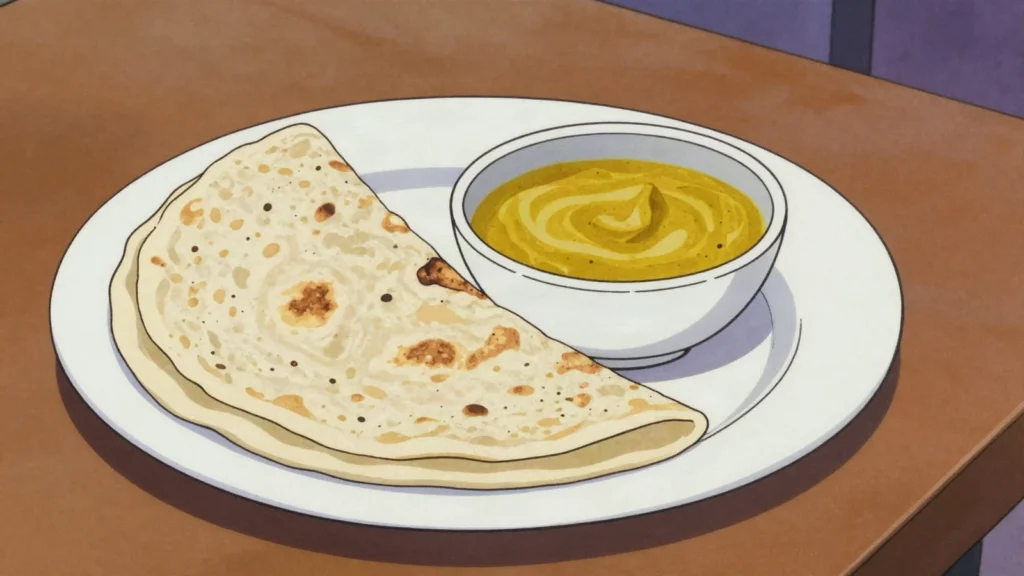
- Stack the peeled rotis on a plate. Cover them with a clean cloth at once. That traps steam and keeps them soft. Serve them with a curry or dhal. They keep a day if wrapped well. Warm them on a dry pan to refresh them.
Technique
- Dosti means friendship in Sarnami, the Surinamese Hindustani language, and the name describes two rotis joined together and then separated.
- The inner surfaces never touch the hot pan, so they steam rather than dry out, which is what makes each half so soft.
- The oiled surfaces must also be dusted with flour, since oil alone makes the two rounds stick permanently together.
Substitutions
- A mix of plain flour and atta gives a slightly nuttier bread.
- Ghee in place of oil for the layering gives a richer flavour.
Variations
- Roti paratha, made with a single folded round, is the other Surinamese roti.
- Some cooks use ghee throughout for a richer bread.
- Similar layered breads are made across the Caribbean Indian diaspora.
History
Indo-Surinamese bread whose name means friendship in Sarnami; served with curries and dhal.
Frequently asked questions
What is Dosti roti?
Dosti roti is a bread & pastry from Suriname: two thin rotis cooked joined together then peeled apart, soft and layered. Indo-Surinamese bread whose name means friendship in Sarnami; served with curries and dhal.
How long does Dosti roti take to make?
Dosti roti takes 30 minutes plus resting of preparation and 25 minutes of cooking. The recipe makes 8 rotis. It is rated medium to make.
What can I substitute in Dosti roti?
Yes, within limits. A mix of plain flour and atta gives a slightly nuttier bread. Ghee in place of oil for the layering gives a richer flavour.
What is the most important thing to get right in Dosti roti?
Roll a second one to match it. Brush one round generously with oil. Cover the whole surface right to the edge. Oil alone makes them stick together. Lay the second round exactly on top. Press them together quite gently. Roll the joined pair out together.