
Ingredients
The dough
- 1 kgwhite maize flour
- coarse ground, not fine cornflour
- about 1.2 litres warm water
- or more as needed
For the wrapping
- banana leaves
- or maize husks
- or foil and greaseproof paper
- string, to tie
- if the leaves need it
To serve
- a hot pepper sauce
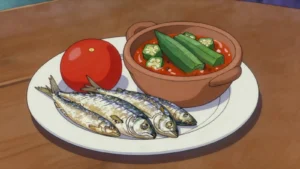
- fried fish
- or a tomato and pepper stew
- fried onion
- or on its own, hot
Directions
- Discard anything that smells or looks wrong. Do not taste to check. Use clean bowls and clean utensils. Keep the dough covered while it ferments. Very warm conditions favour the wrong organisms.
- Use coarse white maize flour. Check the texture rather than the label. It should feel gritty like fine semolina. Put the maize flour in a large bowl. Add warm water gradually. Mix it with your hand as you go. You want a stiff dough, not a batter. Cover the bowl with a cloth.
- Leave it at room temperature for two to three days. In a warm climate, two days is enough. Taste is the traditional test. It should taste sharp and tangy. Take about a third of the fermented dough. Put it in a pot with water.
- Cook it, stirring hard, until it thickens into a paste. That takes about ten minutes. Stir the cooked portion into the raw fermented dough. Mix it thoroughly until uniform. It also helps the parcels hold their shape.
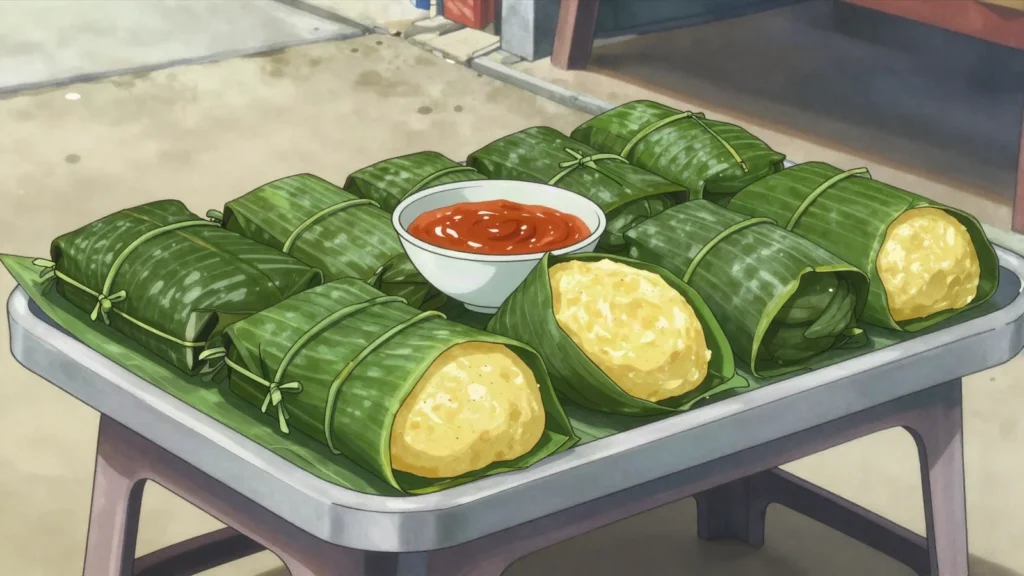
- Cut them into rectangles of about thirty centimetres. Put a good handful of dough on a leaf. Shape it into a rough ball or oval. Fold the leaf over it from both sides. Fold the ends under. Tie it with string or a strip of leaf if needed. Wrap them fairly tightly. Set them in a large pot on a rack. Add water below the level of the parcels.
- Cover the pot tightly. Steam them for about an hour. Check the water level halfway. Top it up with boiling water if needed. A pot that boils dry scorches badly. Steam escapes from a hot parcel when opened. Let the parcels stand five minutes first. Serve the parcels hot and let people unwrap them. Serve a hot pepper sauce alongside.
- Serve fried fish with it, which is the classic pairing. It is dense, firm and slightly sticky. Steam them from frozen for twenty-five minutes. The fermented dough itself keeps a week refrigerated.
Technique
- The two-stage method is the technique: cook about a third of the fermented dough into a stiff paste, then mix it back into the raw dough. That cooked portion binds the mass, smooths the texture and helps the parcels hold their shape — Ghanaian kenkey is made the same way.
- Judge the ferment by smell. Sour and clean like sourdough or yoghurt is right; putrid, rotten or ammoniac is not, and fuzzy black, green or pink growth means discard it. A thin white film is usually harmless yeast. Do not taste to check whether something has gone wrong.
- Ferment at room temperature in a covered bowl with clean utensils, not somewhere warm like the top of a stove. Very warm conditions favour the wrong organisms.
- Use coarse white maize meal, not fine cornflour or cornstarch, which is a thickening starch and entirely wrong. Judge by texture — it should feel gritty like fine semolina — rather than by what the packet is called.
- A spoonful of dough from a previous batch speeds the ferment and makes it more predictable. That backslop is standard practice.
- Soften banana leaves by passing them briefly over a flame or dipping them in boiling water for ten seconds. Cold leaves crack when folded. Frozen leaves from an Asian or African grocer work perfectly well.
- Wrap the parcels fairly tightly but leave a little room for expansion. Loose parcels let water in and go soggy.
- Top up the steaming water halfway. A pot that boils dry scorches the parcels badly.
- Let the parcels stand five minutes and open them away from your face. The trapped steam scalds.
- The sourness is the whole character of the dish, not a fault. It is dense, firm, slightly sticky and meant to be eaten with something strongly flavoured — a hot pepper sauce and fried fish is the classic pairing.
- This is a lactic fermentation, not an alcoholic one. It sours the dough, preserves it, improves the nutritional availability of the grain and makes it more digestible — real documented effects, and the reason the technique persisted.
- The leaves are not eaten. They flavour the contents and hold the shape, and foil lined with greaseproof paper substitutes at the cost of the flavour.
Substitutions
- Maize husks replace banana leaves and are used in some places.
- Foil lined with greaseproof paper is the fallback wrapper, holding the shape without the leaf flavour.
- Whole maize soaked and wet-milled replaces flour and is the traditional starting point.
- A spoonful of previous dough, or a little plain yoghurt, starts the ferment more predictably.
- Yellow maize flour can replace white, giving a different colour and slightly sweeter taste.
- Steaming in a covered pot replaces a proper steamer if the parcels sit clear of the water.
Variations
- Kenkey in Ghana is the closest relative, made in distinct Ga and Fante styles with different wrappers.
- Akassa is the softer, unwrapped Beninese and Togolese version of the same fermented dough.
- Agidi and eko in Nigeria set the fermented maize into a smooth firm pudding.
- Banku in Ghana cooks fermented maize and cassava dough into a soft mass rather than wrapping it.
- Ogi or pap is the thin fermented maize porridge from the same tradition.
- A sweetened version with sugar and coconut is made in some households as a snack.
Frequently asked questions
What is Dokounou?
Dokounou is a street food from Benin: fermented maize dough steamed in leaf parcels, unwrapped hot and eaten with sauce.
How long does Dokounou take to make?
Dokounou takes 40 minutes plus 2 to 3 days fermenting of preparation and 1 hour 15 minutes of cooking. The recipe makes makes about 10 parcels. It is rated medium to make.
What can I substitute in Dokounou?
Yes, within limits. Maize husks replace banana leaves and are used in some places. Foil lined with greaseproof paper is the fallback wrapper, holding the shape without the leaf flavour. Whole maize soaked and wet-milled replaces flour and is the traditional starting point. A spoonful of previous dough, or a little plain yoghurt, starts the ferment more predictably. Yellow maize flour can replace white, giving a different colour and slightly sweeter taste. Steaming in a covered pot replaces a proper steamer if the parcels sit clear of the water.
What is the most important thing to get right in Dokounou?
Discard anything that smells or looks wrong. Do not taste to check. Use clean bowls and clean utensils. Keep the dough covered while it ferments. Very warm conditions favour the wrong organisms.