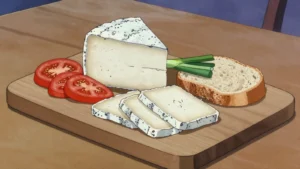

A sharp, salty blue cow’s-milk cheese, created in the 1920s by the dairyman Marius Boel as a cheaper answer to Roquefort. It won PGI protection in 2003 and is crumbled onto rye bread or melted into sauces.
Growing Penicillium roqueforti through a cheese requires the mould culture, needle piercing at the right moment, and a cellar held at a controlled temperature and humidity for months.
What goes into it
- homogenised cow’s milk
- Penicillium roqueforti spores
- rennet
- salt
How it is made
The milk is homogenised, which breaks up the fat and gives the cheese its white paste and sharp bite, then set with rennet and inoculated with blue mould spores. The curd is drained, moulded and salted, and the wheels are pierced with needles after a few days so air can reach the mould and let the blue veins spread inward. It ripens in a cold, humid cellar.
How long it takes: eight to twelve weeks
How it is eaten
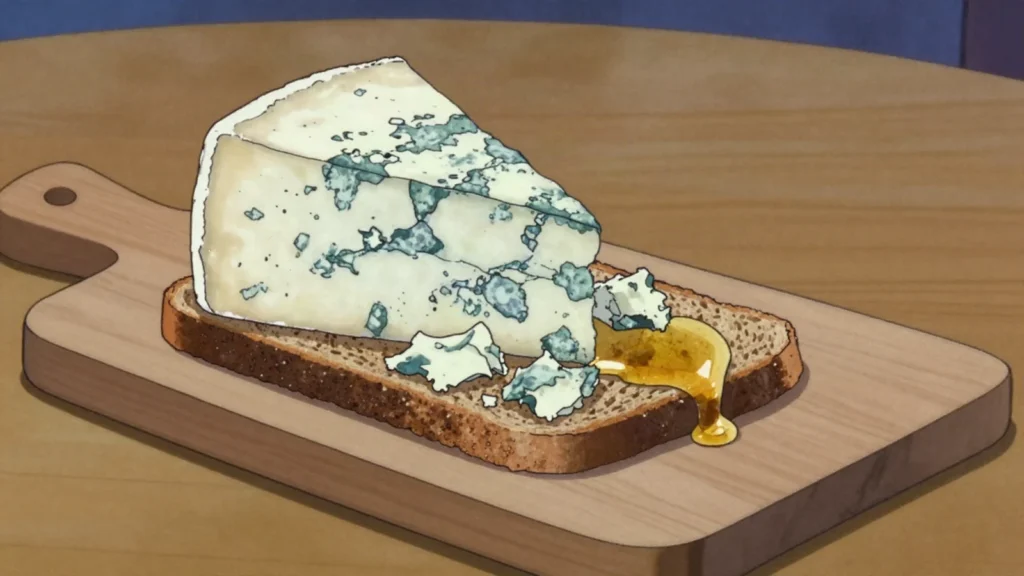
Crumbled on rye with a drop of honey, melted into a sauce, or on a cheese board with port.
History
Created in the 1920s by dairyman Marius Boel as a cheaper answer to Roquefort using cow’s milk; Danablu won PGI protection in 2003.
Frequently asked questions
What is Danablu?
Danablu is a cheese & dairy from Denmark: sharp, salty blue cow’s milk cheese crumbled onto rye bread. Created in the 1920s by dairyman Marius Boel as a cheaper answer to Roquefort using cow’s milk; Danablu won PGI protection in 2003.
How is Danablu made?
The milk is homogenised, which breaks up the fat and gives the cheese its white paste and sharp bite, then set with rennet and inoculated with blue mould spores. The curd is drained, moulded and salted, and the wheels are pierced with needles after a few days so air can reach the mould and let the blue veins spread inward. It ripens in a cold, humid cellar. It takes eight to twelve weeks.
Can I make Danablu at home?
No, and the atlas gives no method for it. Growing Penicillium roqueforti through a cheese requires the mould culture, needle piercing at the right moment, and a cellar held at a controlled temperature and humidity for months.
What goes into Danablu?
Homogenised cow’s milk, penicillium roqueforti spores, rennet, salt.
How is Danablu eaten?
Crumbled on rye with a drop of honey, melted into a sauce, or on a cheese board with port.