
A fast-fermented whole soybean paste, sticky and pungent, simmered into a thick stew. It is ready in two or three days rather than months, and it is reputedly a campaign food that armies could ferment while on the move.
It is an alkaline Bacillus ferment of a low-acid bean held warm for days with no salt at all during the ferment, and the straw carries the inoculum; what colonises soybeans left warm without it is frequently not the same organism.
What goes into it
- whole soybeans
- rice straw, in the traditional method
- salt, added at the end
How it is made
Soybeans are boiled soft and then kept warm — traditionally wrapped in rice straw near an ondol floor — for two to three days while Bacillus subtilis colonises them, drawing sticky threads and breaking the protein down. They are then crushed with salt and garlic into a rough paste. The speed is the point: no months of ageing, no salt during the ferment.
How long it takes: two to three days of warm fermentation
How it is eaten
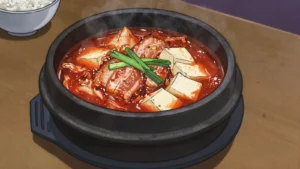
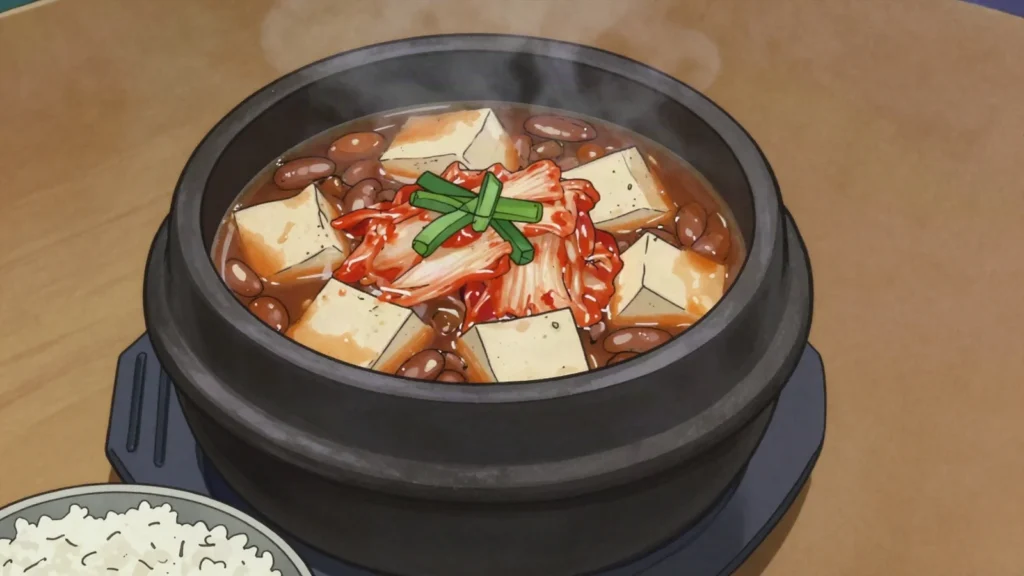
Simmered with tofu, kimchi and pork into cheonggukjang-jjigae, with rice.
History
Ready in two or three days rather than months, reputedly a campaign food that armies could ferment on the move.
Frequently asked questions
What is Cheonggukjang?
Cheonggukjang is a fermented & pickled from South Korea: fast-fermented whole soybean paste, sticky and pungent; simmered into a thick stew. Ready in two or three days rather than months, reputedly a campaign food that armies could ferment on the move.
How is Cheonggukjang made?
Soybeans are boiled soft and then kept warm — traditionally wrapped in rice straw near an ondol floor — for two to three days while Bacillus subtilis colonises them, drawing sticky threads and breaking the protein down. They are then crushed with salt and garlic into a rough paste. The speed is the point: no months of ageing, no salt during the ferment. It takes two to three days of warm fermentation.
Can I make Cheonggukjang at home?
No, and the atlas gives no method for it. It is an alkaline Bacillus ferment of a low-acid bean held warm for days with no salt at all during the ferment, and the straw carries the inoculum; what colonises soybeans left warm without it is frequently not the same organism.
What goes into Cheonggukjang?
Whole soybeans, rice straw, in the traditional method, salt, added at the end.
How is Cheonggukjang eaten?
Simmered with tofu, kimchi and pork into cheonggukjang-jjigae, with rice.