
Ingredients
Maize
- 500 gdried white maize kernels
- or 500 g dried yellow maize
To flavour
- sugar, to taste
- 1/2 teaspoonsalt
- 1 teaspoonground cinnamon, optional
- 1/4 teaspoongrated nutmeg, optional
- 1star anise, ground, optional
To serve
- cold milk
- or water
- or eaten dry with sugar
Equipment
- a heavy dry pan
- a mortar or a grain mill
- a fine sieve
Directions
- Take small amounts and have a drink to hand. It drives out moisture so it keeps far longer. Use dried whole maize kernels. Preparing the maize takes a moment. Pick over the kernels for stones and grit. Rinse them and dry them thoroughly. Spread them on a cloth to dry if needed.
- Heat a heavy dry pan over a medium heat. Add the kernels in a single layer. Work in batches rather than crowding the pan. Stir them constantly with a wooden spoon. Never leave them unattended for a moment.
- Take them off before any go black. Tip them out onto a tray to cool. Spread them out in a single layer. Let them cool entirely before grinding.
- Warm kernels clog a grinder and go pasty. That takes considerable time and effort. Grind it as finely as you possibly can. Return the coarse bits and grind them again.
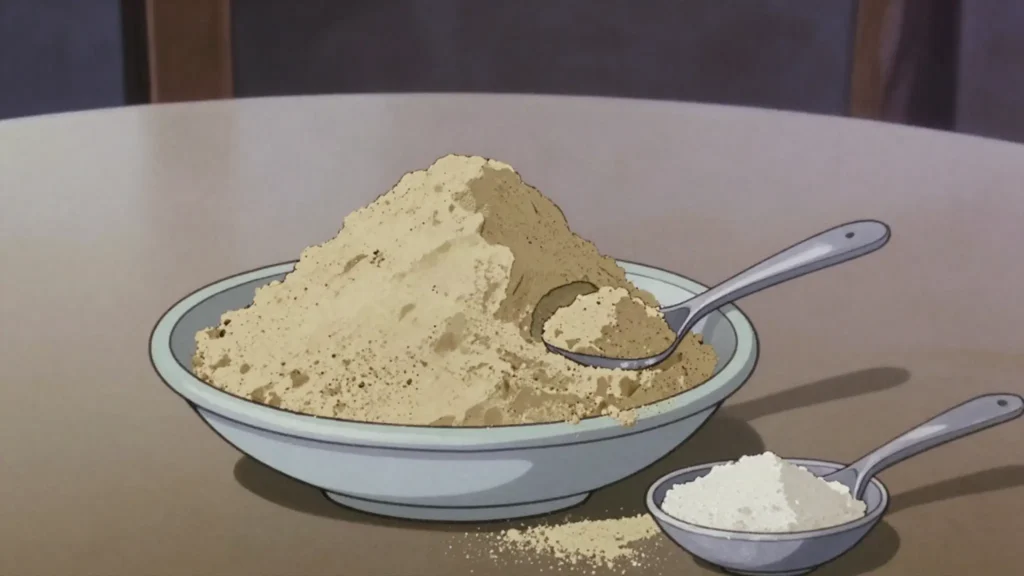
- Repeat until nearly everything passes through. The finished powder should be very fine indeed. Add the salt to the ground powder. Add cinnamon, nutmeg or star anise if you want them.
- Mix them through it thoroughly. Put it in an airtight jar or bag. Keep it somewhere cool and dry. It keeps a month or more that way. Check that it still smells fresh and nutty. Serving it is done in several ways.
- Stir a few spoonfuls into cold milk. It thickens into a smooth drink. Add sugar to taste and stir it well. It can also be eaten dry from the hand. Take only a small pinch if you do. Have a drink beside you when eating it dry.
Technique
- Toasting the grain cooks the starch so no boiling is needed, drives out moisture so it keeps for weeks, and develops a deep nutty flavour.
- The food belongs to a family of toasted grain flours that includes Nicaraguan pinolillo, Canarian gofio and Indian sattu.
- The powder is very fine and can be inhaled, so eating large spoonfuls dry carries a genuine choking risk.
Substitutions
- Yellow maize works in place of the traditional white and is easier to find.
- A grain mill or a powerful blender replaces the traditional mortar and pestle.
Variations
- Some households add cinnamon, nutmeg or star anise to the ground powder.
- It is stirred into milk as a drink or eaten dry with sugar.
- Pinolillo in Nicaragua adds cacao to the same toasted maize base.
History
A northern Haitian travelling food that keeps for weeks, long carried by farmers and market women.
Frequently asked questions
What is Chanm chanm?
Chanm chanm is a snack from Haiti: toasted maize ground to powder, eaten dry with sugar or milk. A northern Haitian travelling food that keeps for weeks, long carried by farmers and market women.
How long does Chanm chanm take to make?
Chanm chanm takes 20 minutes of preparation and 30 minutes of cooking. The recipe makes about 500 g. It is rated easy to make.
What can I substitute in Chanm chanm?
Yes, within limits. Yellow maize works in place of the traditional white and is easier to find. A grain mill or a powerful blender replaces the traditional mortar and pestle.
What is the most important thing to get right in Chanm chanm?
Heat a heavy dry pan over a medium heat. Add the kernels in a single layer. Work in batches rather than crowding the pan. Stir them constantly with a wooden spoon. Never leave them unattended for a moment.