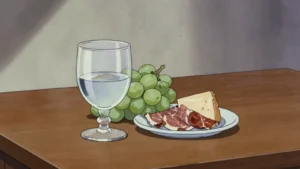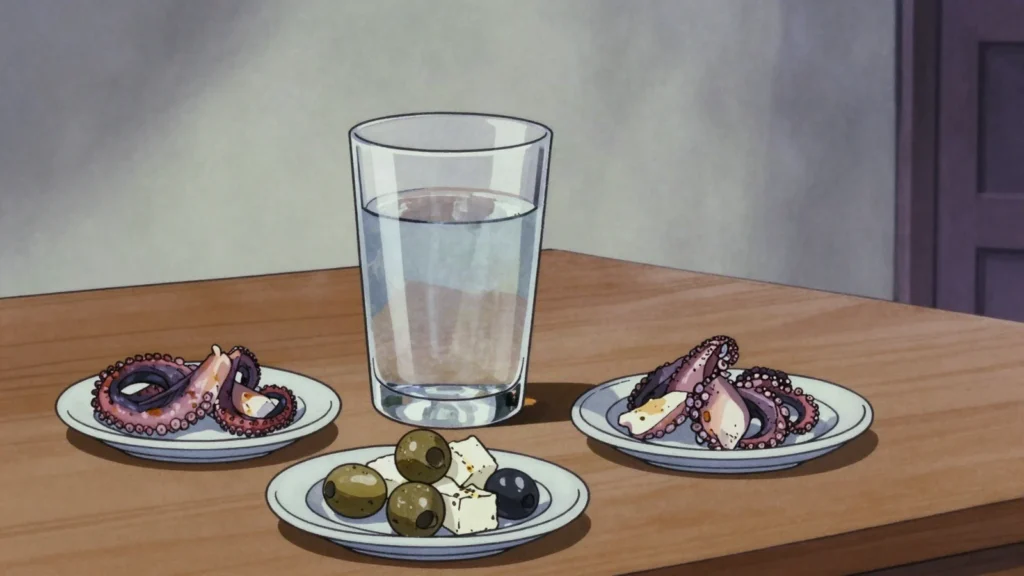

A clear pomace spirit drunk with a succession of small plates, distilled by monks on Mount Athos from the fourteenth century. The tsipouradika of Volos built a whole eating culture around it: each glass ordered brings another meze.
Distilling is illegal without a licence, and pomace mash in particular produces methanol that only a correct cut removes.
What goes into it
- grape pomace — skins, seeds and stems left after pressing
- sometimes aniseed
- water
How it is made
The pomace left after the wine is pressed is fermented further and then distilled in a copper pot still, usually twice. The distiller discards the head and the tail of the run and keeps the middle. It is bottled clear and unaged, either plain or with aniseed added during distillation.
How long it takes: weeks of fermentation, then distilling
How it is eaten
Cold in small glasses at a tsipouradiko, each round bringing a new meze.
History
Distilled by monks on Mount Athos from the fourteenth century; the tsipouradika of Volos serve it with a succession of meze.
Frequently asked questions
What is Tsipouro?
Tsipouro is a wine & spirit from Greece: clear pomace spirit drunk with small plates of meze. Distilled by monks on Mount Athos from the fourteenth century; the tsipouradika of Volos serve it with a succession of meze.
How is Tsipouro made?
The pomace left after the wine is pressed is fermented further and then distilled in a copper pot still, usually twice. The distiller discards the head and the tail of the run and keeps the middle. It is bottled clear and unaged, either plain or with aniseed added during distillation. It takes weeks of fermentation, then distilling.
Can I make Tsipouro at home?
No, and the atlas gives no method for it. Distilling is illegal without a licence, and pomace mash in particular produces methanol that only a correct cut removes.
What goes into Tsipouro?
Grape pomace — skins, seeds and stems left after pressing, sometimes aniseed, water.
How is Tsipouro eaten?
Cold in small glasses at a tsipouradiko, each round bringing a new meze.