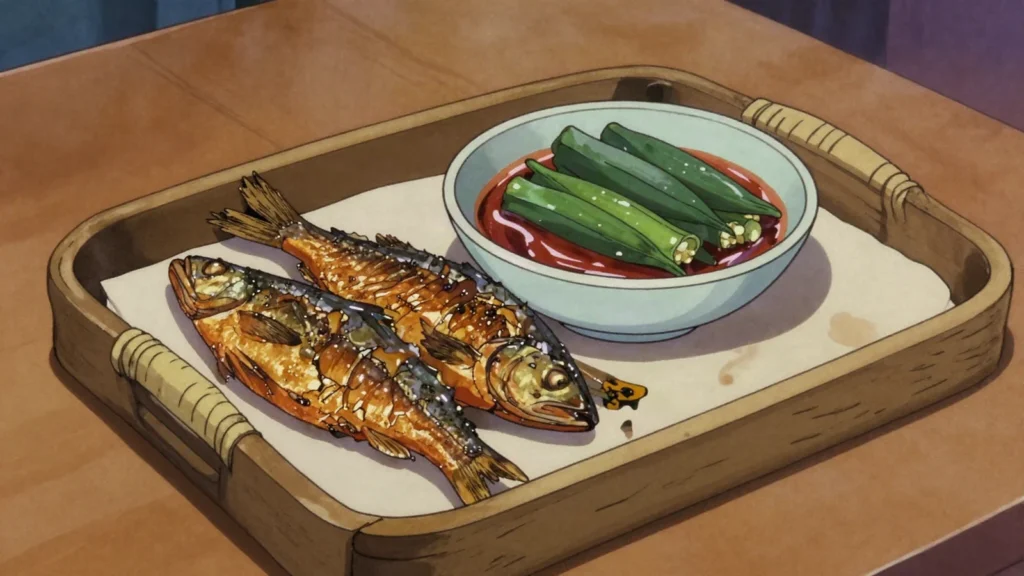

Fish smoked over wood, the backbone of calulu and everyday sauces on São Tomé. Smoking kept the catch edible in a tropical climate without refrigeration, and the smoke is what gives calulu its depth.
It needs a wood fire kept smouldering under a rack for a day or more, and the drying is what preserves it; a short run in a domestic smoker leaves a perishable and quite different thing.
What goes into it
- reef and pelagic fish, split
- hardwood and coconut husk for smoke
How it is made
The fish is split, laid on a raised rack over a smouldering wood fire, and smoked and dried together for a day or more until it is stiff and dark. The loss of water and the smoke compounds on the surface together keep it edible for weeks in the heat.
How long it takes: one to two days on the rack
How it is eaten
Broken into calulu with okra and palm oil, or into everyday tomato and palm sauces.
History
Smoking kept the catch edible in a tropical climate without refrigeration, and smoked fish is what gives calulu its depth.
Frequently asked questions
What is Peixe fumado?
Peixe fumado is a charcuterie & cured from São Tomé and Príncipe: fish smoked over wood, the backbone of calulu and everyday sauces. Smoking kept the catch edible in a tropical climate without refrigeration, and smoked fish is what gives calulu its depth.
How is Peixe fumado made?
The fish is split, laid on a raised rack over a smouldering wood fire, and smoked and dried together for a day or more until it is stiff and dark. The loss of water and the smoke compounds on the surface together keep it edible for weeks in the heat. It takes one to two days on the rack.
Can I make Peixe fumado at home?
No, and the atlas gives no method for it. It needs a wood fire kept smouldering under a rack for a day or more, and the drying is what preserves it; a short run in a domestic smoker leaves a perishable and quite different thing.
What goes into Peixe fumado?
Reef and pelagic fish, split, hardwood and coconut husk for smoke.
How is Peixe fumado eaten?
Broken into calulu with okra and palm oil, or into everyday tomato and palm sauces.