
Ingredients
Fruit
- 5ripe pandanus heads, Pandanus tectorius
Equipment
- a large pot
- a scraper or a strong knife
- a coarse sieve or cloth
- mats or trays for drying
Nothing is added
- no sugar and no salt
To store
- dried leaves or paper, for wrapping
Directions
- Pull the keys off the central core one at a time. Discard the woody central core. Trim the hard fibrous tip off each key. Keep the soft coloured bases, which hold the pulp. Put the trimmed keys in a large pot. Cover them with plenty of water.
- Bring it to the boil and cook them for about an hour. Drain them and let them cool enough to handle. Work from the base towards the tip.
- Pound enough to release the pulp without shredding the fibre. Discard all the fibre, which is inedible. Put the strained pulp in a wide heavy pan.
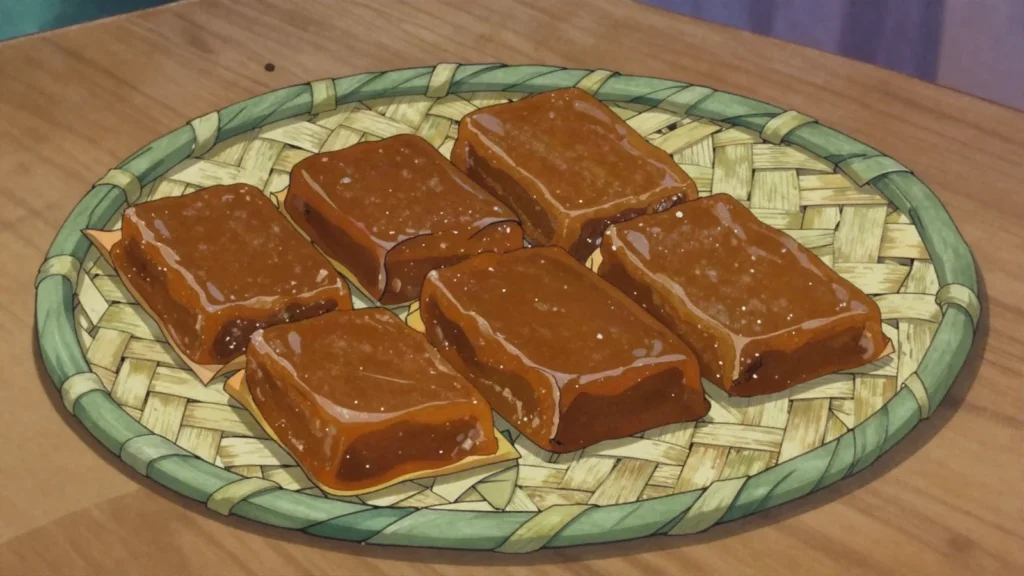
- Cook it over a low heat, stirring constantly. This takes an hour or more depending on quantity. Take handfuls of the thickened paste. Press them into flat cakes about a centimetre thick.
- Press firmly so no air is trapped inside. Drying them takes several days. Lay the cakes on clean mats or trays in full sun. Turn them once a day so both sides dry.
- Bring them in overnight so dew does not soften them. Cover them with netting against insects. Dry them for three to five days in strong sun.
- Wrap each cake in dried leaves or paper. Keep them somewhere dry and airy. They keep for months when properly dried. Break off pieces and eat them as they are.
Technique
- The fibre is inedible; the whole method is separating pulp from it.
- Cook the pulp until it pulls away from the pan, since underdone paste moulds.
- Store it wrapped and airy rather than sealed, as a seal traps moisture.
Substitutions
- There is no substitute, since it depends on the specific fruit.
- An oven on its lowest setting in place of sun drying.
Variations
- Mokwan, the Marshallese version made the same way.
- Made with coconut cream worked into the paste.
- Softened in water and eaten as a fresh paste.
History
Pandanus pulp is boiled and dried into keeping cakes, one of the few ways to store fruit on an island with thin soil and no rivers.
Frequently asked questions
What is Pandanus Paste?
Pandanus Paste is a snack from Nauru: boiled pandanus fruit pulp dried into sweet chewy blocks. Pandanus pulp is boiled and dried into keeping cakes, one of the few ways to store fruit on an island with thin soil and no rivers.
How long does Pandanus Paste take to make?
Pandanus Paste takes 1 hour of preparation and 2 hours, plus several days drying of cooking. The recipe makes about 12 cakes. It is rated hard to make.
What can I substitute in Pandanus Paste?
Yes, within limits. There is no substitute, since it depends on the specific fruit. An oven on its lowest setting in place of sun drying.
What is the most important thing to get right in Pandanus Paste?
The fibre is inedible; the whole method is separating pulp from it.