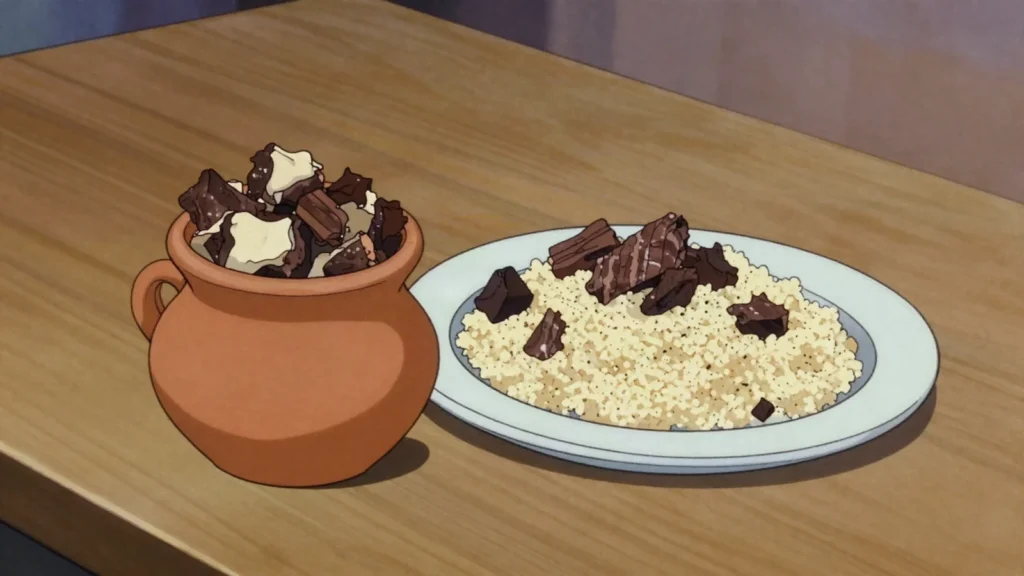

Ingredients
Meat
- 1.5 kgcamel or beef, cut in thin strips
- 2 tbspcoarse salt
To fry and store
- 500 grendered fat or clarified butter
- 1 tspground black pepper
- 1 tspground cumin
- 1 tspsalt
To serve
- couscous or rice
- flatbread and sweet tea
Directions
- Cut the meat into thin strips along the grain, trimming off every trace of visible fat. Fat left on the meat goes rancid in storage and spoils the whole jar, however well the rest is done.
- Rub the strips with the coarse salt and hang them on lines in dry air out of direct sun, or lay them on racks, for two to three days.
- They must dry until they are hard and rattle — no give at all when squeezed. Anything still soft in the middle will spoil under the fat, and this is the step that decides whether the jar keeps.
- Cut the dried strips into pieces and fry them in the rendered fat over medium heat for 30 to 40 minutes, stirring often, until deeply browned and any remaining moisture has gone. The bubbling will slow and quieten as the water leaves — that is the signal.
- Stir in the pepper, cumin and salt and cook two minutes more.
- Pack the hot meat into a clean dry jar and pour over the hot fat until it is completely submerged with a 1 cm layer on top. Tap the jar to release trapped air.
- Cool, seal, and keep refrigerated. Traditionally lakhlaa kept for months in a desert store, but a modern kitchen is warmer and meat under fat at ambient temperature is a low-oxygen store — use it within a month.
- Lift out spoonfuls with a clean dry spoon and add to couscous, rice or stews.
Technique
- Dry until it is genuinely hard, and trim every scrap of fat before drying. Those two things decide whether the jar survives.
- Wait for the bubbling to stop when frying. That silence is the doneness test.
- Clean dry spoon, every time, and keep the surface covered with fat.
Substitutions
- Goat or lamb, both of which are used across the Sahara.
- Clarified butter in place of rendered fat.
- A dehydrator or a low oven with the door ajar in place of open air.
Variations
- The Somali muqmad and Tunisian kaddid are the same preserve under other names.
- Pounded to a coarse powder and stirred into couscous.
History
A Moorish preserve of the desert: strips are dried, then fried and packed in fat and butter in jars, keeping meat edible through long journeys.
Frequently asked questions
What is Lakhlaa?
Lakhlaa is a charcuterie & cured from Mauritania: camel or beef dried, cooked and stored under its own fat for months. A Moorish preserve of the desert: strips are dried, then fried and packed in fat and butter in jars, keeping meat edible through long journeys.
How long does Lakhlaa take to make?
Lakhlaa takes 30 min plus 3 days drying of preparation and 1 hour 30 minutes of cooking. The recipe makes makes about 800 g. It is rated medium to make.
What can I substitute in Lakhlaa?
Yes, within limits. Goat or lamb, both of which are used across the Sahara. Clarified butter in place of rendered fat. A dehydrator or a low oven with the door ajar in place of open air.
What is the most important thing to get right in Lakhlaa?
Cut the meat into thin strips along the grain, trimming off every trace of visible fat. Fat left on the meat goes rancid in storage and spoils the whole jar, however well the rest is done.