
Ingredients
The dogs
- 4all-beef or pork-and-beef frankfurters in natural casing, about 70 g each
- 4New England-style split-top buns, or soft side-split buns
- 20 gbutter, softened, for griddling the buns
Classic New York cart topping
- 1large onion, finely diced
- 1 tbspneutral oil
- 2 tbsptomato paste
- 150 mlwater
- 1 tspsweet paprika
- ½ tspground cinnamon
- 1 tspcaster sugar
- 1 tbspcider vinegar
- Salt
To finish
- Yellow American mustard
- Sauerkraut, drained
- Tomato ketchup, if you are not in Chicago
Directions
- Make the onion sauce first: soften the diced onion in the oil over medium-low heat 10 minutes without colouring, then stir in the tomato paste, paprika, cinnamon, sugar, vinegar, water and a pinch of salt.
- Simmer 15 minutes until thick, jammy and glossy, and the raw tomato edge has gone. Keep it warm; it should be spoonable, not runny.
- Bring a pan of water to just below a simmer, at about 80°C (175°F), and lower the frankfurters in. Never boil them hard, which splits the casing and washes out the flavour.
- Heat them through for 5–6 minutes until plump and hot to the centre, or, for a cart-style snap, griddle them on a hot flat pan, rolling them for 4 minutes until the casing blisters and darkens in patches.
- Butter the cut or flat sides of the buns and griddle them 45 seconds a side until golden and slightly crisp. A steamed-only bun is the other tradition, so use a steamer basket for 30 seconds if you prefer soft.
- Check the snap: a natural casing frankfurter should resist the tooth then break audibly. If it feels soft and rubbery, it was overheated.
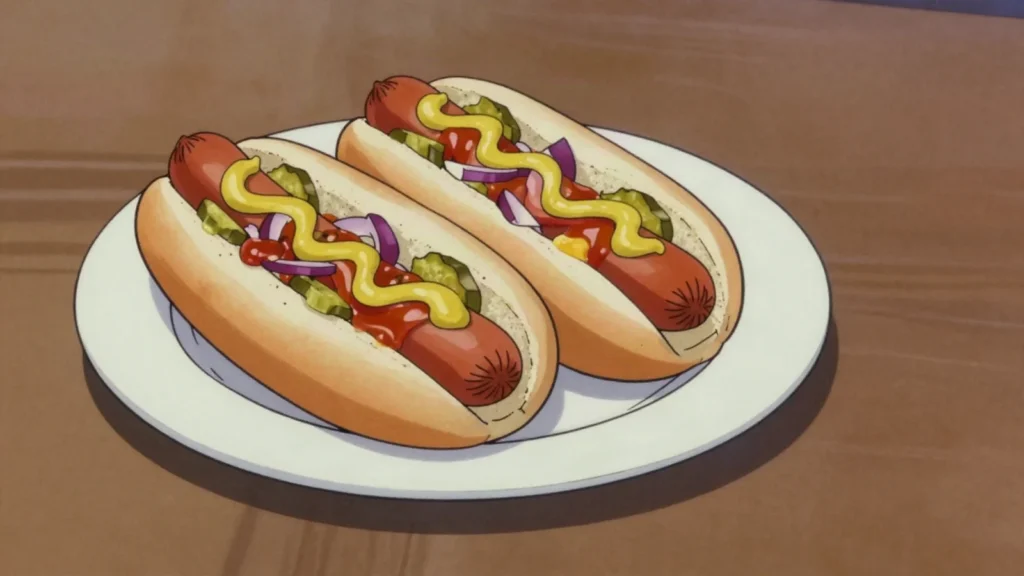
- Set a dog in each bun, lay a stripe of yellow mustard down one side of the sausage rather than over the top, so it does not slide off.
- Top with the warm onion sauce or the sauerkraut, and serve immediately, standing up, with a cold soda.
Technique
- Natural casing is the difference between a good hot dog and a boring one. Skinless dogs cannot snap because there is nothing to break.
- Water below simmering point. The casing bursts around 90°C (195°F) and once it splits the sausage floods and goes woolly.
- Regional rules are taken seriously: ketchup on a Chicago dog is a genuine local offence, and Chicago dogs carry mustard, relish, onion, tomato, sport pepper, pickle spear and celery salt but never ketchup.
Substitutions
- No split-top buns? Trim the crusts off soft side-split rolls and butter and griddle the flat sides for the same effect.
- Frankfurters can be grilled over charcoal for a smokier cart-style char; keep them over indirect heat so the fat does not render out.
Variations
- Chicago dog, dragged through the garden on a poppy seed bun.
- Coney dog of Detroit and Michigan, topped with a beanless chilli, onion and mustard.
- Sonoran dog of Tucson, wrapped in bacon and loaded with beans, tomato and jalapeno salsa.
History
A grilled or steamed sausage, served in a sliced bun and typically topped with mustard, ketchup, relish or onion, developed in the United States through German immigrant influence, since sausages closely related to the modern hot dog, particularly the Frankfurter and the Wiener, were brought to America by German immigrants during the 1800s and gradually adapted into a distinctly American food, particularly through its association with baseball games and street vendor culture in cities including New York and Chicago. Its bun, allowing the sausage to be eaten easily by hand, reflects a specifically American adaptation suited to fast, informal eating at sporting events and street corners, distinguishing the American hot dog from its more formally plated German sausage ancestors. The hot dog remains one of the most iconic and widely recognized foods associated with American culture broadly.
Frequently asked questions
What is Hot dog?
Hot dog is a street food from United States: grilled sausage in a split bun; ballpark and cart staple. A grilled or steamed sausage, served in a sliced bun and typically topped with mustard, ketchup, relish or onion, developed in the United States through German immigrant influence, since sausages closely related to the modern hot dog, particularly the Frankfurter and the Wiener, were brought to America by German immigrants during the 1800s and gradually adapted into a distinctly American food, particularly through its association with baseball games and street vendor culture in cities including New York and Chicago. Its bun, allowing the sausage to be eaten easily by hand, reflects a specifically American adaptation suited to fast, informal eating at sporting events and street corners, distinguishing the American hot dog from its more formally plated German sausage ancestors. The hot dog remains one of the most iconic and widely recognized foods associated with American culture broadly.
How long does Hot dog take to make?
Hot dog takes 10 min of preparation and 10 min of cooking. The recipe makes 4 hot dogs. It is rated easy to make.
What can I substitute in Hot dog?
Yes, within limits. No split-top buns? Trim the crusts off soft side-split rolls and butter and griddle the flat sides for the same effect. Frankfurters can be grilled over charcoal for a smokier cart-style char; keep them over indirect heat so the fat does not render out.
What is the most important thing to get right in Hot dog?
Bring a pan of water to just below a simmer, at about 80°C (175°F), and lower the frankfurters in. Never boil them hard, which splits the casing and washes out the flavour.